


Situation Overview
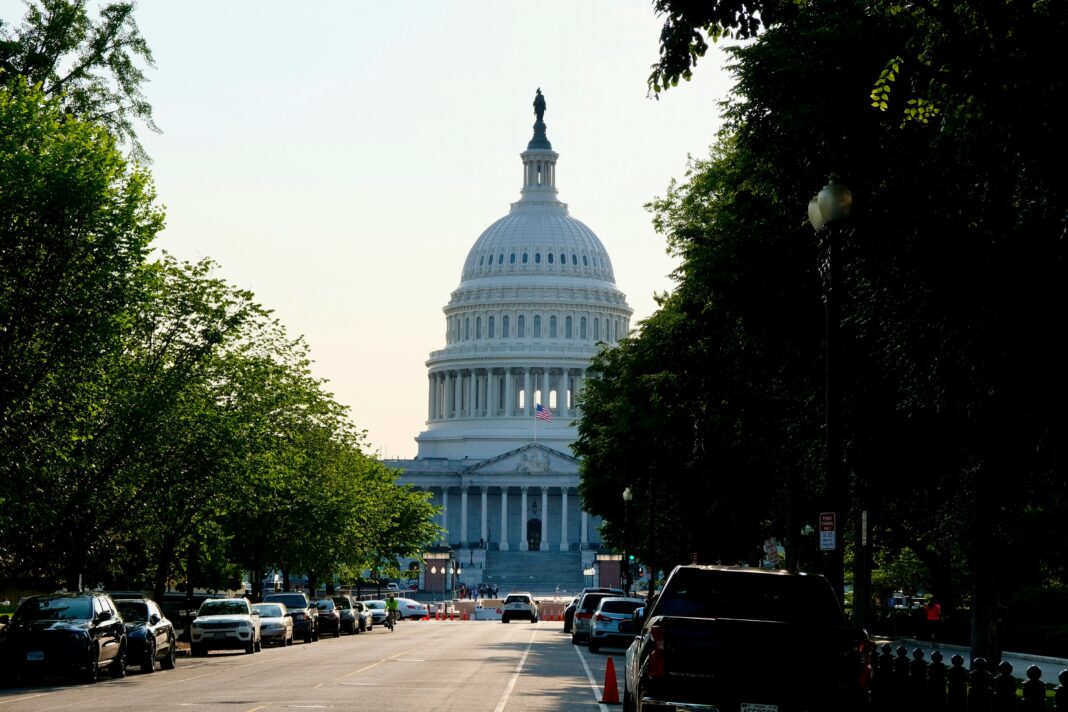
In a decisive moment on Capitol Hill, the U.S. Senate voted this week to block a Democratic-led effort aimed at restricting President Donald Trump’s authority to conduct military operations following recent U.S. action in Venezuela. The vote, which occurred within the past 48 hours, preserved Trump’s ability to act swiftly on national security matters and reinforced Republican unity behind the president’s leadership.
The debate stemmed from a War Powers Resolution introduced by Senate Democrats seeking to limit executive authority after U.S. forces carried out a targeted operation in Venezuela. Republicans argued that the resolution was politically motivated and risked undermining America’s strategic posture abroad.
Source: AP News
What Happened
Following a U.S. operation that resulted in the capture of former Venezuelan leader Nicolás Maduro, Democrats moved quickly to invoke the War Powers Act, arguing that Congress should have greater oversight over military actions taken by the administration.
The War Powers Resolution, originally enacted in 1973, allows Congress to restrict the president’s ability to deploy U.S. forces without legislative approval. Democrats framed their resolution as a constitutional safeguard, while Republicans countered that it would retroactively penalize a successful operation and weaken U.S. credibility on the world stage.
The Senate vote ultimately failed after Republicans remained largely united against the measure. With the chamber split evenly, Vice President J.D. Vance cast the tie-breaking vote to defeat the resolution. The outcome effectively halted Democratic efforts to constrain Trump’s authority in this case and reaffirmed the GOP’s position on executive flexibility during active national security situations.
Republican leadership emphasized that the resolution came after the operation had already been completed, arguing that it served more as a political statement than a meaningful policy correction.
Trump/GOP Response
President Trump welcomed the Senate’s decision, describing it as a victory for constitutional balance and national security. In statements following the vote, Trump stressed that presidents must retain the ability to act decisively when American interests are threatened, particularly in volatile regions close to U.S. borders.
Republican lawmakers echoed this sentiment, stating that the president’s actions in Venezuela demonstrated strength, clarity, and resolve. GOP leaders also criticized Democrats for what they described as an attempt to weaken presidential authority during a time of heightened global instability.
The White House framed the vote as evidence that Republicans remain committed to a strong executive branch capable of responding to threats without bureaucratic delay. Party officials noted that limiting the president after a successful operation could embolden hostile actors and send the wrong message to allies.
Who Is Involved
-
President Donald Trump — Authorized and defended the Venezuela operation while opposing congressional limits on executive authority
-
Vice President J.D. Vance — Cast the decisive tie-breaking vote in the Senate
-
Senate Republicans — United in opposition to the War Powers Resolution
-
Senate Democrats — Introduced the measure seeking to restrict military authority
-
Nicolás Maduro — Former Venezuelan leader whose capture triggered the congressional debate
Why It Matters
This Senate vote carries significant political and constitutional implications:
-
Executive Authority Preserved: The decision reinforces the president’s ability to act swiftly in foreign policy and military matters without immediate congressional interference.
-
Republican Unity on Security: The vote highlights GOP alignment behind Trump’s leadership and approach to national defense.
-
Political Contrast: As the 2026 political cycle intensifies, the vote sharpens the contrast between Republican and Democratic views on executive power and America’s role abroad.
From a constitutional standpoint, the outcome reflects ongoing tensions over the War Powers Act and whether it remains suited to modern geopolitical realities. Republicans argue that today’s threats require faster decision-making than Congress can often provide.
What’s Next
Looking ahead, Democrats are expected to continue raising concerns over executive authority during upcoming hearings and campaign appearances. However, without bipartisan support, further legislative efforts to limit Trump’s military powers face long odds.
The Trump administration is also expected to expand on its Venezuela strategy, offering additional details on regional security priorities and U.S. engagement in the Western Hemisphere. Meanwhile, Republicans are likely to highlight the vote as proof of steady leadership and effective governance on national security.
Sources
Senate Republicans vote down Venezuela war powers resolution
U.S. Senate blocks effort to curb Trump military authority