
Story Highlights
- Federal judge halts proposed White House ballroom project
- Concerns raised over congressional approval and funding authority
- Decision highlights constitutional checks on executive actions
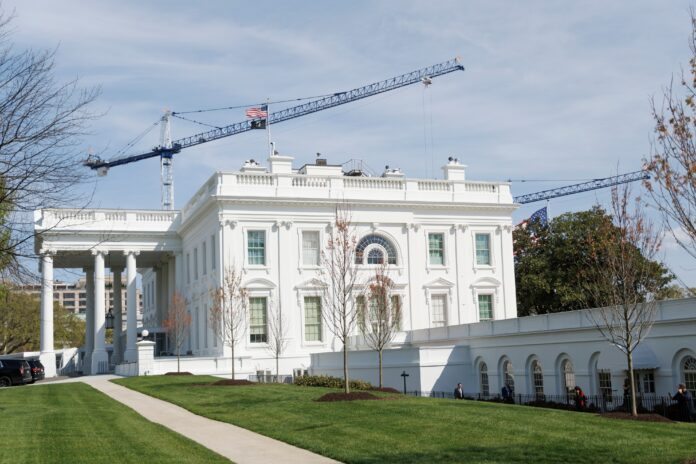
A federal judge has blocked the proposed construction of a new ballroom at the White House, citing concerns over the lack of congressional authorization and the constitutional limits of executive power. The project, estimated at approximately $400 million, had been positioned as an effort to modernize and expand the capacity of the White House for official events. However, the ruling underscores the importance of procedural compliance in government decision-making, particularly when it involves significant public expenditure.
The case centers on whether the executive branch has the authority to initiate and fund such a project without explicit approval from Congress. The judge’s decision emphasizes that large-scale federal spending must follow established legislative processes, reinforcing the system of checks and balances that defines the U.S. political framework. By halting the project, the court has effectively reaffirmed the role of Congress in overseeing federal expenditures and ensuring accountability.
From a legal perspective, the ruling is significant because it clarifies the boundaries of executive authority in matters of infrastructure and spending. While the executive branch has broad powers in managing federal property and operations, those powers are not unlimited. The requirement for congressional approval serves as a safeguard against unilateral decision-making, ensuring that major initiatives undergo scrutiny and debate.
The implications of this decision extend beyond the specific project. It sets a precedent for how similar initiatives may be evaluated in the future, particularly those involving substantial financial commitments. Government agencies and administrations may need to exercise greater caution in planning and executing projects that require funding beyond routine budgets.
Politically, the ruling highlights ongoing tensions between different branches of government. Disagreements over authority and process are a recurring feature of the U.S. system, and this case illustrates how such disputes are resolved through the judicial system. The decision does not necessarily reflect opposition to the project itself, but rather a focus on ensuring that it follows the appropriate legal and procedural framework.
The broader context also includes public perception and priorities. Large-scale projects involving significant costs often attract scrutiny, particularly when economic conditions are uncertain. The debate around the ballroom project reflects wider discussions about government spending, resource allocation, and the balance between modernization and fiscal responsibility.
From an institutional standpoint, the decision reinforces the importance of maintaining clear boundaries between branches of government. The system of checks and balances is designed to prevent the concentration of power and to ensure that decisions are made through a collaborative process. Judicial intervention, in this case, serves as a mechanism for upholding these principles.
The ruling may also influence how future administrations approach similar initiatives. Ensuring compliance with legislative requirements from the outset can help avoid delays, legal challenges, and reputational risks. It highlights the need for coordination between the executive and legislative branches when undertaking projects of national significance.
At the same time, the decision does not necessarily mark the end of the proposal. It may still proceed through the appropriate channels if congressional approval is obtained. This reflects the adaptability of the system, where projects can move forward provided they align with established procedures.
Implications
The court’s decision to block the White House ballroom project underscores the importance of constitutional process in government spending. It reinforces the role of Congress in authorizing major expenditures and highlights the judiciary’s function in maintaining institutional balance.
In the broader context, the ruling serves as a reminder that governance is not only about outcomes but also about adherence to established frameworks. As future projects are considered, the emphasis will remain on ensuring that they meet both strategic objectives and procedural requirements.

