Story Highlights
- Trump emphasizes a strong deterrence-first approach
- Clear signaling aimed at preventing further escalation
- Strategy focuses on strength, clarity, and immediate consequences
What Happened
President Donald Trump has reinforced his administration’s hardline deterrence strategy toward Iran, reiterating that strength and clarity remain central to U.S. policy in the region. The statement comes amid continued tensions, with the administration maintaining pressure through warnings, deadlines, and visible military readiness.
According to officials, the strategy is designed to prevent escalation by making the consequences of non-compliance unmistakably clear. Rather than relying solely on diplomatic engagement, the administration is combining communication with demonstrated capability. This approach aims to discourage actions that could destabilize the region or disrupt global trade.
Trump’s messaging has remained consistent, focusing on the importance of maintaining control over key geopolitical developments. The administration believes that a firm stance reduces the likelihood of miscalculation by eliminating uncertainty. By clearly outlining expectations and consequences, the U.S. seeks to shape behavior without necessarily resorting to extended conflict.
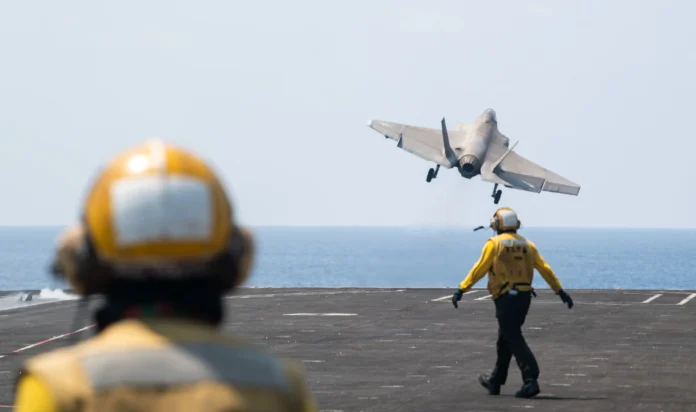
Military forces in the region continue to operate at elevated readiness levels, reinforcing the credibility of the administration’s position. While officials stress that the goal is deterrence, the preparedness signals that the United States is equipped to respond if necessary.
Why It Matters
Deterrence is a cornerstone of international security strategy. The concept relies on the idea that clearly communicated consequences can prevent undesirable actions. In this context, the administration’s approach is intended to stabilize the situation by discouraging escalation before it occurs.
However, deterrence requires careful calibration. If the message is too weak, it may fail to influence behavior. If it is too strong, it may provoke unintended reactions. Finding the right balance is critical to achieving the desired outcome.
For global markets and international observers, the emphasis on deterrence provides insight into how the situation may evolve. It suggests that while tensions are high, the immediate goal is to prevent conflict rather than initiate it.
Political and Geopolitical Impact
Domestically, the reinforcement of a hardline strategy aligns with Trump’s broader leadership style, which emphasizes decisiveness and strength. Supporters may view this approach as necessary to protect national interests, while critics may express concern about the potential risks.
Internationally, the strategy sends a clear signal to both allies and adversaries. Allies may appreciate the predictability and clarity, even if they have reservations about the intensity of the approach. Adversaries, on the other hand, are faced with a well-defined set of expectations and consequences.
The approach also influences regional dynamics, as neighboring countries assess how the situation may affect their own security and economic interests. The emphasis on deterrence may encourage caution among regional actors, potentially contributing to stability.
Implications
If the deterrence strategy is effective, it could help prevent further escalation and create conditions for eventual diplomatic engagement. Clear communication and consistent messaging may reduce uncertainty and support a more stable environment.
However, if the strategy is misinterpreted or challenged, it could lead to increased tension or even conflict. The success of deterrence depends not only on the message itself but also on how it is received and understood by others.
In the long term, this situation may influence how deterrence strategies are applied in future conflicts. It highlights the importance of clarity, consistency, and credibility in shaping international behavior.
Ultimately, the administration’s approach reflects a belief that strength and clear communication are essential tools in managing complex geopolitical challenges.

