Story Highlights
- Trump states Iran conflict is approaching completion
- Emphasis on achieved objectives and controlled outcome
- Signals potential transition toward stabilization
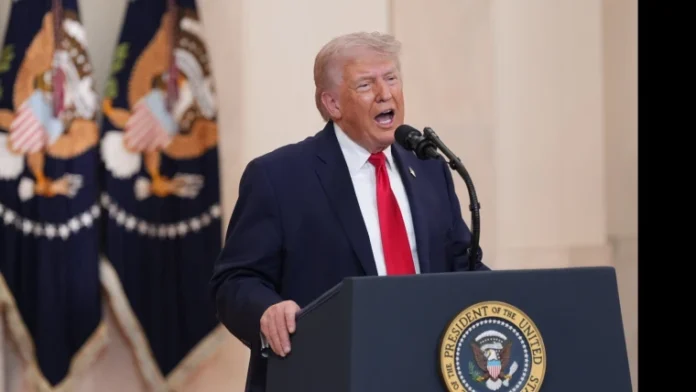
Donald Trump has indicated that the ongoing conflict involving Iran is approaching its final phase, suggesting that recent developments have significantly altered the trajectory of the situation. In his remarks, he emphasized that key objectives have been achieved, framing the current moment as one of transition rather than escalation. This positioning introduces a narrative of control and progress, particularly at a time when global attention remains focused on the Middle East and its broader implications.
The timing of this statement is notable, as geopolitical tensions in the region have had a direct impact on global markets, especially in the energy sector. The Strait of Hormuz, a critical route for international oil shipments, has remained a focal point of concern. Any indication that the conflict may be nearing resolution carries immediate significance for market stability. Trump’s remarks contribute to a more optimistic outlook, suggesting that disruptions to global energy flows may soon ease.
From a strategic perspective, the emphasis on a conflict nearing completion reflects a results-driven approach to foreign policy. The focus is on achieving defined outcomes within a controlled framework, rather than engaging in prolonged and uncertain involvement. By presenting the situation as entering its final phase, the narrative underscores a sense of direction and purpose. It also reinforces the idea that strategic objectives have been met without the need for extended engagement.
The concept of controlled escalation is central to this approach. By applying pressure in a targeted manner, the strategy aims to influence outcomes while minimizing broader instability. This balance between assertiveness and restraint is a key element of modern geopolitical strategy. Trump’s framing suggests that this balance has been successfully maintained, allowing for progress without triggering wider conflict.
The economic implications of a potential resolution are significant. Energy markets are highly sensitive to developments in the Middle East, and even small shifts in perceived risk can influence pricing and investment decisions. A reduction in tensions could lead to greater stability in oil prices, which in turn supports economic confidence across multiple sectors. Industries that depend on predictable energy costs would benefit from a more stable environment, while consumers may experience reduced volatility in fuel prices.
Geopolitically, the situation represents a potential turning point. A movement toward resolution could alter the dynamics of regional relationships, influencing how countries in the Middle East engage with one another and with global powers. It may create opportunities for diplomatic engagement, while also prompting a reassessment of strategic priorities among key stakeholders. In this sense, the current phase serves as both an endpoint and a transition into a new stage of interaction.
Trump’s remarks also function as strategic communication. In today’s interconnected world, public statements play a critical role in shaping perceptions and expectations. By signaling that the conflict is nearing its conclusion, the message contributes to a broader narrative of stability and control. This can influence not only market behavior but also diplomatic positioning, as stakeholders adjust their strategies based on perceived developments.
At the domestic level, the development may resonate within ongoing discussions about foreign policy effectiveness and national priorities. The emphasis on achieving results within a defined timeframe aligns with perspectives that prioritize efficiency and strategic clarity. It also raises questions about how success is measured in complex international situations, where outcomes are often influenced by multiple factors.
However, it is important to recognize that while the current outlook is optimistic, underlying challenges remain. The relationship between the United States and Iran has historically been shaped by deep-rooted differences, and these are unlikely to be resolved entirely in the short term. As such, the transition to a post-conflict phase will require continued attention and engagement to ensure that stability is maintained.
Another key consideration is the role of global stakeholders. Countries that rely on stable energy supplies have a vested interest in the outcome of the situation. A reduction in tensions could strengthen economic confidence and encourage greater cooperation, while also reducing the risk of disruptions that affect global markets. This interconnectedness highlights the broader significance of developments in the region.
Implications
Trump’s indication that the Iran conflict is nearing its final phase introduces a narrative of resolution and stability. If this trajectory continues, it could reduce geopolitical risk, stabilize energy markets, and support broader economic confidence.
At a larger level, the development highlights the importance of strategic clarity and controlled engagement in managing international challenges. The ability to achieve defined objectives while maintaining flexibility remains a central element of effective foreign policy in an increasingly complex global environment.

