Story Highlights
- Trump issues deadline for reopening the Strait of Hormuz
- Focus on restoring stability in global energy supply
- Signals firm stance on protecting critical trade routes
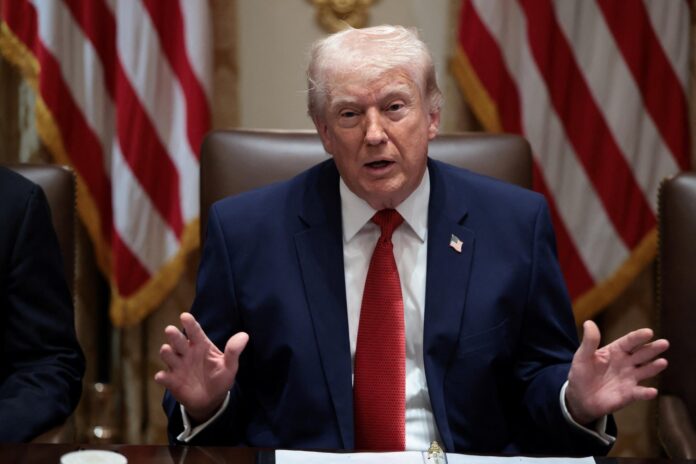
Donald Trump has issued a clear directive calling for the reopening of the Strait of Hormuz within a defined timeframe, emphasizing the urgency of restoring stability to one of the world’s most critical energy corridors. The statement underscores the importance of uninterrupted global oil flow, positioning the situation as both an economic and strategic priority. By setting a deadline, the approach introduces a sense of immediacy while reinforcing a firm stance on maintaining open trade routes.
The Strait of Hormuz plays a central role in the global energy system, serving as a key passage for a significant portion of the world’s oil supply. Any disruption in this narrow corridor has immediate consequences, often leading to increased volatility in energy markets and broader economic uncertainty. Trump’s directive highlights the need to ensure that such disruptions are addressed quickly, particularly in a period where global markets are already sensitive to geopolitical developments.
From a strategic perspective, the use of a defined deadline reflects a focus on clarity and decisiveness. Clear expectations can influence both allies and adversaries, reducing ambiguity and encouraging timely action. This type of communication is often used to signal resolve, demonstrating that maintaining the stability of critical infrastructure is a top priority. It also reinforces the idea that disruptions to global trade routes will be met with a structured and assertive response.
The economic implications of reopening the Strait are substantial. Energy markets are closely linked to developments in this region, and even temporary disruptions can affect pricing and supply chains. A restoration of normal operations would help stabilize oil prices, reduce uncertainty, and support global economic activity. Industries that depend on reliable energy inputs would benefit from improved predictability, while consumers could see more stable fuel costs.
Geopolitically, the statement positions the United States as a central actor in safeguarding international trade flows. Ensuring the security of major transit routes is not only a national interest but also a global concern, as many countries rely on these routes for energy imports. Allies and partners may view this approach as a commitment to maintaining stability, particularly in a region that has historically experienced fluctuations in tension.
The communication itself plays a significant role in shaping perceptions. In modern geopolitics, statements from leadership can influence expectations, market behavior, and diplomatic engagement. By setting a clear timeline, the message introduces urgency while projecting confidence in the ability to manage the situation. This combination of clarity and confidence can have a stabilizing effect, even before any concrete developments occur.
At the domestic level, the development may contribute to discussions around energy security and foreign policy priorities. Protecting critical infrastructure and ensuring stable supply chains are key concerns, particularly in an interconnected global economy. The emphasis on maintaining open trade routes aligns with broader goals of economic stability and strategic positioning.
However, the situation remains complex, involving multiple stakeholders with differing interests. Achieving a resolution will likely require a combination of diplomatic efforts and strategic coordination. While the directive sets clear expectations, the path to implementation may involve negotiations and adjustments based on evolving conditions.
Another important aspect is the broader impact on global confidence. Markets and international stakeholders often respond to signals of stability and control. By addressing a critical issue such as the Strait of Hormuz, the message contributes to a perception of proactive management, which can influence both economic and political dynamics.
Implications
Trump’s call to reopen the Strait of Hormuz highlights the importance of securing key global trade routes. If successful, it could reduce volatility in energy markets and support broader economic stability.
More broadly, the development underscores the role of clear strategic communication in addressing complex geopolitical challenges. Setting defined expectations while maintaining flexibility remains a key element in managing global risks effectively.

