Story Highlights
- The Senate passed a $70 billion bill to fund ICE and Border Patrol after a marathon voting process.
- The package funds the two immigration enforcement agencies for three years, through the rest of Trump’s term.
- Democrats failed to add limits blocking Trump’s proposed $1.8 billion anti-weaponization fund.
What Happened
The Senate passed a sweeping $70 billion immigration enforcement bill to fund Immigration and Customs Enforcement and Border Patrol, giving President Donald Trump a major legislative win on one of his central second-term priorities.
The bill passed 52–47 after Republicans used the budget reconciliation process to move the package without needing Democratic support. Sen. Lisa Murkowski of Alaska was the only Republican to vote against the measure.
- The legislation provides three years of funding for ICE and Border Patrol.
- Republicans used reconciliation to avoid the 60-vote filibuster threshold.
- The bill now moves to the House for final consideration.
The vote followed a long amendment process in which Democrats tried to derail or reshape the package. Their main target was Trump’s proposed anti-weaponization fund, a roughly $1.8 billion initiative critics say could compensate political allies who claim they were unfairly targeted by the federal government.
Those amendments failed. Senate Republican leaders argued that the fund issue had already been addressed because Acting Attorney General Todd Blanche said the Justice Department did not intend to establish it. Democrats responded that without a formal statutory ban, the fund could still be revived later.
The funding fight followed months of pressure over ICE and Border Patrol operations. Democrats had demanded reforms after the fatal shootings of Minneapolis residents Renee Good and Alex Pretti by federal agents earlier this year, while Republicans accused Democrats of blocking core border-security funding. Minnesota officials have also sued the Trump administration for evidence related to those shootings as part of an independent investigation.
Why It Matters
The bill matters because it gives Trump’s immigration enforcement agencies a stable funding base through the rest of his term. That means ICE and Border Patrol can plan staffing, detention capacity, transportation, technology, and operations without the same annual appropriations uncertainty.
For Trump and Senate Republicans, the vote provides a clear political victory on border security before the midterms. Immigration remains one of the strongest issues for the Republican base, and the bill gives the party a major policy achievement to cite on the campaign trail.
- The package strengthens Trump’s deportation and border enforcement agenda.
- It reduces Democrats’ leverage over ICE and Border Patrol funding in future shutdown fights.
- It also exposes continued Republican discomfort over the anti-weaponization fund.
For Democrats, the vote is a setback. They tried to use the funding fight to demand oversight and accountability changes, especially after the Minnesota shootings and other controversies tied to immigration enforcement.
But the reconciliation process limited their leverage. Republicans were able to move the spending package with a simple majority, leaving Democrats with amendment votes but no practical path to block final passage once the GOP conference largely stayed united.
Political and Public Context
The debate showed how immigration continues to unite Republicans even when other Trump-linked proposals divide them. Several GOP senators expressed concern about the anti-weaponization fund, but most still voted for the broader enforcement bill.
That created a split-screen moment for the party: Republicans wanted to deliver for Trump on immigration while also trying to avoid political damage from a fund that critics described as a potential payout vehicle for Trump allies.
- Republicans framed the bill as a necessary border-security measure.
- Democrats framed it as an aggressive enforcement expansion without enough accountability.
- The anti-weaponization fund became the central flashpoint during the amendment fight.
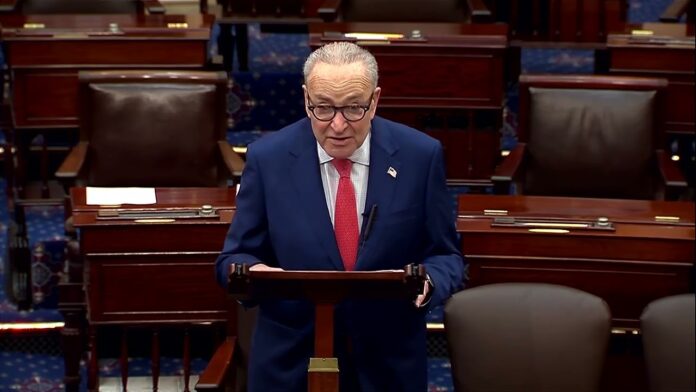
Senate Majority Leader John Thune worked to keep the bill narrow and focused on immigration enforcement. Democrats, led by Senate Minority Leader Chuck Schumer, argued that Republicans were prioritizing immigration crackdowns over household costs, healthcare, and economic pressures facing voters.
The fight also previewed midterm messaging. Republicans will argue they funded border security. Democrats will argue Republicans funded expanded enforcement while refusing stronger oversight protections.
Economic and Global Context
The scale of the bill carries major budget and labor-market implications. A $70 billion multi-year funding commitment represents one of the largest dedicated investments in immigration enforcement in recent U.S. history.
Expanded enforcement capacity could affect industries that rely heavily on immigrant labor, including agriculture, construction, food processing, hospitality, and certain service sectors.
- Employers in labor-sensitive industries may face tighter workforce conditions.
- Federal contractors tied to detention, transport, surveillance, and border technology could benefit.
- State and local governments may face new pressures linked to deportation and detention activity.
Supporters argue that stronger enforcement protects American workers, restores order at the border, and gives agencies the tools needed to carry out federal law.
Critics argue that large-scale enforcement can disrupt communities, separate families, strain local economies, and create labor shortages in sectors already facing cost pressures.
What Happens Next
The bill now heads to the House, where Republican leaders will need to manage their narrow majority and decide whether to pass the Senate version or make changes.
If the House changes the bill, it could have to return to the Senate, delaying final passage. Republican leaders are therefore likely to face pressure from the White House to keep the package moving quickly.
- The House is the next major test for the funding package.
- Republicans will try to avoid changes that reopen Senate negotiations.
- Trump is expected to sign the bill if it reaches his desk.
For ICE and Border Patrol, final passage would provide operational certainty through 2028. For Trump, it would lock in a financial foundation for his immigration agenda before the midterm campaign intensifies.
The Senate vote does not end the political battle. It shifts the fight to the House, where immigration funding, oversight concerns, and the anti-weaponization fund controversy will face their next test.
Sources
- Senate begins voting on bill to fund ICE, Border Patrol as Democrats try to derail it
- US Senate passes $70 billion ICE funding; fails to ban Trump’s ‘anti-weaponization’ fund
- Senate approves $70 billion immigration enforcement bill
- Minnesota sues to obtain evidence in shootings by federal officers during ICE surge

