Story Highlights
Senators Ted Cruz and Roger Wicker are leading Republican criticism of a reported $300 billion reconstruction fund for Iran included in Trump’s emerging peace framework.
Cruz compared the fund unfavorably to the 2015 Iran nuclear deal, calling it potentially three times larger than assistance provided under the Obama administration.
Vice President JD Vance and Donald Trump Jr. have pushed back forcefully, with Trump Jr. accusing Cruz of spreading misinformation about the deal’s terms.
What Happened
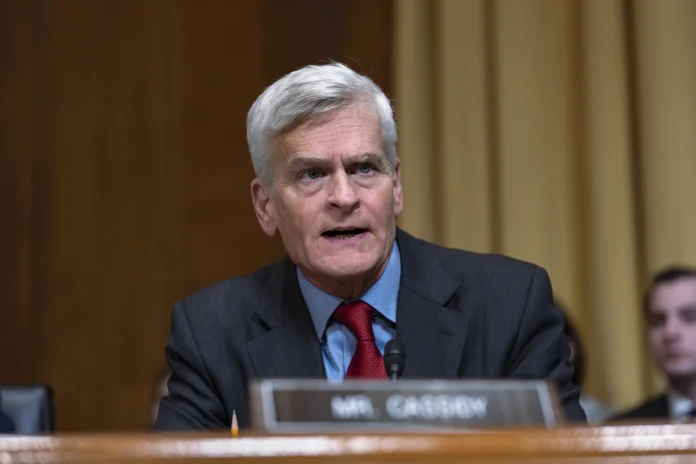
As details of President Trump’s emerging agreement with Iran began circulating on Capitol Hill this week, a significant number of Senate Republicans reacted with alarm, particularly over reports that the framework includes a $300 billion private investment fund designed to attract capital into Iran’s economy. Senator Ted Cruz, a longtime Iran hawk and member of the Senate Foreign Relations Committee, was among the most vocal critics, arguing on his podcast that funneling such a sum to the Iranian regime would be “utterly indefensible” and far larger than the assistance Iran received under the 2015 nuclear agreement negotiated by the Obama administration.
Senator Roger Wicker, chairman of the Senate Armed Services Committee, issued a formal statement expressing concern that the memorandum of understanding negotiates away military gains achieved during the conflict. Wicker argued that the proposed fund would make the terms of the 2015 deal, which he has previously compared to the 1938 Munich Accords, look minor by comparison. Wicker was notably careful in his public messaging, declining to take additional questions from reporters and instead distributing written copies of his statement.
The criticism prompted an unusually public defense from within Trump’s own family and administration. Donald Trump Jr. directly accused Cruz of “lying through his teeth” about the deal’s terms, insisting on social media that the United States was not providing Iran with any direct funding. Vice President Vance offered a more measured but still firm rebuttal, telling reporters that Iran would not receive money simply for signing an agreement, but that economic benefits could flow over time if Tehran met its obligations under the deal.
President Trump himself addressed the controversy directly, posting on Truth Social that reports the United States was financing Iran were inaccurate, while reaffirming that Iran had agreed never to pursue a nuclear weapon. Despite these assurances, the underlying confusion over the fund’s structure, including whether it would be financed by the United States, by Iran’s regional neighbors, or through some other arrangement, has persisted, with administration officials offering shifting characterizations of the plan in the days since the criticism emerged.
The dispute has placed Senate Republican leadership in a difficult position, caught between defending a president whose foreign policy initiatives they have largely supported and addressing the genuine substantive concerns of influential members of their own conference who view the fund as a dangerous precedent for negotiating with a longtime adversary.
Why It Matters
This intraparty clash matters because it represents one of the most significant breaks between congressional Republicans and the Trump administration on a major foreign policy initiative during his second term. Cruz and Wicker are not fringe figures; both hold influential committee positions that give them substantial sway over how Congress engages with the administration’s foreign policy agenda, and their willingness to publicly challenge the deal signals that GOP unity on Iran policy cannot be assumed.
For American taxpayers, the dispute raises legitimate questions about transparency in how the administration structures complex international agreements, particularly those involving substantial financial commitments. The shifting public explanations of the fund’s financing, at various points described as not involving American taxpayers, then potentially involving regional partners, then framed as conditional economic benefits, have made it difficult for both lawmakers and the public to assess the actual scope of U.S. financial exposure.
The episode also illustrates the broader tension within the Republican coalition between traditional foreign policy hawks who view any economic engagement with Iran with deep suspicion and an administration eager to claim a major diplomatic achievement. How this tension is resolved will likely shape Republican messaging on foreign policy heading into the 2026 midterms, particularly in conservative media environments where skepticism of Iran has long been a unifying theme.
For the broader Iran negotiations, the public discord among Senate Republicans could complicate the administration’s ability to present a unified American position during ongoing talks, potentially giving Iranian negotiators leverage if they perceive divisions in Washington over the deal’s terms and durability.
Economic and Global Context
The scale of the disputed fund, $300 billion, would be roughly three times the value of the sanctions relief Iran received as part of the 2015 nuclear agreement, according to comparisons made by Cruz and other critics. That earlier deal, which provided Iran with access to billions of dollars in previously frozen assets, became a defining flashpoint in Republican foreign policy debates for nearly a decade, and the comparison underscores why the current proposal has generated such intense reaction among Iran hawks.
Beyond the specific dollar figures, the broader economic context involves the disruption that the Iran conflict has caused to global energy markets and shipping routes through the Strait of Hormuz. Any reconstruction fund tied to reopening that corridor carries implications not just for Iran’s domestic economy but for global oil supply chains that have experienced sustained volatility throughout the conflict. Restoring normal shipping operations through the strait could ease some of the price pressures that have affected American consumers, even as the financing mechanism for that outcome remains contested.
The dispute also unfolds against a backdrop of broader Republican unease with several of the administration’s recent spending and funding decisions, including controversies over a proposed White House ballroom project and a separate $1.8 billion fund that was ultimately abandoned amid bipartisan court challenges. Taken together, these episodes suggest a pattern of congressional Republicans pushing back on executive branch spending decisions they view as poorly justified or insufficiently transparent, even when the president himself has championed them.
International observers, including allies in the Middle East, are watching closely to see how the fund’s structure is ultimately resolved, given its potential implications for the regional balance of power and Iran’s capacity to rebuild military and economic capabilities that were degraded during the conflict.
Implications
In the near term, expect continued public sparring between Iran hawks like Cruz and Wicker and administration allies like Vance and Trump Jr., particularly as more details of the agreement’s financial provisions become public. Senate Republican leadership will face pressure to clarify the conference’s collective position before any final agreement comes up for review or related funding mechanisms require congressional action.
For the Trump administration, resolving the ambiguity surrounding the fund’s structure will be essential to maintaining congressional support for the broader Iran framework. Continued mixed messaging risks deepening Republican skepticism and could embolden critics to seek legislative mechanisms to constrain the administration’s ability to implement the fund without explicit congressional authorization.
For voters, particularly those in conservative media environments where Iran skepticism runs deep, this dispute offers an early test of how durable Trump’s coalition support remains when his foreign policy decisions conflict with longstanding Republican orthodoxy on dealing with adversarial regimes.
Sources

