Story Highlights
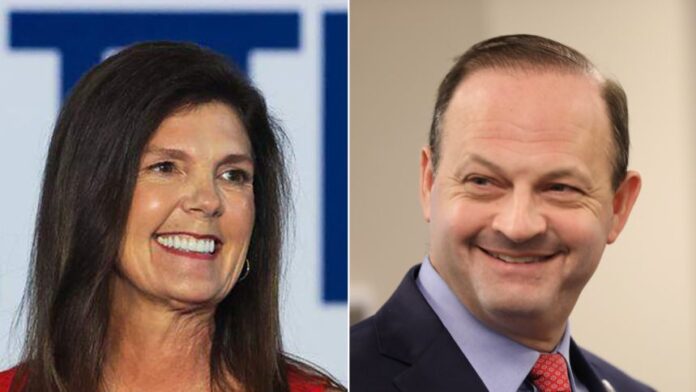
- Trump co-endorsed both Lt. Gov. Pamela Evette and Attorney General Alan Wilson in South Carolina’s GOP gubernatorial runoff on June 23
- The double endorsement came after Trump’s first choice, Evette, appeared to be losing momentum against Wilson in polls
- Trump has now suffered two primary endorsement losses in June, in Iowa and Georgia respectively
What Happened
President Donald Trump had endorsed Lt. Gov. Pamela Evette in late May, less than two weeks before the initial South Carolina primary. But in a Truth Social post Friday, Trump said he is also backing Attorney General Alan Wilson in Tuesday’s GOP runoff, saying the two rivals are “MAGA and America First all the way!” and that he was hoping both would get into a runoff.
Trump’s dual endorsement came amid a flurry of public and internal polls indicating that Evette lags Wilson by double-digit margins. Wilson campaign internals showed him up by near-double digits with just 14 percent of voters undecided, while other public polling placed Wilson ahead by equally comfortable margins.
Wilson responded on social media saying he was honored to have the president’s endorsement, and swiftly issued a news release enumerating the legal briefs he had filed in support of Trump’s policies, including on restricting birthright citizenship. Sen. Tim Scott of South Carolina followed moments later, also announcing his backing for Wilson.
Trump’s move in South Carolina came after he suffered rare defeats in two other gubernatorial primaries in recent weeks. In Iowa, Rep. Randy Feenstra — who won Trump’s endorsement the same day as Evette — was narrowly defeated in the June 2 GOP primary by Zach Lahn, a businessman who aligned himself with the Make America Healthy Again movement. Earlier this week, billionaire Rick Jackson won the Republican primary runoff in the Georgia governor’s race over Trump-backed Lt. Gov. Burt Jones.
GOP primary voters had already ignored Trump’s direction in two gubernatorial primaries this month, and it stands to reason that he hoped to avoid a third consecutive setback by hedging his position in South Carolina. The dual endorsement eliminates the risk of being on the losing side regardless of Tuesday’s outcome.
Why It Matters
Presidential endorsements have long been considered the most powerful tool in shaping Republican primary outcomes. Trump’s track record of backing winning candidates has been a central pillar of his political identity since 2016, and any sustained erosion of that record carries real consequences as he navigates the final two years of his second term.
The double endorsement represents a hedging of Trump’s bets in a primary season where he has seen some of his endorsed candidates fall short — rare defeats that have stirred doubts about his clout as he approaches the back half of his second term. Political observers are watching closely to see whether the losses in Iowa and Georgia signal a broader weakening of his grip on the Republican base, or whether they reflect local dynamics unique to each state.
The South Carolina race also carries personal dimensions. The primary saw Trump conspicuously decline to endorse Representative Nancy Mace, a onetime strong supporter who had pushed for the Justice Department to release Epstein-related files. Trump’s endorsement of Evette in the primary was notable precisely because of the snub against Mace, a onetime staunch supporter of the president whose push for the release of the Epstein files enraged him.
Economic and Global Context
South Carolina is a significant economic state, home to major manufacturing facilities including BMW and Boeing operations, as well as a robust port economy through the Port of Charleston. Whoever wins Tuesday’s runoff will govern a state experiencing substantial industrial growth linked in part to Trump-era tariff policies that have redirected some manufacturing investment domestically.
The governor’s race unfolds against the backdrop of a competitive 2026 midterm environment in which Republican governors are expected to play central roles in turnout operations, redistricting dynamics, and implementing federal policy priorities at the state level. Control of governor’s mansions in reliably Republican states like South Carolina matters less for electoral math and more for administrative capacity and political messaging.
Trump’s broader endorsement strategy this cycle reflects a tension between rewarding loyalty and backing the strongest candidates. Evette had been a Trump loyalist since his 2024 campaign launch, while Wilson has built a record as a legally aggressive attorney general aligned with Trump’s federal policy agenda.
Implications
If Wilson wins Tuesday — which polling suggests is likely — the outcome will be framed in two conflicting ways. Trump’s camp will claim credit for a Wilson win by pointing to the dual endorsement. Critics will argue that Trump’s initial pick lost significant ground, and that the last-minute pivot was a face-saving maneuver rather than a meaningful act of political leadership.
For Republican candidates across the country, the episode carries a practical lesson. A Trump endorsement remains enormously valuable, but it is no longer guaranteed to override local conditions, candidate quality, or grassroots energy from insurgent factions — including the Make America Healthy Again wing that toppled Trump’s pick in Iowa.
For the midterm environment more broadly, a third consecutive month of primary setbacks for Trump-backed candidates would embolden Republican challengers to seek office without waiting for presidential approval, subtly shifting the internal balance of power within the party heading into November.
Sources
“Trump endorses a second candidate in the South Carolina governor’s race”

