Story Highlights
- Trump confirmed attendance at the 36th NATO Summit in Ankara on July 7-8, citing his personal relationship with Turkish President Recep Tayyip Erdogan as his reason for going
- Secretary of State Marco Rubio called the Ankara gathering “the most important meeting in NATO’s history,” citing urgent issues of defense burden-sharing and alliance reform
- Turkey’s foreign minister acknowledged that Trump’s presence would likely not have been secured without Erdogan’s role as host, underscoring the unusual diplomatic dynamics at play
What Happened
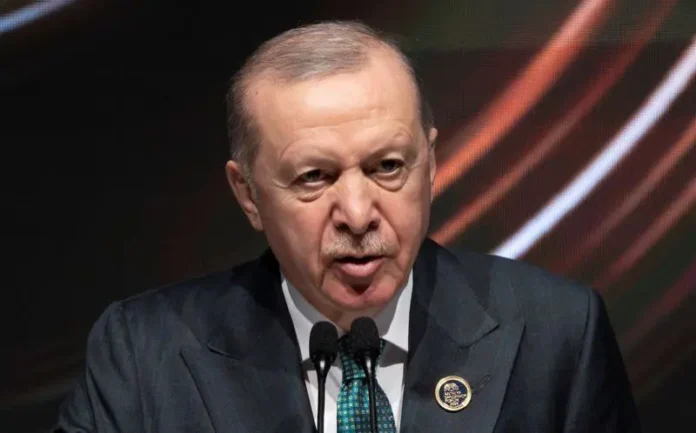
President Donald Trump confirmed this week that he will travel to Ankara, Turkey, for the 36th NATO leaders’ summit on July 7-8, his first in-person participation in an alliance summit since returning to the White House. Speaking in the Oval Office during a meeting with NATO Secretary General Mark Rutte, Trump was unusually candid about his reasons for attending. “Well, except for the fact that it was being held in Turkey by President Erdogan, I don’t think I would have gone to it,” Trump told reporters. “I’m going out of respect to President Erdogan.”
That remark aligned with reporting from multiple sources suggesting Trump had told Turkish President Recep Tayyip Erdogan during a phone call last month that he was attending the summit essentially as a personal favor. Turkish Foreign Minister Hakan Fidan confirmed that dynamic publicly, telling reporters that “if our president hadn’t been there, if Turkey hadn’t been there, Trump wouldn’t have come, and he would have effectively declared that he didn’t attach importance to it.” The comment was a remarkable admission from a NATO ally, effectively acknowledging that the alliance’s credibility in securing American engagement had come to depend on interpersonal relationships rather than institutional ties.
Secretary of State Marco Rubio offered a more formal framing of the stakes, telling the House Committee on Foreign Affairs that Trump’s participation in Ankara would mark “the most important meeting in NATO’s history.” Rubio emphasized that the alliance requires “significant changes” and that issues of burden-sharing, military readiness, and the distribution of security responsibilities between the United States and European allies are all on the agenda. The United States remains a NATO member, Rubio said, while making clear that Washington expects substantive reforms from the gathering.
Erdogan confirmed this week that he anticipates holding bilateral talks with Trump on the summit sidelines. Speaking after a parliamentary group meeting, Erdogan told reporters a one-on-one meeting was “most likely” to happen, though he did not provide further details. The two leaders have maintained a notably close relationship since Trump’s return to power, with cooperation on issues ranging from the Gaza ceasefire to Turkey’s supportive role in the Iran memorandum of understanding that Trump has personally praised.
The summit will bring together leaders from all 32 NATO member states at the Bestepe Presidential Complex in Ankara, along with officials from Gulf and Asia-Pacific partner nations, including Japan, South Korea, Australia, and New Zealand. It is only the second time Turkey has hosted a NATO leaders’ summit, the first having taken place in Istanbul in 2004.
Why It Matters
Trump’s attendance at the Ankara summit is significant precisely because it has not been a foregone conclusion. Throughout his second term, Trump has repeatedly questioned the value of NATO, pressured European allies on defense spending, and maintained a posture of strategic ambiguity about American commitments to collective defense. His willingness to attend only because of his personal affinity for Erdogan — rather than out of institutional commitment to the alliance — reflects a fundamentally transactional approach to American foreign policy that has unsettled European capitals for the past year and a half.
The summit itself arrives at one of the most consequential moments for the alliance since the Cold War. NATO is grappling simultaneously with Russian aggression on its eastern flank, the fallout from the U.S.-Iran war, debates over defense spending thresholds, and a broader question about whether the alliance can function effectively when its leading member’s participation is contingent on the personal diplomacy of individual host leaders. European governments have had to reckon with the possibility of a United States that engages with NATO selectively and on its own terms.
For Turkey, hosting the summit under these conditions represents a significant diplomatic achievement and a demonstration of Erdogan’s unique leverage with Trump. Ankara has managed to maintain strong bilateral ties with Washington while also pursuing an independent foreign policy that includes weapons purchases from Russia, regional mediation roles, and economic engagement with countries at odds with the United States. That balancing act has placed Turkey in an unusual position as a bridge between the White House and an alliance that Trump views with skepticism.
The summit also provides an opportunity to advance the Trump administration’s primary NATO demand: dramatically higher defense spending from European members. Trump has pushed for member nations to spend the equivalent of five percent of their GDP on defense and resilience combined, a threshold that would require most European allies to roughly double or triple their current budgets.
Economic and Global Context
Defense spending is the central economic issue on the NATO summit agenda. Most European members are only now approaching or exceeding the alliance’s longstanding two percent of GDP spending target. Trump’s demand for five percent represents an enormous fiscal commitment for countries already managing tight budgets, elevated debt levels, and competing domestic spending pressures. Turkey has signaled ambition on this front: Erdogan’s communications director stated this week that Ankara aims to reach a combined 3.5 percent core defense plus 1.5 percent resilience target by 2030.
The Iran war’s economic ripple effects will also be present in Ankara. The conflict has strained U.S. relations with several European NATO allies who expressed objections to American military action or raised concerns about the re-opening of the Strait of Hormuz. Those disagreements have created lingering friction that the summit’s organizers will be working to contain. Energy security, supply chain disruptions, and the economic costs of sustained regional instability will provide important background context for the defense spending debates.
The summit’s Indo-Pacific dimension — with Japan, South Korea, Australia, and New Zealand represented at the foreign ministers level — reflects NATO’s evolving self-conception as a global rather than purely transatlantic security organization. That expansion of scope carries its own economic implications, particularly regarding technology, supply chains, and investment in defense industrial capacity across member and partner nations.
Implications
The Ankara summit will be closely watched as a test of whether the Trump administration is prepared to engage constructively with the alliance on structural reforms or whether the gathering will produce public friction and mixed signals. Given Trump’s history of using NATO summits as platforms to pressure allies publicly, European governments are approaching July with cautious expectations. The bilateral meeting between Trump and Erdogan may produce agreements on specific bilateral or regional issues, but its impact on broader NATO cohesion remains uncertain.
For congressional Republicans, Trump’s NATO engagement provides a diplomatic talking point as the midterm campaign heats up. A successful summit that produces concrete commitments on defense spending could be framed as a foreign policy achievement. A contentious or disruptive summit, on the other hand, would add to the list of issues opponents could use to argue that Trump’s approach to alliances undermines rather than strengthens American security.
Longer term, the Ankara summit may define the terms of the NATO relationship for years to come. If the summit establishes a new consensus on burden-sharing and defense investment, it could stabilize the alliance’s internal dynamics through the remainder of Trump’s term. If it fails to produce that consensus, the structural questions about America’s role in European security will remain unresolved, and the alliance will head into an uncertain future with its foundational commitments still subject to debate.
Sources
“Erdogan says bilateral talks with Trump likely at NATO summit in Turkey”

