Story Highlights
- The average Trump primary endorsement in 2026 has come roughly seven months before the general election, compared to about seven weeks before in the 2018 midterms
- Nearly 75 percent of Trump’s endorsements this cycle have gone to incumbents, up from about two-thirds of his overall total since 2017
- Trump has issued more than 1,000 endorsements in House, Senate, and governor’s races since his first term began
What Happened
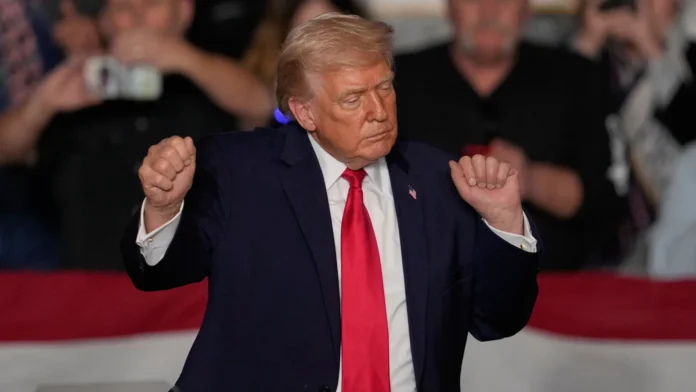
An analysis by NPR of more than a thousand endorsements President Trump has made in House, Senate, and gubernatorial races over the past decade found a significant shift in how he deploys what has become one of the most powerful tools in Republican primary politics: a Truth Social post offering his “Complete and Total Endorsement.” During the 2018 midterm cycle, the average Trump primary endorsement arrived about seven weeks before the relevant primary election. In the current 2026 cycle, that average has stretched to roughly seven months, meaning Trump is now making his preferences known well over a year before the November general election in many cases.
The analysis also found that an increasing share of those endorsements are directed at incumbents rather than open-seat candidates or challengers. Since 2017, roughly two-thirds of Trump’s endorsements overall have gone to sitting officeholders; in the current cycle, that figure has climbed to nearly 75 percent. Many of these endorsements follow a consistent template regardless of the specific race, often praising a member’s record on farming, tax cuts, deregulation, domestic manufacturing, energy production, border security, and military support in similar language across dozens of separate posts, as seen in a November 2025 endorsement of Arkansas Representative Rick Crawford, who went on to run unopposed in his primary.
The pattern reflects a deliberate strategic choice by Trump’s political operation to use early endorsements as a tool for clearing primary fields and discouraging would-be challengers from mounting expensive campaigns against incumbents perceived as loyal, rather than waiting until closer to election day to weigh in on competitive races. This approach has not been applied uniformly, however; Trump has notably stayed out of several high-profile, competitive primaries this cycle, including in Texas and, for an extended period, in Georgia’s Senate race, where he ultimately issued a late endorsement of Representative Mike Collins only in the final hours before voting concluded in the June 16 runoff.
The Georgia Senate runoff illustrated both the power and the limits of Trump’s current approach. Collins, who received Trump’s endorsement just before the runoff concluded, defeated former football coach Derek Dooley, who had been backed by term-limited Georgia Governor Brian Kemp. In the simultaneous gubernatorial runoff, however, Trump’s endorsed candidate, Lieutenant Governor Burt Jones, lost to self-funded businessman Rick Jackson, who spent more than $100 million of his own money campaigning, marking a rare instance of a Trump-endorsed candidate losing a primary outright despite the president’s continued popularity within the party.
Why It Matters
For Republican strategists, the shift toward earlier, incumbent-focused endorsements reflects a calculated effort to reduce the financial and political costs associated with contested primaries, since a Trump endorsement delivered early enough can often discourage a serious primary challenge from ever materializing, preserving both incumbent resources and party unity heading into the general election. With Republicans defending narrow majorities in both the House and Senate, minimizing internal party conflict in safe and lean-Republican seats carries real strategic value heading into a midterm cycle that historically favors the party out of power.
At the same time, the Georgia governor’s race result demonstrates that Trump’s influence, while still substantial, is not absolute, particularly in races where a well-funded, self-financed candidate can compete directly with the financial advantages an endorsement typically confers. This nuance matters for Republican officials gauging how much weight to place on a Trump endorsement in their own electoral calculations, especially in states where local dynamics, such as Kemp’s continued popularity in Georgia, can counterbalance national-level endorsements.
For voters, the pattern raises broader questions about how primary competition functions within the contemporary Republican Party. Early, incumbent-focused endorsements can reduce voters’ opportunities to consider alternative candidates during the competitive phase of a primary, effectively narrowing the field before grassroots momentum can build around challengers, a dynamic that cuts both toward greater party stability and toward reduced primary accountability depending on one’s perspective.
For the party’s midterm prospects overall, the strategic use of endorsements to protect incumbents takes on heightened importance given the math Republicans face: historical trends suggest the party controlling the White House typically loses congressional seats in midterm elections, making the preservation of every currently held seat, including through smooth, unified primary outcomes, a meaningful component of the broader strategy to retain congressional majorities.
Economic and Global Context
While endorsement strategy is primarily a political rather than economic story, it intersects directly with the financial dynamics shaping the 2026 midterms. Republican national party committees have maintained a substantial fundraising advantage over their Democratic counterparts throughout the cycle, and clearing primary fields through early endorsements allows that financial advantage to be directed more efficiently toward general election competition rather than expended on contested primaries, a strategic benefit that compounds the party’s existing fundraising edge.
The Georgia governor’s race also illustrates a related financial dynamic reshaping primary politics nationally: the increasing ability of extremely wealthy, self-funded candidates to compete directly against traditional endorsement-driven campaigns. Jackson’s more than $100 million in personal spending allowed him to overcome both Trump’s endorsement and Kemp’s implicit preference for a more traditional candidate, suggesting that even an early presidential endorsement has limits when facing sufficient self-funded financial firepower.
More broadly, the timing shift toward earlier endorsements reflects the compressed nature of the current election cycle relative to historical midterms, with both parties and their allied outside spending groups increasingly front-loading strategic decisions, fundraising pushes, and candidate recruitment efforts well over a year before election day, a trend likely to continue shaping how future midterm cycles unfold regardless of which party holds the White House.
Implications
In the near term, expect Trump’s endorsement operation to continue prioritizing incumbent protection in the remaining months before the November general election, particularly in competitive districts where Republican incumbents face serious primary challenges from either more populist or more establishment-aligned candidates within the party.
For Republican incumbents, an early Trump endorsement increasingly functions as a powerful deterrent against primary challenges, providing both fundraising benefits and a signal to potential challengers that contesting the seat will be an uphill battle, a dynamic incumbents in both parties have historically sought but rarely achieved with this degree of reliability.
For self-funded or insurgent candidates, the Georgia governor’s race result offers a template, however expensive, for overcoming a Trump endorsement through substantial personal financial investment, a strategy likely to be studied by other wealthy prospective candidates considering future challenges to the president’s preferred picks in competitive open-seat races.
For the broader trajectory of the midterms, how effectively Trump’s endorsement strategy translates into general election success, rather than simply primary field-clearing, will become clearer as the focused incumbent-protection races move toward November, with Republican strategists watching closely whether reduced primary friction translates into stronger general election performance in a historically difficult midterm environment for the party in power.
Sources

