Story Highlights
- The Supreme Court ruled 6-3 that Trump’s executive order ending birthright citizenship violated the 14th Amendment, marking a major defeat for the administration
- In a separate ruling, the court expanded presidential removal power over independent agency officials, strengthening Trump’s control over the federal bureaucracy
- The court struck down campaign finance coordination limits in a case brought by Republican Party committees and then-Senate candidate JD Vance
What Happened
The Supreme Court announced its final opinions of the term this week, delivering rulings on some of the most closely watched cases in recent memory. In the highest-profile decision, the court rejected Donald Trump’s January 2025 executive order that sought to end automatic citizenship for children born on U.S. soil to parents without permanent legal status. Writing for a 6-3 majority, Chief Justice John Roberts reaffirmed the longstanding interpretation of the 14th Amendment, writing, “Citizenship, then and now, was the right to have rights… We keep that promise today.” Justices Clarence Thomas, Samuel Alito, and Neil Gorsuch dissented, with Thomas arguing the amendment was primarily intended to protect formerly enslaved individuals rather than children of foreign nationals.
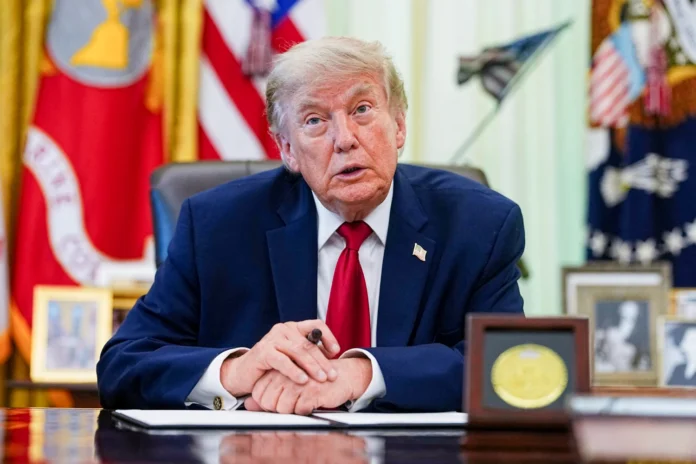
Trump, who attended oral arguments in person in April, an extraordinary move for a sitting president, responded by urging Congress to codify restrictions on birthright citizenship through legislation rather than a constitutional amendment. “Congress should start TODAY to work on ending expensive and unfair to our Country, Birthright Citizenship,” he wrote on Truth Social. Republican senators including Lindsey Graham of South Carolina pledged to continue pursuing legislative and constitutional remedies, with Graham stating he would make the issue a top priority if he becomes Senate Judiciary Committee chairman next year.
The birthright citizenship ruling followed two other significant defeats for the administration earlier in the term. In February, the court ruled 6-3 that Trump exceeded his authority by imposing sweeping global tariffs under the International Emergency Economic Powers Act, finding the law contains no reference to tariffs or duties and therefore does not authorize the president’s actions. In April, the court also weakened a key provision of the Voting Rights Act in Louisiana v. Callais, ruling that compliance with Section 2 could not justify Louisiana’s use of race in redrawing congressional districts, a decision with implications for redistricting fights nationwide.
However, the term also delivered meaningful wins for presidential authority. In Trump v. Slaughter, the court’s conservative majority struck down long-standing removal restrictions for members of the Federal Trade Commission, overturning a 91-year-old precedent that had shielded certain independent agency officials from being fired without cause. Roberts, writing for the majority, stated that “subordinates who exercise the President’s power are subject to removal by him,” a ruling that significantly expands presidential control over independent regulatory bodies. Separately, in a case brought by the National Republican Senatorial Committee and then-candidate JD Vance, the court struck down federal limits on how political parties coordinate spending with their own candidates, a decision Justice Brett Kavanaugh wrote in the majority opinion would let “all political parties… participate more freely and compete more fully in the political process.”
Why It Matters
The birthright citizenship ruling represents one of the most consequential defeats of Trump’s second term, definitively closing off a signature immigration policy the administration had pursued since his first day back in office. The decision reaffirms more than a century of settled constitutional interpretation and forecloses any path to changing citizenship rules through executive action alone, meaning any future changes would require either congressional legislation, which faces steep political hurdles, or the extraordinarily difficult process of a constitutional amendment.
At the same time, the court’s ruling in Trump v. Slaughter carries profound long-term significance for the structure of the federal government, fundamentally strengthening presidential control over independent agencies that Congress had historically insulated from direct political pressure. This shift could reshape how agencies ranging from the FTC to other independent commissions operate under this and future administrations, consolidating executive authority in ways that will likely outlast Trump’s own presidency.
The campaign finance ruling carries direct relevance for the upcoming midterm elections, granting national and state party committees significantly greater flexibility to coordinate spending directly with their preferred candidates. Republican committee leaders celebrated the decision as a “decisive First Amendment victory,” and the ruling is likely to reshape how both parties structure campaign spending strategies heading into November, potentially benefiting whichever party proves more organizationally disciplined in leveraging the new coordination flexibility.
Economic and Global Context
The tariff ruling carries substantial economic implications that extend well beyond the immediate legal question. By striking down Trump’s use of emergency powers to impose sweeping global tariffs, the court effectively forced the administration to pursue trade policy through other legal authorities, a shift that has already influenced decisions like this week’s approach to the USMCA trade agreement, where the administration opted for negotiated bilateral pressure rather than unilateral emergency tariff authority.
The birthright citizenship debate also carries international dimensions, given that Trump has repeatedly characterized the policy as uniquely American folly, despite roughly three dozen countries worldwide, including Canada, Brazil, Mexico, and Argentina, maintaining similar automatic citizenship provisions. The ruling ensures the United States remains within this broader international norm rather than adopting the more restrictive citizenship models common in parts of Europe and Asia.
The expansion of presidential removal power under Trump v. Slaughter could also have ripple effects on regulatory predictability that matter to global markets and international investors, given that agencies like the FTC play significant roles in antitrust enforcement and consumer protection matters affecting multinational corporations operating in the United States.
Implications
In the near term, expect renewed legislative efforts from congressional Republicans to pursue statutory changes to birthright citizenship rules, though such efforts face significant hurdles given the need for sixty votes to overcome a Senate filibuster. Constitutional amendment efforts, while symbolically important to some conservative lawmakers, remain functionally unlikely given the extraordinarily high bar required for ratification.
For federal agencies and their leadership, the Trump v. Slaughter decision will likely trigger a wave of personnel changes and legal challenges as the administration moves to exercise its newly affirmed removal authority over independent commission members appointed by prior administrations. Expect continued litigation testing the outer boundaries of this expanded presidential power in the months ahead.
For political campaigns heading into the midterms, both parties will need to quickly adapt fundraising and coordination strategies to account for the elimination of previous campaign finance coordination limits, a shift that could meaningfully alter how competitive House and Senate races are financed and run this cycle.
Sources

