Work authorizations for more than 330,000 Haitian and 4,000 Syrian immigrants are set to expire on July 10, following a Supreme Court ruling that cleared the way for the Trump administration to end Temporary Protected Status for both groups. The decision has triggered alarm among healthcare providers who rely heavily on immigrant labor to staff nursing homes and home care agencies in states with large TPS populations. The looming deadline marks one of the most consequential immigration policy shifts of the president’s second term.
Story Highlights
- The Supreme Court ruling allows the administration to end TPS protections for Haitian and Syrian nationals
- Existing Employment Authorization Documents will expire on July 10, according to the Department of Homeland Security
- Massachusetts, Florida and New York hold the largest populations of Haitian TPS holders
What Happened
The Supreme Court issued a ruling last week clearing the way for the Trump administration to terminate Temporary Protected Status protections for Haitian and Syrian nationals living in the United States. The decision affects more than 330,000 Haitians and roughly 4,000 Syrians who had been granted the status, which shields individuals from countries experiencing armed conflict, natural disasters or other unsafe conditions from deportation and allows them to legally work in the country. Following the ruling, the Department of Homeland Security announced that existing Employment Authorization Documents for affected individuals will expire on July 10, giving recipients only days to prepare for the loss of their legal work status.
The Trump administration has released limited information about how it intends to carry out the withdrawal of protections, according to immigration attorneys tracking the case. Legal advocates are now advising TPS holders to take precautionary steps, including signing powers of attorney to trusted individuals and, for parents with American-born children, transferring guardianship arrangements in case family separations occur as a result of enforcement actions tied to the ruling.
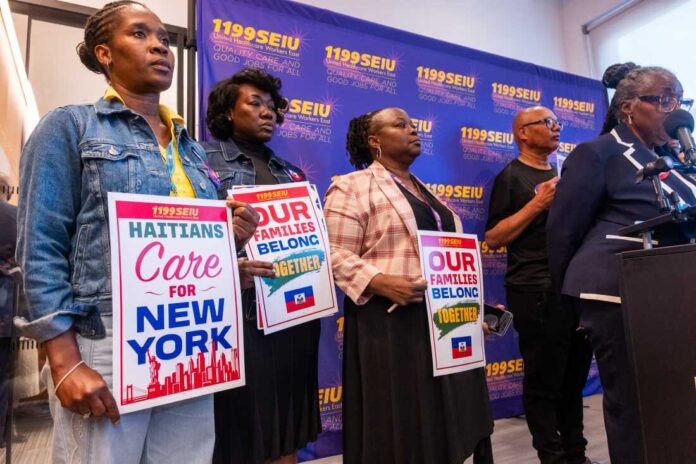
The healthcare sector has emerged as one of the most vocal stakeholders opposed to the policy shift. Healthcare workers rallied at a Manhattan union headquarters following the ruling to express solidarity with Haitian and Syrian communities facing the loss of their work authorizations. Industry experts warn the change could have a severe impact on the nationwide healthcare workforce, which relies heavily on immigrant labor, particularly in nursing homes and home care services in states such as Massachusetts, Florida and New York.
Massachusetts holds the third-largest population of Haitian TPS recipients in the country, with approximately 19,000 individuals, trailing Florida’s 158,000 and New York’s 40,000. Healthcare researchers who have studied the administration’s broader deportation plans warn that removing TPS protections from immigrant caregivers could exacerbate existing staffing shortages in nursing homes and home care agencies that already struggle to recruit sufficient workers.
Why It Matters
The ruling represents a significant test of how far the administration can go in unwinding humanitarian immigration protections established under prior administrations. Temporary Protected Status has historically been renewed repeatedly for populations facing prolonged instability in their home countries, and its termination for Haitian and Syrian nationals marks one of the most consequential rollbacks of the program’s use in recent years.
For American healthcare policy, the timing is particularly fraught. The sector has faced a persistent staffing crisis in long-term care and home health services, positions frequently filled by immigrant workers willing to take on physically demanding, lower-wage caregiving roles. Removing legal work authorization from tens of thousands of caregivers threatens to intensify existing shortages just as the aging U.S. population continues to increase demand for these services.
For affected families, the compressed timeline between the ruling and the expiration of work documents leaves little room for orderly transition, raising the prospect of abrupt job losses, family separations and, in some cases, forced return to countries still experiencing significant instability. Haiti in particular continues to face ongoing political unrest following the assassination of its president in recent years, complicating the practical reality of return for many TPS holders.
Economic and Global Context
Healthcare economists who have studied the impact of the administration’s broader deportation agenda warn that removing immigrant labor from the healthcare workforce could have outsized effects given how concentrated that labor is in specific regions and care settings. States with large Haitian populations, including Florida, New York and Massachusetts, face the most acute exposure to potential staffing disruptions in nursing homes and home health agencies.
Temporary Protected Status has covered individuals from 17 countries deemed by the federal government to face unsafe conditions, a program designed to provide humanitarian relief rather than a pathway to permanent residency. The Trump administration has pursued termination of TPS protections for multiple national-origin groups since taking office, part of a broader effort to reduce the population of individuals with temporary legal status in the country.
Globally, the decision adds to the administration’s expanding immigration enforcement agenda, which has included worksite crackdowns, expanded ICE arrest quotas and continued construction of border infrastructure. The TPS termination specifically intersects with ongoing instability in Haiti and Syria, both of which continue to experience significant humanitarian and security challenges that originally justified the protected status designation.
Implications
For TPS holders, the coming days will be critical as work authorizations lapse, with many families forced to make immediate decisions about legal representation, guardianship arrangements and potential relocation. Immigration attorneys are urging affected individuals to seek legal counsel promptly given the compressed timeline.
For healthcare employers, the termination of work authorizations for tens of thousands of caregivers could force rapid workforce adjustments in nursing homes and home care agencies already operating with thin staffing margins, particularly in states with large Haitian populations.
For policymakers, the ruling is likely to fuel continued legal challenges and legislative efforts from Democratic lawmakers seeking to extend protections for affected populations, even as the administration signals its intent to continue narrowing the scope of humanitarian immigration programs through the remainder of its term.
Sources
The U.S. healthcare system is in crisis. A Supreme Court ruling could make things worse

