The Trump administration issued federal grand jury subpoenas to four New York Times journalists after the paper reported that Secret Service concerns forced President Trump to swap planes when leaving last week’s NATO summit in Turkey. The move, delivered in part by agents appearing at reporters’ homes, marks a dramatic escalation in the administration’s ongoing conflict with the press over national security leaks. Press freedom advocates have called the action an unprecedented intimidation tactic, while the Justice Department insists it is targeting leakers, not journalists.
Story Highlights
- DOJ subpoenaed New York Times reporters Julian Barnes, Eric Lipton, Tyler Pager, and Eric Schmitt to testify before a Manhattan grand jury
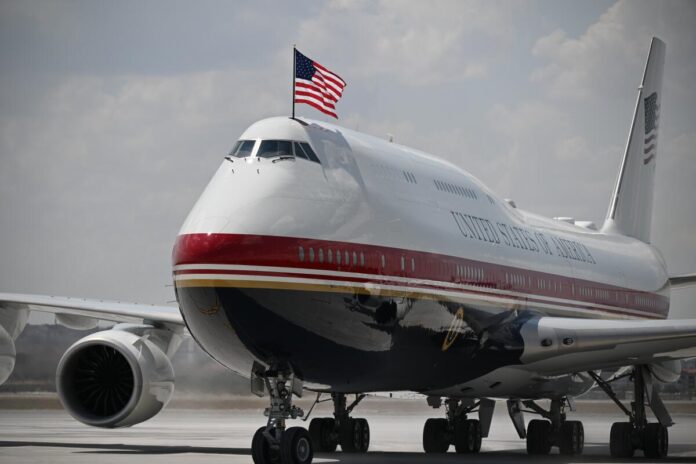
- The reporters had written that Secret Service concerns led Trump to leave Turkey aboard the older Air Force One instead of the new Qatari-donated jet
- FBI Director Kash Patel spent roughly eight hours at the White House Friday overseeing the leak investigation
- The subpoenas were issued by U.S. Attorney Jay Clayton, recently nominated by Trump to be the next director of national intelligence
What Happened
The dispute originated with a New York Times story published July 9, reporting that the Secret Service had urged President Trump to leave the NATO summit in Ankara, Turkey, aboard the older Air Force One rather than the new Boeing 747 gifted by Qatar, citing security concerns about the newer aircraft’s defensive capabilities. The article, citing anonymous sources, suggested the new jet may not have been fully retrofitted with advanced missile defense systems and other protective modifications typically standard on presidential aircraft.
Before the story ran, a senior FBI official contacted the Times and asked that it withhold publication, citing an unspecified national security concern, and separately asked the paper to identify its sources. The Times declined both requests and published the piece. Trump has publicly denied that security concerns drove the plane switch, claiming instead that the swap was intended to give U.S. service members stationed at RAF Mildenhall in England “a chance to tour the aircraft.” Multiple outlets, including CNN, have reported that security personnel were in fact more comfortable with Trump flying on the older aircraft.
On Friday, Kash Patel, the FBI director, met with White House officials for an extended session, reportedly canceling a planned trip to Chicago to spend roughly eight hours coordinating the leak investigation from the White House rather than FBI headquarters. Later that evening, federal subpoenas were delivered to four Times reporters, in some cases by agents showing up directly at their homes, ordering them to testify before a grand jury in Manhattan the following week regarding “an alleged violation of federal criminal law.”
The subpoenas were issued by Jay Clayton, the U.S. Attorney for the Southern District of New York, who was nominated last month by Trump to become the next director of national intelligence. The Justice Department’s rapid-response office responded to criticism by stating that reporters were not the actual targets of the investigation, but rather the individuals suspected of leaking classified or sensitive security information to them. “We value and appreciate the important role that the press plays in this country,” the DOJ statement read, while affirming the department would continue investigating unauthorized disclosures.
David McCraw, the Times’ senior vice president and deputy general counsel, condemned the subpoenas as an extraordinary intrusion, stating that federal agents appearing at reporters’ homes “should shock the conscience of any American who believes in the Constitution and the press freedom it protects.” The Reporters Committee for Freedom of the Press also criticized the move, saying it broke from longstanding Justice Department practice designed to protect journalists from being compelled to reveal sources except under narrow, well-justified circumstances.
Why It Matters
This episode represents one of the most direct confrontations yet between the Trump administration and a major American news organization over national security reporting. It follows a broader pattern of legal and financial pressure the administration has applied to media outlets since Trump returned to office, including settlements with ABC News and CBS News’ 60 Minutes, along with lawsuits and other federal actions against outlets including the Wall Street Journal, the Washington Post, and the BBC.
The case tests the boundaries of press protections under Justice Department guidelines, which generally require senior-level approval and a high evidentiary bar before subpoenas can be issued to journalists in leak investigations. Legal experts note that while the government retains legitimate authority to pursue individuals who unlawfully disclose classified information, using compulsory process against reporters themselves raises serious First Amendment concerns and could chill future reporting on sensitive government operations, particularly those involving presidential security.
The dispute also underscores a genuine national security question independent of the media freedom debate: whether the new Air Force One, a $400 million aircraft donated by Qatar, was adequately equipped with defensive countermeasures before being used to transport the president through what officials have called a hostile operating environment given heightened tensions with Iran. If the reporting is accurate, it points to a substantive gap in presidential protection during an active period of military confrontation in the Middle East.
For the broader press corps, the episode adds to a growing list of similar actions, including a prior FBI search of a Washington Post reporter’s home and now-withdrawn subpoenas issued to journalists at the Post and the Wall Street Journal earlier this year. Each new instance raises the stakes for how aggressively the government is willing to pursue journalists rather than solely the government employees suspected of leaking.
Economic and Global Context
The controversy comes at a moment when the administration is managing an active military confrontation with Iran, making presidential security an unusually sensitive and high-stakes topic. The new Air Force One’s questioned readiness intersects directly with broader concerns about the safety of U.S. leadership amid Iranian threats, including reported statements from Iranian officials regarding potential retaliation against American leadership following weeks of exchanged strikes near the Strait of Hormuz.
Qatar’s $400 million donation of the aircraft itself remains a point of ongoing scrutiny, having drawn criticism from ethics watchdogs and some lawmakers when it was first announced due to questions about foreign gifts to sitting presidents and the costs associated with retrofitting the jet to meet U.S. security standards. The current dispute over whether that retrofitting was completed in time adds a new dimension to those earlier concerns.
Globally, the episode may affect how allied nations and adversaries alike perceive the robustness of U.S. presidential security protocols, particularly during high-profile international travel such as NATO summits. Any perceived vulnerability could factor into future diplomatic and security planning for presidential travel to hostile or high-risk regions.
Domestically, the dispute adds to an already tense relationship between the executive branch and major news organizations, with implications for how financial markets and international observers gauge press freedom conditions in the United States, an issue increasingly referenced in global press freedom rankings and assessments by international watchdog organizations.
Implications
The New York Times is expected to challenge the subpoenas in court, likely seeking to have them quashed or significantly narrowed before the scheduled grand jury testimony date. Legal experts anticipate a protracted fight, given the paper’s history of resisting similar demands and the department’s own acknowledgment that it previously withdrew comparable subpoenas issued to the Washington Post and Wall Street Journal after those outlets pushed back.
For the Trump administration, the outcome will help determine how aggressively it can continue applying legal pressure to media organizations over national security reporting without facing significant judicial or political pushback. A favorable outcome for the DOJ could embolden further use of grand jury subpoenas in future leak investigations.
For journalists and news organizations more broadly, the case will likely influence internal newsroom decisions about how aggressively to pursue and publish sensitive national security stories, particularly those involving direct government requests to withhold publication.
Congressional Democrats and some Republicans concerned about press freedom are likely to raise questions about the subpoenas in coming weeks, while the underlying question of Air Force One’s security readiness may prompt additional oversight hearings independent of the leak investigation itself.
Sources

