The Pentagon has disbursed nearly 3 million dollars in compensation to personnel affected by so-called Havana Syndrome, marking the first payments made under the Havana Act by any presidential administration since the mysterious illness first surfaced nearly a decade ago. The milestone comes as the Trump administration also renamed the interagency team investigating the condition, signaling a renewed focus on identifying its cause. For the diplomats, spies and military personnel who have suffered symptoms since 2016, the payments represent a long-awaited acknowledgment after years of government uncertainty.
Story Highlights
- The Department of Defense disbursed nearly $3 million in first-ever Havana Act compensation payments
- The condition has affected U.S. personnel since 2016, with symptoms including headaches, hearing loss and cognitive difficulties
- The Pentagon renamed its investigative team from Anomalous Health Incidents to Directed Energy Bioeffects
What Happened
The Department of Defense announced Friday that it has disbursed nearly 3 million dollars in compensation to personnel affected by Havana Syndrome, describing the payments as the first ever made under the Havana Act by any U.S. administration. The department said in a statement that it is “prioritizing the care of affected personnel” and framed the disbursement as fulfilling congressional intent regarding what it termed “non-kinetic threats,” a reference to the mysterious symptoms that have affected American personnel stationed abroad since 2016.
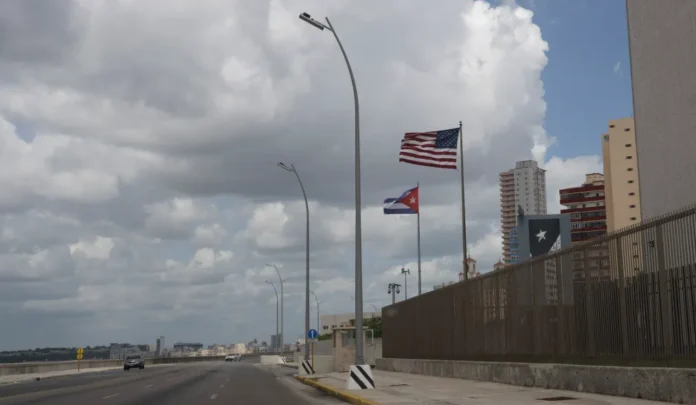
Havana Syndrome first came to public attention when U.S. diplomats stationed in Havana, Cuba, reported falling ill after hearing high-pitched sounds at night, fueling early speculation that a foreign adversary had deployed an unidentified sonic or microwave weapon against them. Symptoms reported by affected personnel have included headaches, dizziness, nausea, hearing loss, memory problems and difficulty concentrating. Similar cases were later reported among embassy staff and government personnel in China, Europe, and even in Washington, D.C. itself, expanding the scope of concern well beyond the initial Cuba-based incidents.
The Havana Act, passed by Congress in 2021, established a framework for compensating personnel who experienced qualifying brain injuries connected to the syndrome, but until Friday’s announcement, no administration had made an actual payment under the law. Alongside the compensation announcement, the Pentagon’s Office of the Under Secretary of War for Research and Engineering renamed its Multifunctional Team on Anomalous Health Incidents to the Multifunctional Team on Directed Energy Bioeffects, though officials said the renamed unit will continue performing the same interagency coordination and investigative functions.
The cause of Havana Syndrome remains contested within the U.S. government. An intelligence assessment released in early 2025 concluded it was “highly unlikely” that a foreign adversary was responsible for the reported symptoms, a finding that has not settled the debate among victims or independent researchers. A 2024 joint investigation by several media outlets, including a well-known CBS newsmagazine, previously linked the condition to the activities of a Russian intelligence unit, an allegation the Kremlin has repeatedly denied as baseless.
Why It Matters
For the personnel affected, many of whom have described years of unexplained physical and cognitive symptoms without formal government acknowledgment or financial support, the first compensation payments represent a significant, if overdue, validation of their experiences. Advocacy groups representing victims have long argued that the slow pace of compensation compounded the difficulty of dealing with debilitating symptoms while awaiting scientific clarity on their cause.
The unresolved question of what actually causes Havana Syndrome carries broader implications for how the U.S. government protects personnel serving overseas. If the condition does stem from a deliberate foreign attack using directed energy or another targeted mechanism, as some victims and independent investigators continue to suspect, the implications for diplomatic and intelligence security protocols would be substantial. If it does not, understanding the actual cause remains important for both the affected individuals’ care and the government’s credibility in assessing future unexplained health incidents.
The Pentagon’s decision to rename its investigative unit to explicitly reference “directed energy” suggests the department is not abandoning the theory that some form of energy-based mechanism may be involved, even as broader intelligence community assessments have downplayed the likelihood of foreign adversary involvement. That naming choice may fuel continued debate between victims’ advocates, who often believe a deliberate attack occurred, and intelligence officials who have grown skeptical of that explanation.
For taxpayers and policymakers, the episode also underscores the challenges of government accountability when dealing with contested, poorly understood health conditions affecting federal employees. The slow path to the first payments, nearly five years after the Havana Act’s passage, raises questions about bureaucratic processes for compensating personnel in future incidents involving ambiguous causation.
Economic and Global Context
While the roughly 3 million dollar disbursement is modest in the context of the overall federal budget, it represents the opening of what could become a larger and ongoing compensation stream if additional claims are approved in the future. The Havana Act permits payments for qualifying brain injuries, and the total financial obligation could grow substantially as more cases are reviewed and validated.
Internationally, the episode carries diplomatic significance given the persistent, unresolved allegations of Russian involvement. Even without definitive proof, the suspicion has strained an already difficult U.S.-Russia relationship and has periodically surfaced in discussions about broader hybrid threats facing American personnel stationed abroad, particularly as tensions between Washington and Moscow remain elevated over the war in Ukraine.
The condition’s documented spread beyond Cuba, to China, Europe and domestic U.S. locations, also reflects a broader concern among national security officials about the vulnerability of American personnel to unconventional threats wherever they are stationed, reinforcing investment in defensive and diagnostic capabilities regardless of the syndrome’s ultimate cause.
Implications
In the near term, the Pentagon is expected to continue processing additional claims under the Havana Act, with the initial payments likely serving as a template for how future compensation determinations will be handled. Victims’ advocacy organizations will be watching closely to see whether the pace of approvals accelerates now that a first tranche of payments has been made.
For the intelligence and defense communities, the renamed Directed Energy Bioeffects team will continue its investigative work, though its ability to produce a definitive answer about the syndrome’s cause remains uncertain given years of inconclusive assessments. Any future findings, whether confirming or ruling out foreign involvement, would carry significant implications for how the U.S. protects personnel serving overseas.
For Congress, the delayed rollout of Havana Act payments may prompt renewed oversight of how quickly executive agencies implement compensation programs enacted into law, ensuring that legislative intent translates into timely support for affected federal employees rather than years of administrative delay.
Source

