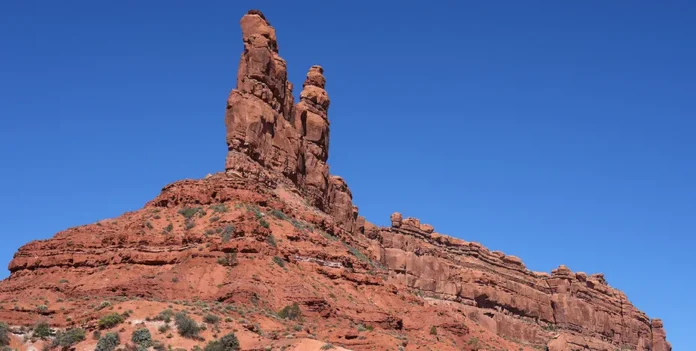
President Trump signed executive orders this week dramatically reducing the size of the Bears Ears and Grand Staircase-Escalante national monuments in Utah, cutting nearly 3 million combined acres of protected federal land to open the areas to mining and drilling. The move revives a fight Trump first launched during his initial term, one that was subsequently reversed by President Biden, underscoring how national monument designations have become a recurring flashpoint between Republican and Democratic administrations. Utah’s Republican congressional delegation celebrated the decision as a long-sought return of local control over federal lands.
Story Highlights
- Trump’s executive orders cut Grand Staircase-Escalante from 1.87 million acres to 182,000 acres and Bears Ears from 1.36 million acres to 121,000 acres
- The reductions, roughly 90 percent for each monument, open the areas to coal, uranium mining, and other resource development
- Both monuments were previously shrunk during Trump’s first term before Biden restored their original boundaries in 2021
What Happened
Donald Trump signed a pair of executive orders Monday in the Oval Office reducing the size of Utah’s Bears Ears and Grand Staircase-Escalante national monuments, cutting their combined footprint by approximately 3 million acres. Grand Staircase-Escalante will shrink from 1.87 million acres to 182,000 acres, while Bears Ears will be reduced from 1.36 million acres to 121,000 acres, according to figures released by the White House. Trump signed the orders under the authority of the Antiquities Act, the 1906 law that grants presidents power to designate and, according to the administration’s legal interpretation, modify areas of historic, cultural, or scientific significance.
The signing ceremony was attended by Utah’s full congressional delegation, including Senators Mike Lee and John Curtis, Governor Spencer Cox, and House Speaker Mike Schultz. “They took the land from the people quite honestly,” Trump said during the ceremony. “We’re giving it back.” Cox praised the decision, arguing that the monuments’ previous boundaries were excessively large and had constrained economic development opportunities for the state, including grazing, recreation access, and mineral extraction.
The move mirrors action Trump took during his first term in 2017, when he reduced Bears Ears by approximately 85 percent and Grand Staircase-Escalante by nearly half. Those reductions were later reversed by President Joe Biden in 2021, who restored the monuments’ original boundaries citing their cultural, spiritual, and prehistoric significance. Senator Lee told reporters that the current effort to shrink the monuments began more than a year ago, involving extended discussions with local stakeholders and Interior Department officials following Trump’s re-election.
Grand Staircase-Escalante, established by President Bill Clinton in 1996, contains large coal reserves alongside its notable rock formations and dinosaur fossil sites. Bears Ears, designated by President Barack Obama in 2016, holds significant uranium deposits along with ancestral Puebloan dwellings, petroglyphs, and sites considered sacred by multiple Native American tribes. The monument has been jointly managed under an agreement between tribal nations and federal agencies, a structure that critics of Trump’s order argue was bypassed without adequate tribal consultation.
Tribal leaders expressed strong opposition to the reduction. Davina Smith-Idjesa, a citizen of the Navajo Nation and co-chair of the Bears Ears Inter-Tribal Coalition, said the decision was “heartbreaking” and argued that federal officials had sidestepped legal obligations to consult with affected tribal nations. “This is a living cultural site that holds our histories, our ceremonies, our traditional foods and medicines and our ancestors’ footprints,” she said.
Why It Matters
The reductions represent a significant victory for Utah Republicans and resource development advocates who have long argued that the expansive monument boundaries established under Clinton and Obama unnecessarily restricted the state’s ability to develop mineral resources and manage public lands according to local priorities. The decision reflects the administration’s broader push to expand access to coal, uranium, and other resources on federal lands as part of its energy policy agenda.
For Native American tribes with cultural and historical ties to the Bears Ears region, the decision represents a significant setback to co-management arrangements that had been negotiated in recent years, raising questions about the durability of federal commitments to tribal consultation on land management decisions that affect sacred sites.
The recurring back-and-forth over these monuments’ boundaries, first designated, then shrunk under Trump, restored under Biden, and now shrunk again, illustrates the volatility surrounding public lands policy when it becomes tied to presidential Antiquities Act authority rather than more durable congressional legislation. This pattern raises questions for both conservation advocates and resource development interests about the long-term stability of any executive action on monument boundaries.
Legal scholars have noted that the Antiquities Act itself does not explicitly authorize presidents to reduce monument sizes, a legal ambiguity that has fueled ongoing litigation and debate. Bureau of Land Management assessments have previously found limited oil and gas potential in the affected areas, though significant coal and uranium reserves remain a central economic argument for supporters of the reduction.
Economic and Global Context
The Trump administration has consistently emphasized expanding access to critical mineral resources, including uranium, framing such moves as essential to reducing reliance on foreign supply chains for materials used in energy production and manufacturing. Uranium deposits within the former Bears Ears boundaries have been cited by supporters as a strategically important resource for domestic nuclear energy and national security purposes.
Utah state officials have previously argued that the expansive monument designations under Biden hindered broader economic development goals for the region, a position formally stated in 2022 opposition filings when Utah challenged the restoration of the monuments’ original boundaries. Supporters of the reduction argue that opening these lands to responsible development could generate meaningful state and local tax revenue alongside job creation in rural Utah communities.
Environmental and conservation organizations have countered that opening these specific landscapes to mining and drilling could undermine tourism revenue tied to recreation activities such as hiking, canyoneering, and river rafting that depend on preserved natural landscapes, an economic sector that has grown substantially in southern Utah in recent years.
Implications
Legal challenges to the reductions are considered highly likely, mirroring the litigation that followed Trump’s first-term monument reductions. Conservation groups and tribal nations are expected to argue that the Antiquities Act does not grant presidents authority to shrink existing monuments, a legal question that has not been definitively resolved by federal courts.
For Native American tribes involved in the Bears Ears Inter-Tribal Coalition, the coming months will likely involve both legal action and continued public advocacy aimed at restoring protections, drawing on the successful precedent of Biden’s 2021 restoration following Trump’s first-term reductions.
Utah’s Republican delegation will likely tout the decision as a significant policy achievement heading into future election cycles, framing it as a restoration of local control over federal lands that had been previously expanded under Democratic administrations.
The long-term durability of Monday’s reductions remains uncertain given the established pattern of monument boundaries shifting between presidential administrations, meaning the ultimate fate of Bears Ears and Grand Staircase-Escalante may again depend on the outcome of future elections and any pending litigation.
Sources
Trump signs order shrinking Bears Ears, Grand Staircase monuments

