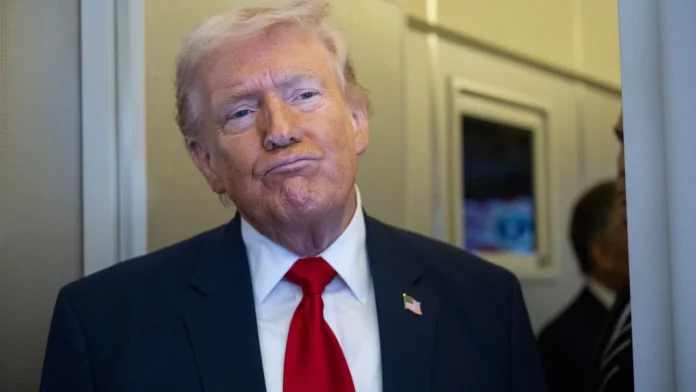
Washington is bracing for another possible government shutdown fight this fall, as Senate Democrats increasingly believe President Trump may refuse to sign a routine funding bill unless Republicans attach his long-sought voter identification legislation. The standoff threatens to replay the dysfunction that produced the longest Department of Homeland Security shutdown in history earlier this year, just weeks before the November midterms.
Story Highlights
- Senate Democrats say Trump may link government funding to passage of the SAVE America Act
- The bill would require proof of citizenship to register to vote and photo identification to cast a ballot
- Senate Republicans lack the 60 votes needed to overcome a Democratic filibuster on the measure
- The current government funding deadline falls just weeks before the Nov. 3 midterm elections
What Happened
Senate Democrats say they believe President Trump is increasingly likely to refuse to sign a short-term government funding package this fall unless it is paired with the SAVE America Act, the Safeguarding American Voter Eligibility legislation that would impose new photo identification and citizenship verification requirements on voters nationwide. Sen. Cory Booker of New Jersey accused the president of wanting to “shut down this government,” saying it reflects “his chaos, his continuing corruption and not being about serving the American people.”
The SAVE America Act has struggled for months to gain traction in the Senate despite Trump’s repeated public pressure campaign. The bill passed the House in February along party lines, but Senate Republicans, who hold a 53-47 majority, remain well short of the 60 votes required to overcome a Democratic filibuster. Multiple procedural attempts to advance the measure, including efforts to attach it to unrelated legislation during a marathon “vote-a-rama” session, have failed, with several Republicans, including Sens. Susan Collins, Lisa Murkowski and Thom Tillis, joining Democrats in blocking the effort at various points.
Trump has nonetheless continued to insist the bill is a top priority, at one point canceling the planned signing of a separate bipartisan housing bill until the SAVE Act passed, and telling House Republicans at a policy retreat that failing to pass it would “guarantee” losses in the midterms. Senate Majority Leader John Thune has repeatedly said the math simply is not there, telling reporters “it’s about the votes” and that there is nothing procedurally he can do to change that reality without eliminating the legislative filibuster, an option most senators in both parties oppose.
The funding standoff follows a bruising earlier fight this year in which a partisan dispute over immigration enforcement triggered a 76-day shutdown of the Department of Homeland Security, the longest in the agency’s history. That shutdown was resolved only after Trump and Senate Democrats struck a deal funding most of the government through September while giving DHS a short-term extension to allow further negotiations over ICE oversight following public backlash from fatal shootings involving federal immigration agents.
Why It Matters
The renewed shutdown threat illustrates how deeply intertwined election-related legislation has become with basic government funding operations, raising the prospect that routine fiscal deadlines could once again become hostage to unrelated policy disputes. A Democratic senator who spoke anonymously to reporters said both parties are “testing the waters” ahead of a potential shutdown, each side calculating which would bear more political blame just weeks before voters go to the polls.
For federal workers and agencies, the prospect of another shutdown so soon after the record DHS closure raises practical concerns about operational continuity, back pay, and morale, particularly for agencies still recovering from earlier disruptions. For voters, the fight over the SAVE America Act itself carries direct stakes, as its provisions on voter identification, citizenship verification, and mail-in ballot restrictions could reshape voting procedures in numerous states if ultimately enacted.
Politically, the dispute places Senate Republican leadership in a difficult position, caught between the president’s demands and the practical reality that the votes to pass the bill simply do not exist without eliminating the filibuster, an outcome many senior Republicans view as risky given the precedent it would set for future Democratic majorities.
Economic and Global Context
A prolonged government shutdown carries measurable economic costs, including delayed federal payments, disrupted services, and reduced economic output tied to furloughed federal employment. The earlier 76-day DHS shutdown this year already strained immigration enforcement operations and contributed to significant operational and public relations difficulties for the agency, including scrutiny following fatal incidents involving field agents.
A repeat shutdown scenario in the fall would arrive amid an already turbulent economic backdrop, with markets recently rattled by renewed Iran-related oil price volatility and ongoing uncertainty over Federal Reserve interest rate policy. Analysts have noted that shutdown-related disruptions to economic data releases and consumer confidence can compound existing market volatility, particularly when they coincide with other geopolitical stressors.
Implications
In the coming weeks, expect intensified negotiations between Thune’s office and Senate Democratic leadership as the funding deadline approaches, with both sides publicly positioning to avoid blame for any shutdown that materializes. Sen. Rick Scott has already circulated internal correspondence urging Republicans to begin preparing a stopgap funding strategy for October, signaling that GOP leadership is treating the threat as a near-certainty rather than a remote possibility.
For voters, the outcome of this fight will determine whether SAVE America Act provisions become law before the midterms or remain a campaign issue rather than enacted policy. For federal agencies and contractors, continued funding uncertainty complicates planning and budgeting well into the fall. And for both parties, the shutdown fight will likely become a central storyline in midterm messaging, with each side working to frame the other as responsible for any resulting disruption to government services.
Sources

