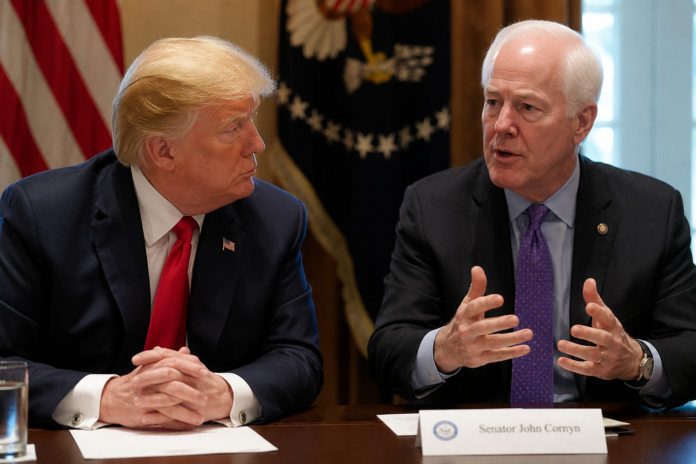
Texas Senator John Cornyn, who lost his Republican primary earlier this year to Trump-endorsed Attorney General Ken Paxton, is increasingly using his final months in the Senate to distance himself from the president, according to recent reporting. The shift underscores lingering friction within Senate Republican ranks following Trump’s aggressive use of primary endorsements to reshape the party’s congressional roster. With Cornyn no longer facing reelection pressure, his willingness to buck the administration offers a window into deeper tensions simmering beneath the surface of the GOP’s current unity.
Story Highlights
- Cornyn lost his May 26 primary runoff to Trump-endorsed Ken Paxton after a 24-year Senate career
- Cornyn has described using his remaining Senate vote to extract concessions from the administration as “kind of fun”
- Trump delayed his endorsement of Paxton until the final week of the race, frustrating Senate Republican leadership
- Cornyn’s departure adds to a broader pattern of Trump-backed primary challenges unseating sitting Republicans, including Louisiana Senator Bill Cassidy and Kentucky Representative Thomas Massie
What Happened
Texas Senator John Cornyn, a 24-year veteran of the chamber and former Senate Republican whip, has adopted an increasingly independent posture toward the Trump administration in the months since losing his May primary runoff to Texas Attorney General Ken Paxton. Cornyn was defeated decisively, with Paxton capturing 63.8 percent of the vote after receiving a last-minute endorsement from Trump, who described Paxton as “a true MAGA warrior” while criticizing Cornyn for not being “supportive of me when times were tough.”
The endorsement came despite months of Senate Republican colleagues, along with the National Republican Senatorial Committee, publicly backing Cornyn’s reelection bid and privately lobbying Trump to stay out of the race or support the incumbent. Many of those colleagues expressed concern that Paxton, who has faced multiple legal and ethical controversies throughout his career as Texas attorney general, could put a reliably Republican Senate seat at greater risk in the general election against Democratic nominee James Talarico. Trump nonetheless withheld his endorsement until the final week of the campaign, a delay that some Republican strategists characterized as prolonging Cornyn’s political humiliation.
Since the primary loss, Cornyn has increasingly signaled a willingness to use his remaining months in office, before his term concludes in January, to pursue positions independent of the administration’s preferences. In one public comment, Cornyn described it as “kind of fun” to use his Senate vote as leverage to extract concessions from the Trump administration, a notable departure from his historically reliable voting record in support of the president’s agenda throughout Trump’s second term. Cornyn has also posted pointed messages on social media suggesting unspecified accountability was coming for unnamed parties, fueling speculation about his future plans and posture toward the administration.
Cornyn’s shift comes amid broader tensions between Trump and elements of Senate Republican leadership, including then-Senate Majority Leader John Thune, who has publicly and sharply criticized several Trump proposals, including a fund to compensate January 6th defendants and measures aimed at limiting IRS scrutiny of Trump and his family. Political analysts have noted that Cornyn’s departure removes one of the Senate’s most reliably pro-administration votes at a moment when Republican margins in the chamber remain narrow, potentially complicating the path for major legislative priorities in the months ahead.
Why It Matters
Cornyn’s situation illustrates a broader dynamic reshaping the Republican Party under Trump’s continued dominance of primary politics: the president’s endorsement has become a decisive factor in Republican primaries nationwide, capable of unseating even long-serving, ideologically aligned incumbents who fall short of demonstrating sufficient personal loyalty. This month alone, Trump-backed challengers have also defeated Kentucky Representative Thomas Massie and Louisiana Senator Bill Cassidy, underscoring how thoroughly primary loyalty tests have come to define competitive Republican contests.
For Senate Republican leadership, the dynamic creates a genuine governing challenge. Lawmakers who might otherwise support administration priorities on substantive policy grounds face powerful incentives to publicly demonstrate loyalty regardless of their private reservations, while those who have already lost their seats, like Cornyn, face the opposite incentive: fewer political constraints on breaking with the president during their remaining time in office.
The situation also carries implications for the administration’s remaining legislative agenda, including proposals like the SAVE America Act and efforts to eliminate the Senate filibuster, both of which could be complicated if a growing number of Senate Republicans, whether out of personal grievance or genuine policy disagreement, decline to provide reliable support during a period when the party’s Senate majority remains narrow.
For Republican voters and party strategists, Cornyn’s experience raises broader questions about the tradeoffs involved in prioritizing presidential loyalty over electoral experience and institutional seniority when selecting nominees, particularly in competitive general election contests where a more moderate or experienced candidate might otherwise hold an advantage.
Economic and Global Context
While Cornyn’s situation is primarily a domestic political story, it carries indirect implications for the broader legislative environment heading into a critical midterm election cycle. The Texas Senate primary alone cost Republicans more than $100 million, according to reporting on the race, reflecting the significant financial resources increasingly devoted to intraparty primary contests rather than general election battles against Democratic opponents.
The dynamic also intersects with broader questions about Republican Senate strategy heading into November’s midterms, with the party defending a narrow majority amid significant economic headwinds, including inflation concerns and the economic disruption tied to the ongoing Iran conflict. A fractured or less cohesive Senate Republican conference could complicate the party’s ability to advance a unified economic message during a challenging midterm environment.
Cornyn’s Texas Senate seat itself remains a closely watched general election contest, with Paxton facing Democratic state Representative James Talarico in November. Texas Republicans have not lost a Senate race since 1988, but Paxton’s litany of past controversies has led some party strategists to view the seat as carrying more competitive risk than it would have under Cornyn’s continued candidacy.
Implications
For Senate Republican leadership, managing a caucus that includes members like Cornyn, who face diminished incentives to support administration priorities, will likely require careful legislative sequencing in the months ahead, particularly for any priorities requiring near-unanimous Republican support given the chamber’s narrow margins.
For the Trump administration, Cornyn’s shift serves as an early indicator of how other lame-duck or primary-defeated Republicans might behave during their remaining time in office, a dynamic that could recur as more incumbents face primary defeats in future election cycles under Trump’s continued influence over the party’s nomination process.
For Texas voters, the general election contest between Paxton and Talarico will serve as a direct test of whether Trump’s primary endorsement strategy translates into general election success, with implications for how aggressively the president deploys similar endorsements in future primary contests.
For the broader Republican Party, the Cornyn episode adds to an ongoing conversation about the balance between ideological loyalty and electoral pragmatism in candidate selection, a debate likely to intensify as more incumbents weigh their own primary vulnerabilities heading into 2026 and beyond.
Sources
This Republican Is Still Bitter That Trump Didn’t Endorse Him

