Story Highlights
- Trump emphasizes progress in U.S. position against Iran
- Signals confidence in deterrence and control
- Focus shifts toward stability and next-phase strategy
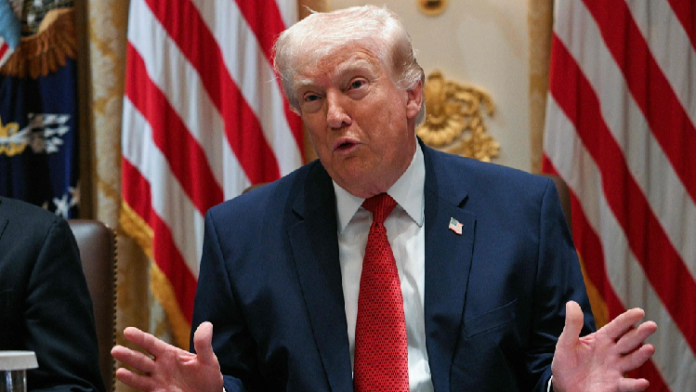
Donald Trump has underscored what he describes as significant strategic gains in the ongoing standoff involving Iran, presenting a narrative of strengthened positioning and controlled escalation. His remarks suggest that recent actions have not only limited Iran’s operational flexibility but have also reinforced the United States’ influence in the region. At a time when global attention remains fixed on the Middle East, such signals are being closely analyzed for their broader implications.
The core of Trump’s message revolves around deterrence. By highlighting the impact of U.S. actions, the emphasis is placed on the ability to shape outcomes without entering prolonged conflict. This approach reflects a broader strategic framework that prioritizes leverage and positioning over extended engagement. The idea is to create conditions where adversaries are constrained, reducing the likelihood of further escalation while maintaining readiness to respond if necessary.
The geopolitical context surrounding these developments is complex. The Middle East continues to play a central role in global energy markets and security considerations. Any shift in the balance of power within the region has implications that extend far beyond its borders. Trump’s framing of the situation as one of progress and control introduces a stabilizing narrative, which may influence how both allies and adversaries interpret current dynamics.
Energy security remains a key factor in this equation. The stability of critical routes such as the Strait of Hormuz is essential for maintaining global supply chains. Disruptions in this region have historically led to volatility in oil prices, affecting economies worldwide. By signaling that the situation is under control, the narrative supports expectations of continued stability in energy flows, which is a crucial factor for market confidence.
From an economic standpoint, the perception of stability is often as important as the reality. Markets respond not only to events but also to expectations. By projecting confidence in the current strategic position, Trump’s remarks contribute to shaping those expectations. Reduced uncertainty can lead to more stable pricing in energy markets, which in turn supports broader economic planning and investment.
The strategic messaging also reflects a focus on efficiency. Rather than pursuing open-ended objectives, the approach emphasizes achieving specific outcomes within a defined framework. This aligns with a broader perspective that prioritizes measurable results and controlled engagement. It suggests a shift away from traditional models of prolonged involvement toward a more targeted and adaptive strategy.
At the same time, the emphasis on readiness to respond ensures that flexibility is maintained. The ability to adjust strategy in response to changing conditions is a critical component of effective policy. By keeping options open, the approach balances restraint with preparedness, allowing for a calibrated response to future developments.
The reaction from international stakeholders is likely to be shaped by both the substance and the tone of these remarks. Allies may interpret the message as a sign of stability and continued leadership, particularly if it leads to reduced tensions in key مناطق. For countries that rely heavily on stable energy supplies, any indication of control in the region is likely to be viewed positively.
On the other hand, regional actors will closely evaluate how these developments affect their own strategic positions. The balance of power in the Middle East is influenced by a range of factors, including military capabilities, economic interests, and diplomatic relationships. Trump’s framing of the situation may prompt adjustments in how these actors approach both cooperation and competition.
Another important dimension is the role of communication in shaping outcomes. In modern geopolitics, public statements are not merely reflections of policy—they are tools that influence perception and behavior. By presenting the situation as one of progress and control, the messaging contributes to a narrative that can affect decision-making at multiple levels.
Domestically, the emphasis on strategic gains may resonate within broader discussions about foreign policy effectiveness. The idea of achieving results without prolonged engagement aligns with perspectives that prioritize efficiency and clear objectives. It also raises questions about how success is defined in complex international environments, where outcomes are often incremental and evolving.
However, it is important to recognize that the situation remains dynamic. While the current narrative highlights progress, underlying tensions have not disappeared. The relationship between the United States and Iran continues to be shaped by long-standing issues, including regional influence and strategic competition. As such, the current phase may represent a period of stabilization rather than a definitive resolution.
Implications
Trump’s emphasis on strategic gains in the Iran standoff reinforces a policy approach centered on deterrence, efficiency, and controlled engagement. If sustained, this positioning could contribute to greater stability in both geopolitical and economic terms, particularly in relation to energy markets.
At a broader level, the development highlights the importance of balancing strength with flexibility in managing international challenges. The ability to influence outcomes while avoiding prolonged conflict remains a key objective in modern foreign policy. As the situation evolves, attention will focus on whether these gains translate into lasting stability and how they shape future engagement in the region.

