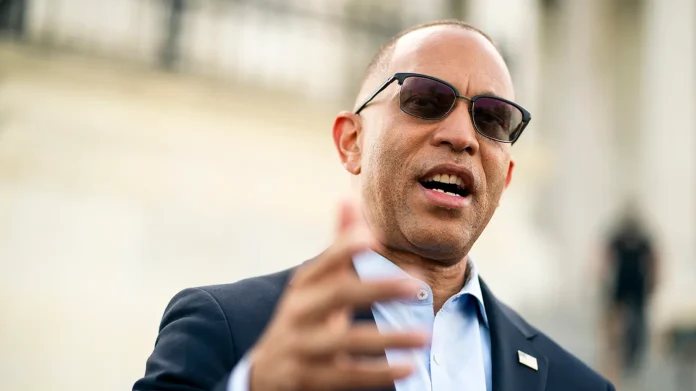
A growing wave of primary victories by democratic socialist candidates is creating significant internal challenges for House Minority Leader Hakeem Jeffries as he positions himself for a potential run at the speakership should Democrats retake the House this November. The trend, which has now extended beyond safely progressive urban districts into competitive suburban and swing areas, has drawn sharp criticism from Republicans who argue it reveals the true ideological direction of the modern Democratic Party. The internal Democratic tensions offer Republicans a potential messaging opportunity heading into the midterm elections.
Story Highlights
- Democratic socialist candidate Melat Kiros, 29, defeated 15-term incumbent Rep. Diana DeGette in a Colorado primary, following similar wins by democratic socialists in New York City primaries.
- More than a dozen Democratic Socialists of America-backed candidates have won or advanced in primaries nationwide this election cycle.
- Jeffries publicly congratulated the DSA-backed nominees, drawing criticism from moderate Democrats and Republicans alike over the party’s perceived leftward shift.
What Happened
A series of primary victories by candidates aligned with the Democratic Socialists of America has intensified questions about the ideological direction of the Democratic Party ahead of the 2026 midterm elections, creating a growing challenge for House Minority Leader Hakeem Jeffries as he positions himself for a potential speakership bid. The most recent and notable victory came when 29-year-old democratic socialist Melat Kiros defeated 15-term incumbent Representative Diana DeGette in a Denver-area Colorado primary, a result that signaled the movement’s strength extends well beyond its traditional strongholds in New York City.
Kiros’s win followed a wave of primary victories a week earlier by two other democratic socialist candidates in New York City primaries, including community organizer Darializa Avila Chevalier, who defeated Representative Adriano Espaillat, the head of the Congressional Hispanic Caucus, and New York state Assembly member Claire Valdez, who won the primary for retiring Representative Nydia Velázquez’s seat. Neither Chevalier nor Valdez has committed to supporting Jeffries for the speakership if Democrats retake the House majority in November, according to reporting from Politico.
Jeffries has attempted to walk a careful line regarding the party’s leftward-shifting energy, publicly congratulating the newly nominated Democratic candidates, including the DSA-backed nominees, in a social media post that read, “Congratulations to our Democratic nominees.” The gesture drew immediate criticism from multiple quarters. A coalition representing Jewish Democrats accused the incoming candidates of wanting to “abolish prisons and borders” and “defund the police,” while former National Security Council official Jamie Metzl expressed alarm at Jeffries’s embrace of the nominees, writing that he initially assumed the post “was from a spoof account.”
The ideological rifts extend beyond individual primary races into substantive policy divisions within the caucus. Progressive Representatives Alexandria Ocasio-Cortez and Greg Casar have announced support for an amendment introduced by Republican Representative Thomas Massie that would cut U.S. funding for Israel, a position not shared by all of their Democratic colleagues, with Jeffries himself declining to take a public position, stating his caucus is “still having discussions” on the matter. This division mirrored a key fault line in the recent primaries, where establishment-aligned incumbents who supported Israel lost to challengers who had been more critical of that relationship.
Democratic strategists and lawmakers close to Jeffries have expressed differing views about how manageable the situation will prove. Representative John Larson, a Jeffries ally, expressed confidence that the leader’s “very collaborative approach” would help smooth over ideological differences, while others, including Representative Gregory Meeks, expressed more direct concern, stating regarding the incoming class’s rhetoric, “If that’s the mode that they take when they get here, then I have a problem.”
Why It Matters
The growing influence of democratic socialist candidates within the Democratic Party presents Republicans with a significant messaging opportunity heading into the midterm elections, allowing GOP candidates and the Trump administration to characterize the entire Democratic Party as increasingly radicalized, a framing Trump has already deployed extensively in his recent public speeches warning of a “communist menace” in American politics.
For Jeffries specifically, the situation creates a genuine leadership challenge that mirrors, in inverse form, the difficulties House Speaker Mike Johnson has faced managing the Freedom Caucus within the Republican conference. Should Democrats retake the House majority, Jeffries would need to secure enough votes from an increasingly diverse and ideologically fractured caucus to win the speakership, potentially giving a small number of democratic socialist members significant leverage over his agenda, similar to the leverage hardline conservatives have exercised over Republican speakers in recent Congresses.
For moderate Democrats in competitive swing districts, the national attention on the party’s leftward shift creates a difficult political dynamic, as Republican opponents will likely attempt to nationalize individual House races by tying moderate Democratic candidates to the more provocative rhetoric and policy positions associated with the party’s rising socialist wing, regardless of individual candidates’ actual positions.
The dynamic also illustrates a broader generational and ideological transformation occurring within the Democratic Party’s base, with primary voters in increasingly diverse districts, including traditionally safe blue seats, demonstrating willingness to oust long-serving incumbents in favor of candidates offering more aggressively progressive policy platforms.
Economic and Global Context
The democratic socialist movement’s electoral gains have occurred against a backdrop of significant public dissatisfaction with both major parties’ handling of affordability and economic concerns, with many of the successful primary challengers explicitly campaigning on themes of economic inequality, corporate influence in politics, and opposition to what they characterize as insufficient Democratic Party responsiveness to working-class concerns.
The Israel funding debate specifically reflects broader tensions within the Democratic coalition regarding foreign policy, an issue that has become increasingly salient following the war involving Gaza and shifting generational attitudes toward the U.S.-Israel relationship, particularly among younger and more progressive Democratic primary voters who have shown willingness to prioritize this issue in their voting decisions.
Republicans, watching these internal Democratic tensions unfold, have signaled intentions to leverage the divisions for strategic advantage in the general election, framing the rise of self-identified democratic socialists as validation of longstanding conservative arguments about the Democratic Party’s true ideological character, a narrative that dovetails directly with the anti-communism messaging Trump has emphasized in his recent public addresses.
Implications
For House Republicans, the visible fracturing within the Democratic caucus provides a clear opportunity to shape midterm messaging around ideological extremism, potentially blunting some of the momentum Democrats have shown in recent special elections and off-year contests by refocusing voter attention on intra-party Democratic tensions rather than economic dissatisfaction with the Trump administration.
For Jeffries, navigating the competing demands of an energized progressive base and more moderate incumbents concerned about general election viability will remain a central challenge throughout the remainder of the campaign season, with his handling of the situation likely to significantly influence his standing within the caucus regardless of the November election outcome.
For voters in swing districts nationwide, the national conversation about the Democratic Party’s ideological direction will likely become an increasingly prominent feature of local House races, as Republican candidates seek to nationalize contests by associating their Democratic opponents with the party’s more provocative national figures and positions.
Sources
“Wins by the far-left set up challenge for Hakeem Jeffries”

