Story Highlights
- The “Anti-Weaponization Fund” totals $1.776 billion and will accept claims through December 15, 2028
- Acting Attorney General Todd Blanche signed the settlement; Trump retains the power to fire any of the five fund commissioners
- Nearly 100 House Democrats filed a legal brief urging a federal judge to block the arrangement
What Happened
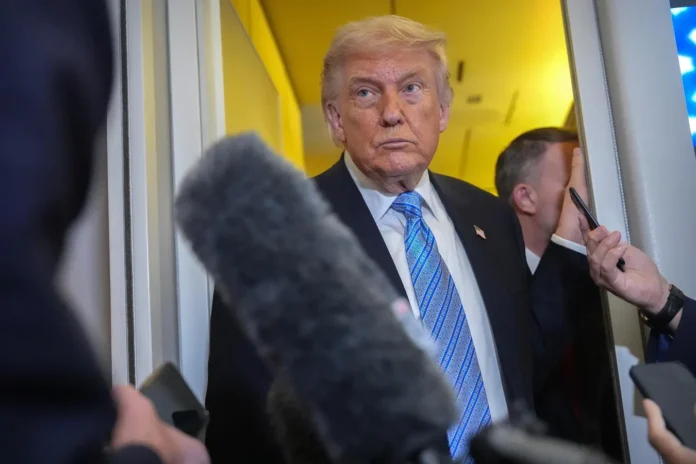
Acting Attorney General Todd Blanche, who previously served on Trump’s personal legal defense team during the criminal prosecutions brought by special counsel Jack Smith, announced Monday that the Justice Department was establishing the “Anti-Weaponization Fund” as part of a settlement resolving President Trump’s lawsuit against the Internal Revenue Service. The lawsuit, filed in January, sought $10 billion in damages over the unauthorized disclosure of Trump’s and the Trump Organization’s confidential tax returns by a government contractor.
Rather than direct that money to charity — as Trump had suggested earlier this year — the settlement channels taxpayer funds into a new pool that any individual claiming to be a victim of politically motivated prosecution or investigation can apply to receive. A five-member commission, whose members have not yet been named and whom Trump retains authority to remove, will oversee the fund. Blanche framed the arrangement as establishing “a lawful process for victims of lawfare and weaponization to be heard and seek redress.”
The Justice Department stated there are no partisan requirements for applicants, meaning any American who believes they were unfairly targeted — under any administration — could theoretically file a claim. However, critics noted the fund will be administered by a commission appointed by and answerable to Trump, and that it will expire precisely one month before his second term ends.
Trump ally and MyPillow founder Mike Lindell told CNN he expects to be compensated through the fund. Legal experts cited by multiple outlets described the arrangement as highly unusual, noting that federal law generally limits settlement authority to cases involving “actual or imminent litigation,” a standard that congressional Democrats argue was not met here. A coalition of 93 House Democrats filed an amicus brief challenging the legality of the deal.
Representative Jamie Raskin, the ranking Democrat on the House Judiciary Committee, called the fund “nothing but a racket designed to take $1.7 billion of taxpayer dollars out of the Treasury and pour it into a huge slush fund.” Democracy Forward, an advocacy group that filed its own legal brief, vowed to continue challenging the arrangement in court.
Why It Matters
The creation of this fund represents one of the most consequential expansions of executive power over the Justice Department in recent memory. By routing a personal presidential lawsuit through a DOJ settlement and directing taxpayer funds to politically sympathetic recipients, the administration has blurred the line between personal legal grievances and official government action in ways that legal scholars say are without clear precedent.
The fund’s structure raises separation-of-powers concerns that will likely be tested in federal court. The president’s authority to fire commission members means there is no meaningful independence between the disbursement mechanism and the beneficiary-in-chief. Critics argue this setup creates an obvious incentive for applicants to align themselves with Trump’s political narratives in order to secure payouts.
Supporters of the fund, however, argue it represents a legitimate effort to address genuine abuses that occurred during the Biden administration, particularly the prosecutions of hundreds of January 6 defendants under what they characterize as politically driven charging decisions. From their perspective, the fund is a correction to years of selective law enforcement.
The political optics ahead of the November midterms are complex. While the base is likely to view the fund favorably as accountability for Biden-era overreach, independent voters and suburban Republicans may be more sensitive to the perception that taxpayer money is flowing to individuals convicted of attacking the Capitol. That tension could surface in competitive House and Senate races.
Economic and Global Context
The $1.776 billion fund will be drawn from the federal Treasury’s judgment fund, a standing appropriation that the Justice Department can access without specific congressional approval for settling legal claims against the government. Legal experts noted that this mechanism has historically been used for garden-variety agency disputes, not politically charged arrangements of this scale and visibility.
The administration did not release a breakdown of how the money will be allocated, what documentation applicants must provide, or what legal standard will govern the commission’s decisions. The absence of published criteria increases exposure to legal challenge and sets up a potential court fight over administrative process that could delay or block disbursements.
At roughly $1.8 billion, the fund is not large enough to materially affect federal budget projections, but it sets a precedent that critics warn future administrations of either party could exploit. If courts uphold the arrangement, it could effectively create a new tool for presidents to reward allies and settle personal litigation through the public treasury.
Global observers, particularly U.S. allies who monitor the health of American democratic institutions, are watching the development closely. Some European governments have already expressed private concern about the trajectory of DOJ independence under the current administration.
Implications
Federal courts will likely be asked to weigh in quickly. The coalition of 93 House Democrats has already filed a challenge, and Democracy Forward has signaled it will pursue litigation. The central legal question — whether the attorney general had authority to settle a case that the government itself argues was not a legitimate claim — will determine whether any funds actually flow to applicants.
If the fund survives legal challenge, it will process claims until December 15, 2028, covering virtually the entire remainder of Trump’s second term. That timeline means the administration could use ongoing disbursements as a regular political tool, rewarding allies and reinforcing narratives about Biden-era weaponization throughout the midterm cycle and beyond.
For Republicans in Congress, the fund offers a potential talking point about accountability for institutional overreach, but it also creates liability in swing districts where voters may be uncomfortable with the blending of personal presidential grievance and federal law enforcement. The balance between enthusiasm from the MAGA base and wariness from moderates will shape how members choose to engage with the issue.
For the DOJ itself, the arrangement deepens ongoing concerns about the department’s perceived independence. Career prosecutors and former officials from both parties have privately expressed alarm about the pace at which the institution’s traditional norms are being reshaped under the current leadership.
Sources

