
Story Highlights
- Georgia House Speaker Jon Burns informed Governor Kemp that legislators would not consider redistricting during a special session, citing concerns about acting too quickly after the Supreme Court’s Callais ruling
- The decision came as protesters chanted “Black voters matter” outside the Georgia Capitol during the special session
- Georgia Republicans did not rule out revisiting redistricting later this year, leaving the door open for future action
What Happened
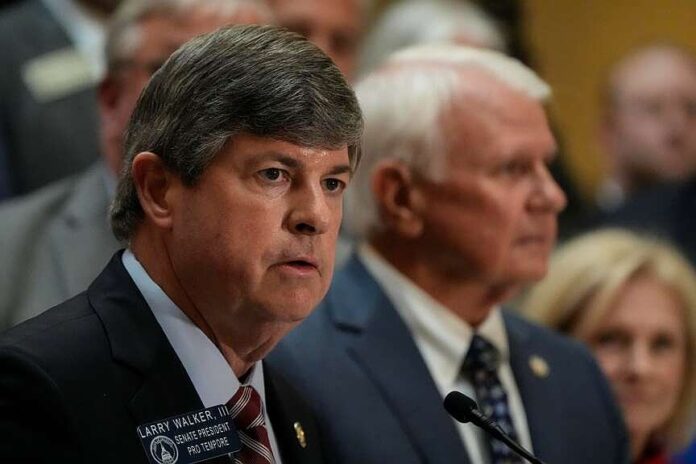
Georgia State House Speaker Jon Burns sent Governor Brian Kemp a letter just hours before a Wednesday special session was set to begin, informing him that legislators would not consider congressional or legislative redistricting at all during the session. Burns announced the decision publicly shortly afterward, even as demonstrators filled the Georgia Capitol chanting “Black voters matter” in anticipation of a potential vote to redraw districts in ways that could reduce Black representation in Congress and the state legislature. Kemp did not immediately respond to requests for comment from the Associated Press following the announcement.
Burns explained that legislators wanted to take additional time to evaluate the implications of the Supreme Court’s recent decision in Louisiana v. Callais, which struck down Louisiana’s congressional map as an illegal racial gerrymander while simultaneously laying the groundwork for state legislatures to reduce the number of districts where Black and other nonwhite voters hold significant electoral influence. The speaker emphasized that lawmakers believed it was more important to focus legislative attention on economic matters rather than what he characterized as “partisan games,” a notable rebuke of the aggressive redistricting push that had already swept through several other Republican-controlled states following the same Supreme Court ruling.
The decision occurred against the backdrop of significant demographic stakes specific to Georgia. Approximately one-third of Georgia’s 180 state representatives are Black, with Latino, Asian, and other minority populations bringing the total nonwhite representation to roughly 40 percent of the legislature, broadly reflecting the state’s overall population composition. Georgia’s congressional delegation includes five districts out of 14 total where the electorate is majority or plurality nonwhite, and all five elected Black Democrats in the 2024 election cycle, representation that redistricting advocates argued could have been significantly diminished under a new Republican-drawn map.
Senator Raphael Warnock, a Georgia Democrat, used the moment to deliver pointed criticism of Republicans considering redistricting, noting that some of the same lawmakers who might redraw district lines to dilute Black political representation also publicly honor Dr. Martin Luther King Jr. on his federal holiday. “If you want to redraw maps and you have the power to do it, I guess you can do it,” Warnock said. “But keep Dr. King’s name out of your mouth.” While Georgia held back, the broader national redistricting battle continued to intensify, with Republicans having already implemented new congressional boundaries in eight other states, including Texas, Missouri, North Carolina, Ohio, Florida, Tennessee, Louisiana, and Alabama, potentially netting the party as many as 16 additional House seats nationally heading into the midterms.
Why It Matters
Georgia’s decision to hold back from redistricting, even temporarily, represents a notable exception to the aggressive national pattern that has characterized Republican strategy following the Callais decision. The choice illustrates that presidential pressure, even when exercised directly as Trump did with Tennessee Governor Bill Lee in a parallel effort, does not automatically translate into uniform action across every state legislature, suggesting meaningful variation in how individual state Republican parties weigh the political risks and benefits of aggressive redistricting moves.
For Republicans nationally, the Georgia outcome raises strategic questions about the limits of the mid-decade redistricting campaign that Trump initiated last year specifically to protect the party’s narrow House majority ahead of the 2026 midterms. With Republicans potentially gaining as many as 16 seats through redistricting in states that have already acted, compared to up to six potential Democratic gains through counter-redistricting in states like California and Utah, Georgia’s decision not to participate represents a missed opportunity from the perspective of those seeking maximum partisan advantage, even as it may reflect a more cautious political calculation specific to Georgia’s electoral environment.
The episode also highlights ongoing tension within the Republican Party about the optics and legal risk of racial gerrymandering, even after the Supreme Court’s ruling removed significant federal legal obstacles. Burns’s explicit citation of needing time to fully understand the Callais decision’s implications suggests genuine legal caution among at least some Republican legislative leaders, distinct from the political messaging considerations that have driven similar decisions in other contexts.
For voters and democracy advocates, Georgia’s pause offers a temporary reprieve in a state where five congressional districts currently provide meaningful representation for Black and other minority voters, though Republicans’ explicit acknowledgment that they have not ruled out revisiting the issue later this year means the underlying question remains unresolved heading into future legislative sessions.
Economic and Global Context
Georgia’s status as a critical battleground state with substantial economic weight, anchored by Atlanta’s position as a major logistics, finance, and film production hub, means that legislative stability and predictable governance carry economic significance beyond the immediate political stakes of redistricting itself. Extended special sessions focused on contentious partisan redistricting fights can create governance distractions that affect legislative bandwidth for other priorities, a concern Burns explicitly raised in his public comments favoring focus on economic matters.
The broader national redistricting battle has produced significant variation in outcomes across states, with Cook Political Report estimating total potential Republican gains of up to 16 seats nationally compared to roughly 10 for Democrats through their own counter-redistricting efforts in states like California and Utah, though several maps from both parties continue to face active litigation that could alter these projections before the midterm elections occur.
Nearly 145 million Americans, representing roughly two of every five U.S. residents, now live in states with newly redrawn congressional districts for the 2026 election cycle, according to PBS NewsHour reporting, illustrating the unprecedented scale of the mid-decade redistricting wave that began with Trump’s initial push to Texas Republicans last summer and has since spread across multiple states through both Republican and Democratic-controlled legislatures.
Implications
For Georgia Republicans, the door remains open for revisiting redistricting later this year, meaning the current decision represents a pause rather than a permanent rejection of Kemp’s push, with the ultimate outcome likely depending on how broader national political dynamics and additional legal clarity around the Callais ruling’s implications develop over the coming months.
For Governor Kemp, the legislative rebuff represents a notable setback to a priority he had pursued at least partly in response to direct engagement from Trump, raising questions about Kemp’s ability to translate presidential pressure into legislative action even within his own party’s controlled chambers, a dynamic that could affect his political standing as he approaches the final stretch of his gubernatorial tenure.
For national Republican redistricting strategists, Georgia’s hesitation serves as a reminder that the aggressive mid-decade redistricting campaign, while successful in numerous states, faces real limits when individual state legislative leaders weigh in with independent political judgment about timing, legal risk, and broader governance priorities.
For voting rights advocates and Democratic strategists, Georgia’s decision provides at least temporary protection for existing minority representation in the state’s congressional delegation, though continued vigilance will likely be necessary given Republican leaders’ explicit acknowledgment that the redistricting question remains open for potential future legislative action before the 2028 election cycle.
Sources
“Georgia Republican legislative leaders reject governor’s call for 2028 redistricting”

