Story Highlights
- Representative Mike Collins defeated Trump-backed-turned-Kemp-backed candidate Derek Dooley in the Senate Republican runoff after Trump issued a late endorsement
- Businessman Rick Jackson defeated Trump-endorsed Lieutenant Governor Burt Jones in the governor’s race, spending more than $100 million of his own money
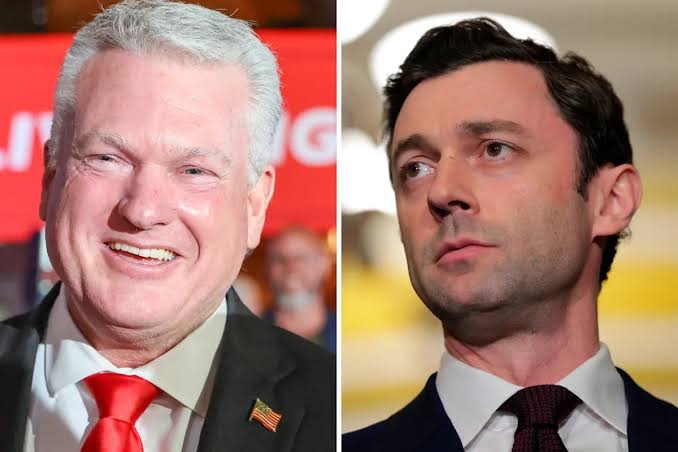
- Collins will face Democratic incumbent Senator Jon Ossoff, the only Democratic senator nationwide running for reelection in 2026, in a race seen as pivotal to Senate control
What Happened
Georgia Republicans held back-to-back primary runoff elections on June 16 to determine the party’s nominees for the state’s open governor’s race and its competitive U.S. Senate seat, producing a split outcome that highlighted both the continued strength and the real limits of President Trump‘s influence within the state party. In the Senate race, Representative Mike Collins defeated former University of Tennessee football coach Derek Dooley in a head-to-head runoff after neither candidate secured a majority in the initial primary. Trump had largely stayed out of the race for months before issuing a lengthy endorsement of Collins in the early hours of the Sunday before the runoff, after early voting had already concluded. Dooley had been recruited and heavily backed throughout the campaign by term-limited Georgia Governor Brian Kemp, who declined to run for the Senate seat himself and instead invested substantial political capital in Dooley’s candidacy.
In the simultaneous gubernatorial runoff, Lieutenant Governor Burt Jones, who had Trump’s endorsement dating back to August 2025, lost to businessman Rick Jackson, a billionaire healthcare executive who entered the race in February and spent more than $100 million of his own money campaigning across the state. Jones, who had been heavily involved in past efforts to challenge Georgia’s 2020 election results and had helped shepherd controversial legislation through the state Senate on issues ranging from abortion restrictions to voting law changes, campaigned as Trump’s chosen successor to Kemp. Jackson countered Jones’s argument by emphasizing his outsider business background and self-funded independence from both factions of the state party establishment, ultimately prevailing in a result widely described as a rare and notable primary defeat for a Trump-endorsed candidate.
The outcome left Kemp with what was characterized as a resounding political setback, having invested heavily in Dooley’s losing Senate campaign while declining to take sides in the governor’s race in which his own preferred successor was not on the runoff ballot. The split results, with Trump’s pick prevailing in the Senate race but losing in the governor’s race, underscored what political observers have described as a continued rift within Georgia’s Republican Party over the balance of power between Trump’s national political organization and the state-level Republican establishment that Kemp has built over two terms as governor.
Jackson will face Democratic former Atlanta Mayor Keisha Lance Bottoms in November’s general election for governor, while Collins will face Democratic Senator Jon Ossoff, who is seeking reelection to a seat he first won in a 2021 runoff and is currently the only Democratic senator nationwide standing for reelection in the 2026 cycle. Ossoff’s campaign, anticipating the eventual Republican nominee regardless of which candidate emerged from the runoff, had previously released a statement criticizing the GOP field as likely to “limp into a month-long race to the bottom that will surely leave both broke and unelectable,” reflecting Democrats’ expectation that the contested and costly Republican primary fight would leave the eventual nominee in a weakened position heading into the general election.
Why It Matters
The Georgia Senate race is widely regarded as one of the most pivotal contests determining Senate control in 2026, given that Democrats need a net gain of four seats nationally to retake the majority, making Ossoff’s seat, along with a handful of other competitive races, central to both parties’ paths to controlling the chamber for the remainder of Trump’s term. Collins enters the general election having secured the Trump endorsement that helped him win the runoff, a clear asset in a state Trump carried in the 2024 presidential election, though the costly and competitive primary battle against Dooley may have left him with depleted resources relative to Ossoff heading into the fall campaign.
For the broader Republican Party, the split outcome offers a real-time data point on the limits of presidential endorsement power even in a state Trump has won three consecutive times, illustrating that well-resourced, self-funded candidates and entrenched state-level political organizations, such as the one Kemp has built in Georgia over his tenure as governor, can successfully counter a national endorsement under the right circumstances.
For Georgia’s gubernatorial race specifically, Jackson’s victory sets up a general election contest against Bottoms that will test whether a wealthy, business-oriented Republican outsider can hold the state’s governorship for the GOP without the full, enthusiastic backing of either Trump’s national organization or Kemp’s state-level political network, both of which had backed other candidates during the primary.
For national Republican strategists, the Georgia results reinforce the broader lesson reflected in Trump’s evolving endorsement strategy: earlier endorsements in less competitive races can effectively clear primary fields, but in marquee, well-funded contests, presidential backing alone does not guarantee victory, a dynamic likely to inform how aggressively the party intervenes in other contested primaries through the remainder of the 2026 cycle.
Economic and Global Context
The financial scale of Georgia’s gubernatorial primary, with Jackson’s personal spending exceeding $100 million, represents one of the most expensive self-funded primary campaigns in recent state political history, underscoring a broader national trend of extremely wealthy candidates increasingly able to bypass traditional party infrastructure and endorsement dynamics through direct personal investment in their own campaigns.
The Senate race’s outcome will also carry direct implications for national policy debates, given that Senate control determines which party sets the chamber’s legislative agenda and confirms federal judicial and executive branch appointments for the remainder of Trump’s term, making the roughly five-month general election campaign between Collins and Ossoff one of the most closely watched and heavily resourced Senate contests nationally.
Both parties’ national campaign committees are expected to direct substantial outside spending into the Georgia Senate race given its significance to overall Senate control, a pattern consistent with the broader financial dynamics already shaping the 2026 cycle, in which national party committees and allied super PACs on both sides have signaled plans to deploy significant resources into the small number of races viewed as most likely to determine majority control.
Implications
In the near term, both Collins and Ossoff will transition from their respective primary contests into a five-month general election campaign that national strategists in both parties view as central to the battle for Senate control, with substantial outside spending from national party committees and allied super PACs expected on both sides.
For Kemp, the dual setbacks of his preferred Senate candidate losing the runoff and his absence from the winning side of the governor’s race raise questions about his political capital during the final stretch of his tenure as governor, even as he remains a popular figure within the state party more broadly.
For Jackson, the general election against Bottoms will test whether his self-funded, outsider campaign strategy that succeeded in the Republican primary can translate into a winning coalition in the general election, particularly given questions about his ability to unify the party’s Trump-aligned and Kemp-aligned factions that split during the primary.
For national Democrats, holding Ossoff’s seat remains essential to any path toward retaking the Senate majority, making the resources and attention directed toward this race likely to intensify substantially as November approaches, with both parties treating Georgia as a bellwether for the broader national political environment heading into the midterms.
Sources
“Georgia results: Collins will face Sen. Ossoff; Trump’s pick loses governor runoff”

