Story Highlights
- Firings began Monday at the ODNI, with a source confirming “the deep state firings have begun”
- Pulte was reportedly targeting around 400 employees at the National Counterterrorism Center for dismissal
- Senate Intelligence Vice Chair Mark Warner introduced legislation Tuesday to bar future presidents from installing unconfirmed acting DNIs
What Happened
The large-scale cuts that President Donald Trump’s acting director of national intelligence had been considering imposing at his own office started on Monday. “The deep state firings have begun,” a source familiar with the matter told CNN. The dismissals came just days after Pulte officially took up his role leading the intelligence community.
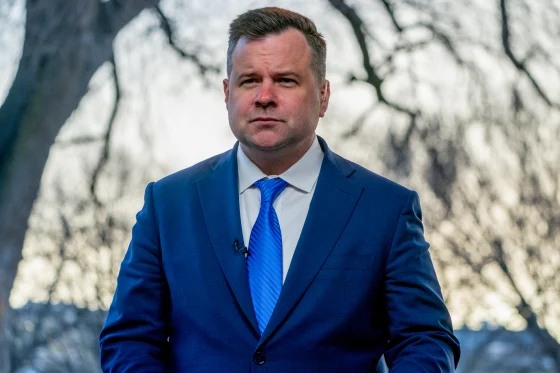
President Donald Trump’s new acting director of national intelligence, Bill Pulte, began purging staff members at the office on Monday, a source familiar with the matter confirmed to NBC News. Trump named Pulte the acting director this month and said on Truth Social that he had “asked him to execute the immediate and needed downsizing of the office, reverting staff to their home agencies.”
A separate source with knowledge of the matter told NBC News over the weekend that Pulte had ordered staff members to identify 400 employees to be fired from the National Counterterrorism Center in the coming weeks. Pulte issued the instruction before he officially took over for outgoing Director Tulsi Gabbard.
Sources had previously told CNN that Pulte was looking at cutting hundreds of jobs at the ODNI. Last week, Pulte showed up to his new job a day early after asking for a list of every employee in the office, catching even outgoing director Tulsi Gabbard off-guard. All offices were asked to provide a list ranking their personnel by Monday.
Senate Intelligence Vice Chair Mark Warner on Tuesday introduced legislation that would bar the president from installing an acting director of national intelligence, taking direct aim at Trump’s controversial pick. Dubbed the Do Not Interfere in our Intelligence Act, Warner’s bill requires the principal deputy DNI — a Senate-confirmed position — to step in as the acting head of the agency should there be a vacancy.
Why It Matters
The ODNI was created specifically in the wake of the September 11, 2001 attacks to coordinate intelligence sharing across all 18 federal intelligence agencies, prevent information silos, and ensure the government can detect and disrupt terrorist threats before they materialize. Gutting the office’s professional staff raises serious questions about the nation’s ability to anticipate and respond to attacks in real time.
Senator Mark Warner and Representative Jim Himes wrote in a letter to Pulte: “While there is room to consider responsible reductions to ODNI’s workforce, any large cuts would follow on a substantial downsizing that has already occurred in 2025 and risk jeopardizing the mission of an organization explicitly created after 9/11 to prevent any future such terrorist attack.”
The appointments themselves have generated unusual bipartisan resistance. Senate Majority Leader John Thune told reporters, “We don’t need a weaponised DNI.” Last week, all but one Senate Democrat and seven Republicans voted against a three-year extension of Section 702, citing concerns about Pulte. The failure to renew that surveillance authority has left a gap in one of the country’s primary tools for monitoring foreign terrorist communications.
Critics have also pointed to Pulte’s professional background as fundamentally unsuited for leading the country’s most sensitive intelligence operations. A businessman with ties to construction and private equity, Pulte has no intelligence or military background, and critics see him as a Trump loyalist who has attacked the president’s critics.
Economic and Global Context
The shakeup at the ODNI comes at a particularly sensitive moment in American foreign policy. The United States is engaged in active negotiations with Iran over a nuclear peace deal while simultaneously managing the fallout from a war that has disrupted energy markets, strained alliances, and elevated global threat levels. A weakened intelligence infrastructure could hamper the administration’s ability to verify Iranian compliance and detect covert military movements.
Counterterrorism budgets and staffing levels have direct implications for American businesses operating abroad, for the airline industry, and for port security. A significant reduction in the NCTC’s capacity to monitor extremist networks could increase insurance costs and travel advisories for American companies with global operations, with downstream effects on multinational earnings and investor confidence.
Foreign adversaries also monitor the internal state of American intelligence capabilities. Abrupt mass firings at a top-level coordinating agency send a signal of institutional disruption that rivals, including Russia, China, and Iran, may attempt to exploit. Intelligence professionals have long warned that timing disruptions to key personnel transitions is a standard tactic for adversarial intelligence services.
Implications
The firings set up a direct confrontation between the executive branch and congressional oversight bodies. Warner’s new legislation, even if unlikely to pass in the current Senate, applies public and political pressure on the White House to install a permanent, Senate-confirmed DNI. Trump nominated U.S. Attorney Jay Clayton to serve as DNI, but then demanded Clayton fail to appear for his confirmation hearing, an event swiftly scheduled in the hopes of preventing Pulte from serving as acting DNI. That move only deepened the institutional confusion.
For career intelligence professionals, the message from the administration is unmistakable: loyalty to the president’s agenda is now a primary criterion for job security. That dynamic risks accelerating the departure of experienced analysts and officers — either through firings or voluntary resignations — precisely when geopolitical complexity demands institutional depth. The NCTC, in particular, houses officers with years of expertise in tracking specific terrorist networks and individuals.
Warner said: “Bill Pulte may be exactly who President Trump wants running the intelligence community, but that does not make him qualified for the job. The intelligence community should be led by experienced, Senate-confirmed professionals — not by whoever happens to be most willing to carry out the president’s wishes.”
The outcome of this reshaping will matter well beyond this administration. The precedent of installing an unconfirmed political operative to lead the entire intelligence community — and immediately using that position to conduct mass dismissals — could fundamentally alter the institutional character of American intelligence for years to come.
Sources
“Firings now underway at Office of Director of National Intelligence, source says”

