Story Highlights
- Trump ordered the Senate to cancel a scheduled confirmation hearing for Jay Clayton, his nominee for director of national intelligence, while attending the G7 summit in France
- Trump threatened not to sign a reauthorization of a critical surveillance law unless the Senate passed an election bill that has already failed multiple times
- Trump has used his political influence to oust incumbent senators in primaries this cycle, escalating tensions within his own party’s congressional ranks
What Happened
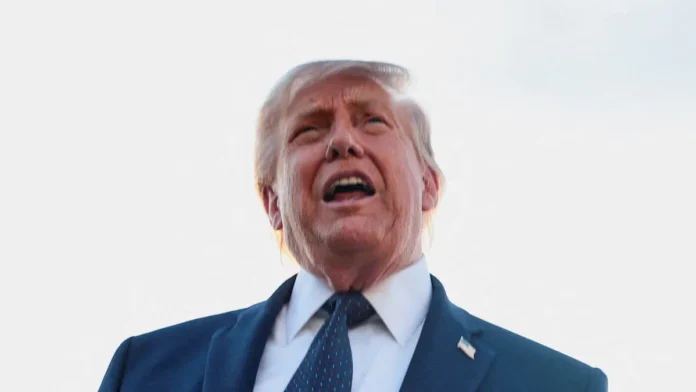
According to NBC News reporting published June 17, President Trump ordered the Senate on a Wednesday to cancel an afternoon confirmation hearing for Jay Clayton, his nominee to serve as director of national intelligence, while Trump was attending the Group of Seven summit in France. The directive arrived with little warning and immediately disrupted plans that Senate Majority Leader John Thune had carefully arranged to fast-track Clayton’s nomination as part of a broader strategy to secure Democratic votes needed for an separate, unrelated legislative priority.
Simultaneously, Trump threatened not to sign a reauthorization of a critical foreign surveillance program unless the Senate first passed a sweeping election bill, an ultimatum that proved especially frustrating to Republican leadership given that the specific election legislation in question had already failed to advance on multiple previous occasions. The surveillance program reauthorization carries significant operational importance for national security agencies, making Trump’s decision to link its fate to an unrelated and already-failed legislative priority a source of particular concern among Republican senators focused on ensuring the program’s continuity.
The friction reflects a broader pattern that has developed over recent months, in which Trump has used the substantial political leverage of his endorsement and primary intervention capabilities to discipline members of his own party who he perceives as insufficiently loyal. Earlier in the year, Trump helped oust two veteran Senate incumbents through primary challenges, endorsed a primary challenger against another sitting senator, and publicly criticized a House Republican member running for reelection, according to NPR reporting from May. In one notable instance, Trump warned Republicans directly on Truth Social that resistance to his agenda could cost them their seats, writing that lawmakers who failed to fall in line would “all be looking for a job much sooner than you thought possible.”
The tension has not been limited to nominations and procedural matters. In early June, six Republican senators, including Susan Collins of Maine, Jon Husted of Ohio, and Dan Sullivan of Alaska, broke with the administration to vote in favor of an amendment that would have blocked federal funding for Trump’s White House ballroom project, though the measure ultimately failed by a vote of 52 to 47, falling short of the 60 votes needed to overcome a procedural objection during the immigration enforcement reconciliation bill’s vote-a-rama process.
Why It Matters
For Senate Republican leadership, the recurring pattern of presidential interventions that disrupt carefully sequenced legislative strategy represents a genuine governing challenge, separate from any ideological disagreement with the president’s underlying policy goals. Thune’s repeated need to recalibrate floor strategy and committee scheduling in response to unanticipated presidential directives illustrates the practical difficulty of managing a legislative agenda when the head of the party can unilaterally reshape priorities with little advance consultation.
The dynamic carries particular significance given Republicans’ narrow majorities in both chambers, which Speaker Mike Johnson has repeatedly noted represents the smallest House majority in modern history. With such thin margins, party discipline and predictable legislative sequencing become more important, not less, making Trump’s pattern of unexpected interventions a more consequential source of strain than it might be with larger working majorities.
For senators facing competitive reelection races this fall, including Collins in Maine, Husted in Ohio, and Sullivan in Alaska, the tension between supporting the president’s broader agenda and managing the political risks of specific controversial positions, such as ballroom funding or surveillance reauthorization disputes, creates difficult navigation challenges. Polling cited in reporting on the ballroom funding vote showed each of these senators facing genuinely competitive races, meaning their voting decisions carry direct electoral consequences beyond simple party loyalty calculations.
The broader pattern also raises questions about Republican unity heading into the November midterms, when maintaining narrow majorities in both chambers will require not just successful campaigns but also continued legislative functionality during a period when the president has shown willingness to publicly criticize and primary members of his own party who deviate from his preferred positions, even on matters where reasonable policy disagreement exists within the broader conservative coalition.
Economic and Global Context
The surveillance program at the center of the reauthorization dispute, understood to reference Section 702 of the Foreign Intelligence Surveillance Act based on related coverage of similar legislative fights this year, carries substantial implications for national security operations that intelligence agencies have characterized as essential to counterterrorism and foreign intelligence collection efforts. Allowing such authorities to lapse, even temporarily, due to an unrelated legislative dispute creates operational risk that career national security officials have previously warned against in similar reauthorization battles.
The nomination delay for Clayton to serve as director of national intelligence occurs at a moment when the position carries heightened importance given ongoing developments in the Iran conflict and broader Middle East diplomatic negotiations, areas where consistent intelligence community leadership typically supports more effective policy coordination across the executive branch.
The pattern of presidential pressure on Senate Republicans also intersects with broader fiscal tensions that have characterized this Congress, including the contentious fight over the anti-weaponization fund and the White House ballroom funding controversy, both of which have similarly tested party unity and required Republican senators to weigh loyalty to the administration against independent judgment on specific spending and oversight questions.
Internationally, allies and foreign governments monitoring American legislative stability have additional reason for attention given that intelligence-sharing arrangements and surveillance authorities affect cooperative relationships with partner nations, making domestic legislative gridlock over these issues a matter of interest beyond purely domestic political considerations.
Implications
For Senate Majority Leader Thune, continued unpredictability from the White House complicates his ability to plan legislative sequencing for the remainder of the year, particularly as Congress faces a compressed calendar heading into the midterm elections that leaves limited room for the kind of last-minute disruptions that have characterized recent weeks.
For vulnerable Republican incumbents, the ongoing tension between presidential loyalty and political self-preservation will likely continue shaping individual voting decisions on a case-by-case basis, with senators in competitive races increasingly willing to break from administration positions on specific votes, even while generally supporting the broader Republican legislative agenda.
For the surveillance reauthorization specifically, the dispute will need resolution before the program’s authorities lapse, creating pressure for either the administration to moderate its position or for the Senate to find an alternative path forward that addresses Trump’s underlying concerns about election legislation without permanently linking the two unrelated priorities.
For the broader Republican Party heading into November, continued visible friction between the White House and Senate Republicans, even short of any fundamental policy rupture, creates a narrative opportunity for Democrats seeking to portray the party as internally divided, a dynamic that will likely factor into messaging strategies on both sides as the midterm campaign intensifies in the coming months.
Sources
“Senate Republicans grow increasingly frustrated with Trump blindsiding them”

