Story Highlights
- Senate Republicans proposed a package containing roughly $1 billion for security upgrades
- Democrats criticized the proposal as indirectly supporting Trump’s White House expansion plans
- Republican lawmakers argued recent security incidents justify additional funding
What Happened
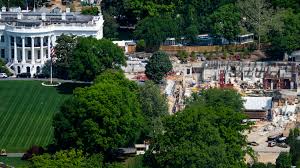
Senate Republicans unveiled a sweeping immigration and security package this week that includes approximately $1 billion in funding tied to infrastructure and protective upgrades around the White House complex. Although the legislation does not directly finance construction of President Donald Trump’s proposed White House ballroom project, critics say the measure could support security work connected to the broader modernization effort.
Republican lawmakers defended the proposal by emphasizing the importance of reinforcing security measures after several recent incidents involving threats against federal officials and government property. Supporters argued the Secret Service and related agencies require additional resources to address evolving security risks surrounding the White House perimeter.
Senator Chuck Grassley described the funding as part of a larger national security initiative focused on protecting federal facilities and improving operational readiness. Administration officials echoed that position, arguing the project addresses legitimate security concerns rather than political symbolism.
Democrats strongly criticized the measure, accusing Republicans of attempting to move politically sensitive spending through broader immigration legislation. Several Democratic lawmakers argued Congress should prioritize affordability issues, infrastructure, and social programs instead of allocating large sums toward projects connected to White House expansion plans.
The proposal also became tied to the wider debate over immigration enforcement and border policy. Republicans included additional funding for law enforcement operations and immigration enforcement agencies, framing the package as part of a comprehensive effort to strengthen national security. Democrats responded by accusing Republicans of combining unrelated priorities into a single politically charged bill.
Why It Matters
The debate matters because it reflects the broader political struggle over federal spending priorities during Trump’s second term. Republicans continue emphasizing border enforcement, institutional security, and executive branch protection as central government responsibilities, while Democrats argue the administration is directing resources toward politically symbolic projects.
Security concerns surrounding the White House have become increasingly serious in recent years due to several high-profile incidents involving threats against federal officials and government property. Supporters of the proposal argue expanded security measures are reasonable given the growing complexity of protecting national leaders and critical facilities.
The controversy also illustrates how infrastructure and modernization projects can quickly become political flashpoints in Washington. Trump’s proposed ballroom project has already generated debate over presidential legacy, donor involvement, and executive branch spending. Even indirect connections to the project are now receiving heightened scrutiny from both parties.
The legislative fight may also influence negotiations on immigration policy and federal appropriations later this year. Congressional leaders from both parties are attempting to balance national security concerns with competing demands for spending restraint and domestic investment. The outcome could shape broader budget negotiations heading into the next fiscal cycle.
Economic and Global Context
Federal security spending has expanded significantly over the past two decades as governments respond to evolving domestic and international threats. Agencies responsible for protecting federal officials, government facilities, and diplomatic sites have repeatedly requested larger budgets to address new risks tied to technology, extremism, and geopolitical instability.
The proposed package arrives during a period of elevated federal deficits and growing concern over long-term government debt. Critics argue Congress should exercise greater discipline when approving large appropriations packages, particularly for projects that may carry political symbolism beyond core operational needs.
Construction and modernization projects around federal facilities also create broader economic ripple effects. Security contractors, engineering firms, and infrastructure suppliers could benefit from expanded federal spending tied to White House upgrades and related projects. However, economists note that increased federal spending may face greater political resistance as lawmakers debate deficit reduction strategies.
Globally, governments across Europe and Asia have similarly increased investments in executive branch security infrastructure following heightened geopolitical tensions and growing concerns about domestic instability. American policymakers are therefore operating within a broader international trend toward expanded protective spending for government institutions.
Implications
The Senate proposal now faces a difficult legislative path as Democrats prepare amendments and procedural challenges aimed at limiting or removing controversial provisions. Republicans, meanwhile, are expected to argue that opposing the package weakens national security and immigration enforcement efforts.
If passed, the legislation could accelerate modernization work around the White House and strengthen federal security capabilities in the near term. Agencies responsible for implementing the upgrades would likely begin planning and contracting processes quickly due to ongoing operational demands.
The political implications could extend well beyond the immediate funding debate. Democrats may use the controversy to portray Republicans as prioritizing symbolic projects over economic concerns facing ordinary Americans. Republicans, in turn, are likely to frame Democratic opposition as evidence of insufficient support for law enforcement and national security infrastructure.
For voters and policymakers, the dispute reflects the increasingly blurred lines between infrastructure, politics, and security in Washington. Even routine funding debates now carry broader ideological implications about government priorities, presidential authority, and the role of federal spending in shaping public policy.
Sources
“Senate Republicans propose package including $1bn that could go to Trump ballroom”

