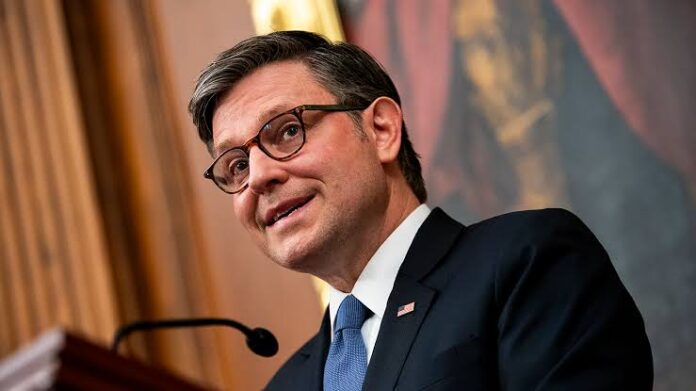
House Speaker Mike Johnson escalated Republican warnings over the weekend that a wave of democratic socialist candidates modeled after New York City Mayor Zohran Mamdani poses a serious threat to the American system of government. Appearing on Fox News Sunday, Johnson argued the trend extends well beyond New York and represents a defining battle line heading into the 2026 midterms. His comments echo President Trump’s own Independence Day remarks branding the movement a resurgence of communism.
Story Highlights
- Speaker Mike Johnson said “there are many Mamdanis popping up, running for Congress around the country” during a Fox News Sunday interview
- Johnson compared the moment to Cold War-era warnings about communism, saying “the barbarians are inside the gate”
- Treasury Secretary Scott Bessent said Mamdani has effectively become “the leader of the Democratic Party”
- The comments follow Trump’s Fourth of July speech comparing democratic socialism to “a cancer” that needs to be cut out
What Happened
House Speaker Mike Johnson told Fox News Sunday host Shannon Bream that a growing wave of democratic socialist candidates represents a serious and growing danger to the country’s political system. “There are many Mamdanis popping up, running for Congress around the country, and you better be very serious about this,” Johnson said, referring to New York City Mayor Zohran Mamdani, a democratic socialist whose 2025 mayoral victory has become a central talking point for Republicans. “This is a serious threat to our whole system of government.”
Johnson invoked Cold War-era rhetoric during the interview, drawing a comparison between former President Ronald Reagan’s warnings about communism abroad and what he described as a similar ideological movement now emerging within the United States. “The barbarians are inside the gate,” Johnson said, arguing that today’s Democratic Party bears little resemblance to earlier generations of the party. He further characterized the movement in stark terms, saying candidates aligned with Mamdani represent Marxist positions that include abolishing borders, defunding police, and eliminating the Senate.
The comments follow a similar warning Johnson issued in late June on social media, when he wrote that “MINI MAMDANIs” were “popping up all around the country,” calling the trend “NOT a joke” and stating that “we are in a fight RIGHT NOW to save the Republic.” Treasury Secretary Scott Bessent amplified the concern in separate CNBC remarks, arguing that Mamdani has effectively become “the leader of the Democratic Party” following a string of primary wins by candidates he has backed in states including New York, Michigan, Maine, and Pennsylvania.
Johnson’s Sunday remarks directly followed President Trump’s Independence Day address on the National Mall, where the president compared the rise of democratic socialism to “a cancer” that “you got to cut it out, you got to cut it out fast.” Trump’s Mount Rushmore speech the previous evening had similarly warned that communism represented a greater threat to the country than World War I, World War II, Pearl Harbor, or the September 11 attacks. Democratic leaders have offered a different read on the moment. House Minority Leader Hakeem Jeffries has called for party unity after the midterms, telling colleagues to remember “the enemy is Donald Trump,” while Mamdani himself has urged Democrats to refocus on cost-of-living issues such as housing, healthcare, and gas prices rather than internal ideological debates.
Why It Matters
Johnson’s remarks reflect a deliberate Republican strategy heading into the midterms: nationalizing the election around the specter of socialism rather than allowing races to be decided purely on local or district-specific issues. By elevating Mamdani as a singular symbol of the Democratic Party’s direction, Republicans aim to tie moderate and swing-district Democratic candidates to a brand of politics that polls show remains contested among the broader electorate.
The strategy carries real electoral risk on both sides. Polling has shown Democrats maintaining a modest advantage on the generic congressional ballot even amid this messaging push, suggesting that warnings about socialism may not be fully offsetting other headwinds facing Republicans, including economic conditions and the president’s approval ratings. At the same time, the enthusiasm surrounding Mamdani-aligned candidates in several state primaries suggests the progressive wing of the Democratic Party is gaining organizational strength, a dynamic that could complicate Democratic messaging in more moderate districts this fall.
For Republican strategists, the comparison to the Tea Party movement’s rise during the Obama era is instructive: an energized ideological wing can reshape a party’s image nationally even when its candidates only win in a relatively small number of districts. Whether swing voters interpret the Mamdani comparison as a genuine warning or as overheated rhetoric will likely shape how effective this line of attack proves in competitive races.
The debate also underscores deeper tensions within the Democratic Party itself, with establishment figures like Jeffries urging unity while progressive-aligned candidates continue notching primary victories, a divide Republicans are clearly betting they can exploit through the fall campaign.
Economic and Global Context
The rhetorical battle over socialism arrives against a backdrop of persistent affordability concerns among American voters, an issue Mamdani himself has emphasized as central to his political appeal, citing rent, grocery, and fuel costs as the primary drivers of voter frustration rather than ideological labels. Recent polling from The Economist/YouGov shows Democrats holding a narrow lead on the generic congressional ballot, with 38 percent supporting a Democratic candidate compared to 35 percent favoring a Republican, while a separate Echelon Insights poll showed a wider Democratic advantage of 51 percent to 45 percent.
The economic subtext of the socialism debate is significant. Mamdani’s policy platform in New York, including a rent freeze affecting roughly one million housing units, has become a specific target of Republican criticism, with Trump citing it as an example of policies he argues create unsustainable government intervention in markets. Republicans argue such measures illustrate the practical risks of the progressive economic agenda, while proponents contend they address genuine affordability crises in high-cost cities.
Globally, the debate over democratic socialism in the United States has drawn attention from international observers watching how a major Western democracy grapples with rising populism on both its left and right flanks, a dynamic playing out in various forms across European and Latin American democracies as well.
Implications
For Republican candidates in competitive districts, expect continued messaging tying Democratic opponents to the “Mamdani” brand regardless of individual candidates’ actual policy positions, a tactic that will likely intensify as the House GOP campaign arm rolls out formal midterm messaging in the coming months.
For Democratic leadership, the challenge will be managing the party’s internal ideological diversity without allowing Republicans to define the entire party through its most progressive wins. Jeffries and other establishment figures face pressure to strike a balance that neither alienates energized progressive volunteers and donors nor hands Republicans an easy general election attack line in moderate districts.
For voters, the coming months will likely bring an increasingly nationalized midterm campaign centered on ideological framing rather than localized policy debates, a dynamic that could shape turnout patterns on both sides heading into November.
Sources
“Speaker Mike Johnson warns of ‘communism’ amid recent Democratic victories, citing Zohran Mamdani”

