Story Highlights
- Collins and Platner both won their primaries decisively, setting up the general election matchup
- Collins is the only Republican senator representing a state Trump lost in the 2024 presidential election
- Trump has expressed support for Collins’s reelection while acknowledging her past breaks with his agenda
What Happened
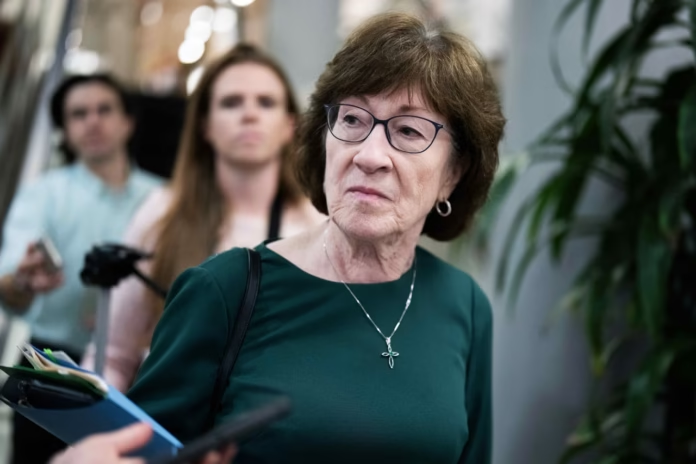
Senator Susan Collins of Maine and Democratic challenger Graham Platner both secured their party’s nominations in Tuesday’s primary, formally setting up a general election contest that both parties view as central to the battle for Senate control in 2026. Collins, first elected in 1996 and seeking a sixth term, ran unopposed for renomination, while Platner, a veteran and oyster farmer making his first bid for political office, won the Democratic nomination after a campaign marked by some controversy during the primary process.
Collins occupies a unique position within the Senate Republican conference as the only member representing a state that Trump lost in the 2024 presidential election, a distinction that has made her a perennial target for Democratic efforts to flip the seat. She has built her decades-long career on a reputation for independence, having voted to convict Trump during his second impeachment trial following the January 6 Capitol attack, while also voting in favor of bipartisan legislation seeking to limit Trump’s war-making authority and opposing several of his more contentious second-term Cabinet nominees, including Defense Secretary Pete Hegseth and FBI Director Kash Patel.
Despite that history of occasional breaks with the administration, Trump has signaled support for her reelection, telling Fox News in March that he hopes she wins because Republicans “have to keep the majority.” Collins has also drawn criticism directly from Trump on other occasions, including after she voted in favor of legislation aimed at constraining his authority to conduct military operations in Venezuela, which prompted Trump to suggest that Republicans who supported the measure “should never be elected to office again.”
Despite the friction, Collins has continued to frame her appeal to Maine voters around independence from strict party loyalty, telling supporters that the state’s electorate has historically evaluated candidates individually rather than along strict partisan lines. Democrats, sensing a genuine opportunity given Maine’s leftward presidential trend, have made Collins their top target in the chamber for the third consecutive election cycle, according to Collins herself, who has pointed to Senate Minority Leader Chuck Schumer’s repeated focus on her seat.
Why It Matters
The Maine Senate race carries outsized significance for the overall battle for Senate control, since Democrats need a net gain of four seats to retake the majority, and Collins’s seat represents one of their clearest opportunities given the state’s recent presidential voting patterns. Her ability to once again defy unfavorable partisan trends, as she did in 2020 when she won reelection by more than eight points even as Trump lost the state by nine, will be closely watched as a test of whether personal political brand can continue to overcome structural disadvantages.
For Senate Republicans, Collins represents a distinct governing model within the conference: a senator willing to break from the president on specific votes while still generally supporting the broader Republican agenda. Her continued presence in the Senate, should she win reelection, would preserve a moderate voice within the GOP conference at a moment when the party has increasingly consolidated around stricter loyalty to the president’s positions.
The race also illustrates the complicated political calculations facing Trump when deciding how much direct involvement to apply in races involving Republican incumbents who have occasionally opposed him. His expressed hope for her victory, despite past criticism of her voting record, reflects the practical reality that maintaining the Senate majority sometimes requires supporting candidates who do not align with him on every issue.
For Maine voters, the contest will likely center on competing visions of representation, with Collins emphasizing her seniority and ability to deliver results through institutional experience, while Platner, as a political newcomer, will likely position himself as offering generational change and a clean break from establishment politics in both parties.
Economic and Global Context
Maine’s Senate race is expected to draw substantial outside spending from national party committees and allied groups given its importance to the overall Senate majority calculation, with both parties treating the contest as among their highest priorities for the cycle. Collins has historically been outspent in her previous reelection campaigns yet has consistently overperformed pre-election polling, a dynamic that both parties will be testing again this cycle.
The broader national environment for the 2026 midterms features Republicans defending a narrow 53-47 Senate majority, with Maine joining Georgia, North Carolina, and Michigan among the most competitive races nationally. Historical midterm patterns generally favor the party not holding the White House, adding additional pressure on vulnerable incumbents like Collins regardless of their individual political brand.
Collins’s voting record, including her opposition to the One Big Beautiful Bill Act and support for limiting certain executive war powers, reflects a broader tension within the Republican conference between full alignment with the president’s agenda and the political necessity, in certain states, of maintaining distance on specific high-profile votes.
Implications
For Senate Republicans, holding Collins’s seat remains essential to preserving their majority, meaning national party resources are likely to flow heavily into Maine regardless of any lingering tension between Collins and the White House over specific past votes.
For Democrats, Platner’s candidacy as a political outsider represents a strategic bet that voters frustrated with establishment politics in both parties may be more receptive to a non-traditional candidate than to a more conventional Democratic nominee in a state with independent-minded voters.
For the broader Republican Party, the outcome will offer insight into whether voters continue to reward senators who maintain independence from the president on selected issues, a model that could inform how other moderate Republicans approach their own reelection strategies in future cycles.
Sources
Maine Senate midterms to pit Collins against Platner after controversy-fueled primary run

