Story Highlights
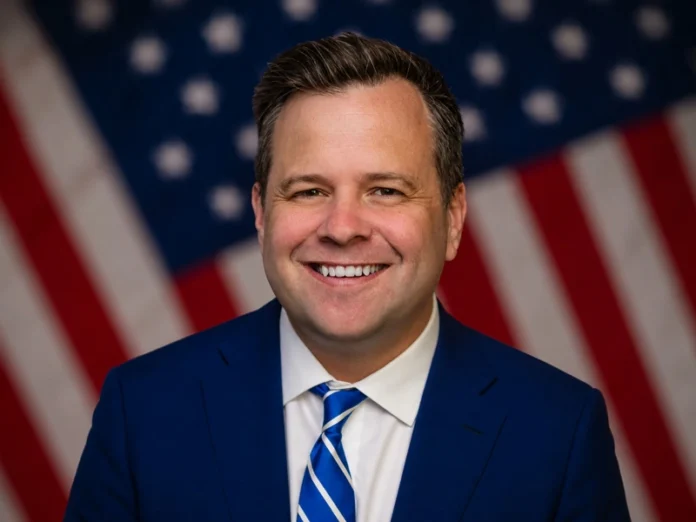
- Trump appointed Bill Pulte as acting DNI, effective June 19, replacing Tulsi Gabbard who announced her resignation in May
- Pulte has no intelligence or national security background, drawing bipartisan criticism including from Senate Majority Leader John Thune
- Democratic senators are blocking renewal of Section 702 of FISA, a critical surveillance authority, over Pulte’s appointment
What Happened
President Trump said he was appointing Bill Pulte as acting director of national intelligence to replace Tulsi Gabbard, who announced she would resign from her role on June 30. Trump cited Gabbard’s desire to be with her husband as he is being treated for bone cancer.
Pulte currently serves as head of the Federal Housing Finance Agency, and in that position he has helped the Trump administration compile information to fuel investigations into the president’s perceived political enemies. As acting director of national intelligence, Pulte will be the highest-ranking intelligence official, overseeing a vast network of 18 agencies, including the CIA and the National Security Agency.
Trump announced the decision in a social media post, listing Pulte’s qualifications as someone with deep experience managing the most sensitive matters in America, the safety and soundness of the markets, and oversight of over ten trillion dollars at Fannie Mae and Freddie Mac. Critics immediately noted that financial management experience is categorically different from the intelligence and national security expertise that Congress specified when creating the DNI role after 9/11.
Trump doubled down on his choice in a subsequent Truth Social post, directing Pulte to cut staff at the Office of the Director of National Intelligence as soon as he takes up his role, reverting personnel to their home agencies. Trump also emphasized he was already searching for a permanent ODNI nominee with experience in national security.
Pulte has been a reliable advocate for the administration and has shown a willingness to go after the president’s perceived enemies. He previously accused Federal Reserve Board Governor Lisa Cook of mortgage fraud, targeted New York Attorney General Letitia James over residency claims, and pursued accusations against Democratic Senator Adam Schiff. All three have denied wrongdoing.
Why It Matters
The director of national intelligence is arguably the most consequential intelligence role in the federal government. The position was created after the 9/11 Commission concluded that poor coordination between intelligence agencies allowed terrorist threats to go undetected. Congress was explicit in requiring extensive national security expertise for anyone nominated to fill it permanently.
Sen. Mark Warner of Virginia, the top Democrat on the Senate Intelligence Committee, slammed the decision, saying Pulte was chosen precisely because the White House believes he will provide the narrative it wants, not the intelligence the country needs. Warner warned that this is how intelligence becomes politicized, how inconvenient facts disappear, and how agencies charged with protecting democracy instead become tools of manipulation.
Senate Majority Leader John Thune, a Republican, said he did not want a weaponized DNI. Congressional leaders from Trump’s own party called on the president to select a permanent intelligence chief to put the matter to rest, reflecting discomfort within Republican ranks about the appointment even as most stopped short of outright opposition.
Economic and Global Context
The intelligence community’s work directly underpins economic and national security decision-making. At a moment when the United States is engaged in active nuclear negotiations with Iran and managing ongoing tensions with China, the quality and credibility of intelligence assessments reaching the president are of heightened importance.
The appointment has become a flashpoint in Congress, with Democrats refusing to renew Section 702 of the Foreign Intelligence Surveillance Act, which allows warrantless surveillance of communications involving foreigners. That measure is divisive on both sides of the aisle, as it has also resulted in the surveillance of U.S. citizens. It allows intelligence agencies to collect emails, texts, and phone data without warrants if the communications are believed to involve individuals outside the U.S.
All but one Senate Democrat and seven Republicans voted against a three-year extension of Section 702, citing concerns about Pulte. Pennsylvania’s John Fetterman was the only Democrat to break party ranks in that 52-47 vote. Trump called on Congress to pass a temporary extension, accusing Democrats of taking national security hostage over unrelated issues.
Implications
If Section 702 is allowed to lapse without renewal, it would represent a significant operational setback for the intelligence community. The authority is used extensively to monitor foreign adversaries’ communications, including those of state-sponsored hackers, terrorist organizations, and foreign intelligence operatives active inside the United States. Its expiration would require agencies to seek individual court orders for surveillance that is currently conducted at scale under a blanket legal authorization.
For the Republican Party, the episode highlights the limits of executive power without legislative cooperation. Even in a Senate where Republicans hold a majority, there are clear boundaries beyond which the president’s unilateral appointments generate sufficient internal resistance to block legislative action that the administration wants.
For Pulte, the road ahead is challenging. Acting officials in senior national security roles face particular scrutiny from career intelligence professionals, foreign partners who may question the continuity of assessments, and congressional oversight committees who control funding and can compel testimony.
Sources
“Trump appoints Bill Pulte as acting director of national intelligence”

