Story Highlights
Trump-endorsed Rep. Mike Collins defeated Derek Dooley in the GOP Senate runoff, setting up a race against Sen. Jon Ossoff
Trump and Gov. Brian Kemp’s joint pick for governor, Burt Jones, lost to self-funded businessman Rick Jackson
Jackson spent more than 100 million dollars of his own money to overcome the Trump-Kemp endorsement
What Happened
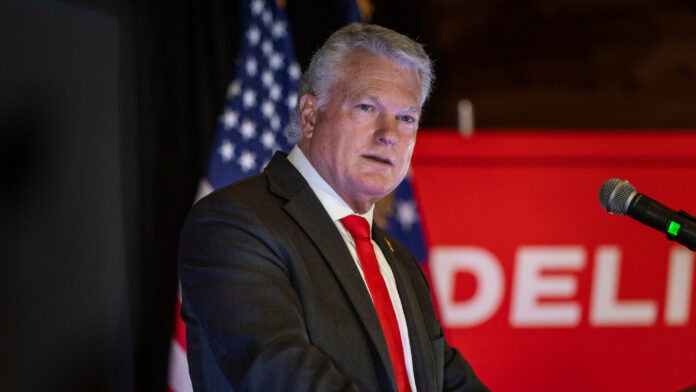
Georgia Republicans went to the polls Tuesday for runoff elections that will shape two of the state’s most consequential races in November, delivering President Donald Trump a win in one contest and a rare defeat in the other. Representative Mike Collins won the Republican nomination for the U.S. Senate seat currently held by Democratic Senator Jon Ossoff, defeating former University of Tennessee football coach Derek Dooley by a decisive margin after Trump issued a late endorsement just days before the vote.
Collins, who has represented Georgia’s 10th Congressional District since 2023 and owns a trucking business, finished first in the original May primary with nearly 41 percent of the vote, advancing to a runoff after no candidate cleared the 50 percent threshold needed for outright victory. Dooley, the son of legendary University of Georgia football coach Vince Dooley, had been recruited into the race by term-limited Governor Brian Kemp, who argued that a political outsider would be better positioned to defeat Ossoff in November. Trump’s endorsement criticized Dooley for previously acknowledging that Trump lost Georgia in the 2020 election, a fact Trump continues to dispute.
In the simultaneous runoff for Georgia’s open governor’s race, the outcome ran in the opposite direction. Healthcare executive Rick Jackson defeated Lieutenant Governor Burt Jones, who had secured endorsements from both Trump and Kemp, two of the most powerful figures in Georgia Republican politics. Jackson, a self-described political outsider who spent more than 100 million dollars of his own wealth on the race, built his campaign around comparisons to Trump’s own outsider political identity, despite lacking the president’s formal backing. Jones, a longtime Trump ally who signed Electoral College documents in 2020 falsely certifying that Trump had won Georgia, was unable to overcome Jackson’s overwhelming financial advantage even after Kemp issued a last-minute endorsement just days before the vote.
Jackson will now face former Atlanta Mayor Keisha Lance Bottoms, a Biden administration adviser, in the November general election, while Collins moves on to challenge Ossoff, the only Democratic senator currently representing a state Trump carried in the 2024 presidential election.
Why It Matters
The split outcome in Georgia offers one of the clearest data points yet on the actual boundaries of Trump’s influence over Republican primary voters heading into a critical midterm year. While Trump’s endorsement proved decisive in tipping a closely contested Senate primary, it was insufficient to overcome a well-funded opponent in the governor’s race, suggesting that financial resources and campaign infrastructure can still outweigh presidential backing under the right circumstances.
For Senate Republicans, Collins’s victory preserves what party strategists consider one of their best opportunities to flip a Democratic-held seat in 2026, given that Georgia remains a state Trump won in 2024 despite Ossoff’s incumbency. Ossoff has built a substantial financial advantage heading into the general election, raising more money than any other Senate candidate in the current cycle, meaning Collins will need robust national party support to remain competitive financially.
The governor’s race loss adds to a growing list of Trump-endorsed candidates who have fallen short in 2026 primary contests, including a defeat in the Iowa governor’s race and a primary loss for a Texas statewide official earlier in the cycle. While Trump’s overall record of endorsements winning primaries remains strong, the accumulation of these defeats in marquee races raises questions among some Republican strategists about whether his political capital is becoming more selectively effective rather than universally decisive.
The Georgia results also expose a continuing rift between Trump and Kemp, two of the most influential figures in the state’s Republican politics, whose alliance on the governor’s race could not overcome Jackson’s resources, even as their joint message failed to resonate as strongly as it has in past contests.
Economic and Global Context
Georgia’s Senate race is expected to become one of the most expensive in the country this cycle, with both parties anticipating spending well into the hundreds of millions of dollars given the seat’s pivotal role in determining Senate control. Democrats need a net gain of four seats to retake the majority, making Ossoff’s seat, in a state Trump won, an essential target for Republicans hoping to preserve their narrow 53-45 majority.
Jackson’s deployment of more than 100 million dollars in personal wealth illustrates a broader trend in contemporary American politics, where self-funded candidates increasingly compete with traditionally endorsed candidates by leveraging personal fortunes to dominate advertising markets. Tracking firm AdImpact found Jackson outspent Jones by nearly three times since the start of the year, a financial gap that traditional endorsements struggled to offset.
The outcome also has implications for how national Republican fundraising committees allocate resources for the general election, since both Collins and Jackson will now require substantial outside support to compete against well-funded Democratic opponents in a state that remains genuinely competitive at the statewide level.
Implications
For Senate Republicans, the focus now shifts entirely to the general election matchup between Collins and Ossoff, with national party committees expected to direct significant resources toward the race given its outsized importance to overall Senate control.
For Trump, the mixed results will likely prompt continued scrutiny of his endorsement strategy heading into the remaining 2026 primary contests, particularly in races where well-funded self-styled outsiders present a genuine financial challenge to his preferred candidates.
For Georgia Republicans more broadly, the simultaneous wins and losses suggest the party’s coalition remains capable of producing competitive nominees in both directions, even as it grapples with internal tension between Trump’s national brand and the preferences of figures like Kemp who maintain independent standing within the state.
Sources
Rep. Mike Collins wins GOP runoff in Georgia Senate racehttps://www.nbcnews.com/politics/2026-election/georgia-senate-midterms-primary-winner-collins-rcna350028

