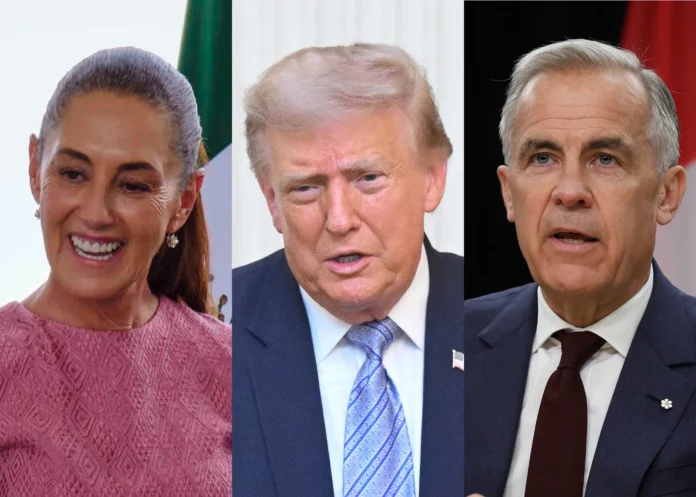
President Trump attended the FIFA World Cup final between Argentina and Spain on Sunday at MetLife Stadium, marking a historic first for an American president and capping the United States’ co-hosting role in the largest World Cup ever staged. Trump joined FIFA President Gianni Infantino to present the trophy, appearing alongside fellow North American co-host leaders Canadian Prime Minister Mark Carney and Mexican President Claudia Sheinbaum. The appearance closes out a month-long tournament the White House has repeatedly touted as the most watched and successful in the event’s history.
Story Highlights
- President Trump attended the World Cup final on July 19 at MetLife Stadium in East Rutherford, New Jersey, his first appearance at the tournament
- Trump joined FIFA President Gianni Infantino to present the championship trophy to the winning team
- Canadian PM Mark Carney and Mexican President Claudia Sheinbaum, leaders of the two other World Cup host nations, also attended
What Happened
President Donald Trump traveled from his Bedminster, New Jersey golf club to MetLife Stadium in East Rutherford on Sunday to attend the championship match of the 2026 FIFA World Cup, pitting Spain against Argentina. The White House confirmed his attendance three days earlier, with Press Secretary Karoline Leavitt telling reporters that “his attendance will cap what has been the most watched, most secure, and most successful World Cup in American history.” The trip marked Trump’s first appearance at any match during the monthlong tournament, which was jointly hosted by the United States, Canada, and Mexico.
FIFA President Gianni Infantino confirmed in the weeks leading up to the final that he and Trump would jointly present the championship trophy to the winning team, a role Trump previously filled at last year’s FIFA Club World Cup final at the same venue, when Chelsea defeated Paris Saint-Germain. “We will be together with the president, enjoying the final, and handing the trophy to the winner, of course, together,” Infantino said in an interview ahead of the match. The relationship between Trump and Infantino has grown notably close over the past year, with FIFA opening an office at Trump Tower in New York City and Infantino accompanying the president on international travel earlier this year.
Sunday’s match drew a notable gathering of North American leadership, as Canadian Prime Minister Mark Carney and Mexican President Claudia Sheinbaum, both of whom lead nations that co-hosted matches throughout the tournament, accepted invitations to attend alongside Trump. The appearance placed three leaders with a complicated diplomatic history in close proximity during a high-profile international sporting event, offering a rare moment of shared ceremonial duty amid ongoing trade and border tensions between Washington and its northern and southern neighbors.
The final capped a tournament that expanded to 48 teams for the first time in World Cup history, with matches distributed across all three host countries. Trump’s absence from the tournament until the final match drew some commentary, but his appearance at the championship game, coupled with the trophy presentation alongside Infantino, ensured his role as a central figure in the closing moments of the largest global sporting event hosted on American soil in decades. Security for the event was extensive, consistent with the elevated protective posture typically associated with presidential appearances at large public gatherings.
Why It Matters
Trump’s attendance at the World Cup final represents a significant diplomatic and soft-power moment for the United States, offering the administration an opportunity to showcase American infrastructure, security capability, and global hosting credentials on one of the largest possible international stages. With an estimated global television audience numbering in the hundreds of millions, the event provided a high-visibility platform for the administration at a time when much of its foreign policy attention has been consumed by the ongoing conflict with Iran.
The gathering of Trump, Carney, and Sheinbaum together in a shared box carries symbolic weight beyond sports. All three lead nations whose relationships have been strained at various points over trade policy, tariffs, and border security, and their joint appearance at a ceremonial sporting event offers a notable contrast to the more adversarial tone that has often characterized formal diplomatic engagements between the three governments over the past year.
For the American tourism, hospitality, and sports industries, successfully co-hosting the expanded 48-team World Cup represents a substantial economic and reputational achievement, one the administration has been eager to claim credit for as evidence of effective large-event planning and security coordination under its watch.
The event also reinforces Trump’s affinity for high-profile sports diplomacy, following a pattern established during his first term and continued throughout his second, in which the president has used marquee sporting events, from the Club World Cup to now football’s biggest global stage, as opportunities for both domestic political messaging and informal international engagement with foreign leaders.
Economic and Global Context
The 2026 World Cup represented a substantial economic undertaking for all three host nations, with stadium renovations, security infrastructure, and hospitality investments running into the billions of dollars across the United States, Canada, and Mexico. Economic impact estimates for World Cup host nations have historically ranged widely, but tourism officials in host cities across the three countries have pointed to significant increases in hotel occupancy, restaurant spending, and retail activity throughout the tournament’s monthlong run.
MetLife Stadium’s selection as the site of the final reflects its status as one of the largest and most well-equipped venues in the New York metropolitan area, with a capacity exceeding 82,000, and its recent history hosting major FIFA events, including last year’s Club World Cup final, positioned it as a natural choice for the tournament’s marquee match.
Globally, the expanded 48-team format significantly broadened the tournament’s reach, incorporating more national federations and, by extension, more global audiences than any prior World Cup. The co-hosting arrangement among the United States, Canada, and Mexico also required unprecedented cross-border logistical coordination, offering a real-world test of North American infrastructure and security cooperation even as trade relationships among the three nations have faced periodic strain.
The presence of Carney and Sheinbaum alongside Trump additionally underscores the economic interdependence of the three co-host nations, whose tourism and hospitality sectors all benefited from shared ticket sales, cross-border travel, and joint marketing efforts throughout the tournament.
Implications
In the near term, expect continued White House messaging emphasizing the tournament’s security and logistical success as a broader validation of the administration’s approach to large-scale event planning, likely featuring prominently in future public remarks about American infrastructure and hosting capability.
For U.S.-Canada and U.S.-Mexico relations, the shared appearance at the final offers a symbolic opening for renewed diplomatic engagement, though whether the goodwill generated by a joint sporting event translates into substantive progress on trade or border issues remains uncertain given the underlying tensions that persist between the three governments.
For the sports and hospitality industries, the successful conclusion of the tournament is likely to strengthen the case for future American bids to host major international sporting events, reinforcing venues like MetLife Stadium as premier destinations for global competitions.
For FIFA and Infantino, the close relationship cultivated with the Trump administration throughout the tournament, including the Trump Tower office and repeated joint appearances at marquee matches, signals a continued alignment between the international soccer governing body and the current U.S. administration heading into future major tournaments.
Sources

