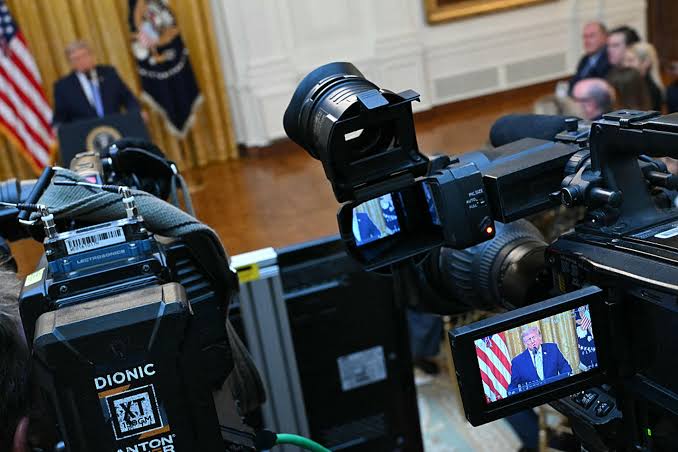
President Trump’s declassification of intelligence documents alleging Chinese interference in the 2020 election has triggered a secondary battle over how major news outlets covered his Thursday primetime address, with conservative critics accusing outlets like The New York Times of presenting a one-sided account that downplayed the president’s underlying claims. The dispute reflects a broader and long-running conflict between the Trump administration and legacy media organizations over how his public statements and supporting evidence are characterized. Republican commentators argue the declassified materials deserve more substantive examination than they have received.
Story Highlights
- Trump declassified intelligence documents he says show China bought, stole, or hacked tens of millions of voter data files across 18 states
- Trump claims Democrat-controlled states have refused to share voter files, suggesting the true scope of Chinese data access is undisclosed
- Conservative media outlets accused New York Times reporters Julian Barnes and Maggie Haberman of unbalanced coverage of the speech
- The dispute unfolds alongside broader Republican criticism of broadcasters that declined to air Trump’s address in full
What Happened
Following President Trump’s Thursday primetime address on election security, the White House released a tranche of declassified intelligence documents that officials say support the president’s claims regarding Chinese access to American voter registration data. According to Trump’s remarks, the materials show that Chinese actors acquired tens of millions of voter data files spanning 18 states, though the declassified assessments themselves, according to independent reporting, characterized the situation with more nuance than Trump’s public framing suggested, noting that voter registration information is often publicly available for download in many states.
Trump went further in follow-up statements, alleging that the true scope of Chinese access to voter data may be significantly understated because several Democrat-controlled states have refused to share their voter files with federal investigators. “Since Democrat states refused to share their voter files, the real number is actually much higher than that,” Trump said, according to reporting that captured his remarks in the days surrounding the speech. The claim adds a partisan dimension to what the administration has otherwise sought to frame as a nonpartisan election security concern.
In the aftermath of the speech, a parallel controversy emerged over media coverage of the address and the declassified documents. Conservative commentary outlets, including a widely circulated newsletter authored under the byline “Trump Card,” singled out New York Times national security reporter Julian Barnes and White House correspondent Maggie Haberman for what critics characterized as an imbalanced treatment of the story. The critique alleged that the Times gave Trump only brief, cherry-picked quotations while devoting substantially more space to rebuttals and skeptical framing, without including perspectives from outside experts who might support the president’s underlying claims.
The controversy over media framing adds to a broader pattern of tension between the Trump administration and major news organizations that has persisted throughout his second term. During his primetime address itself, Trump explicitly called for broadcasters who declined to air his remarks in full, including several major networks that opted not to carry the speech on their primary channels, to have their licenses reviewed, a comment that drew immediate criticism from press freedom advocates but resonated with segments of his conservative base who view legacy media coverage as fundamentally hostile to his administration.
Republican lawmakers and commentators have used the episode to reinforce longstanding arguments about perceived media bias in coverage of the president, framing the disparity between the declassified documents’ technical findings and Trump’s more sweeping public characterization of them as evidence that outlets are more interested in undermining the president’s credibility than fairly presenting the underlying intelligence for public evaluation.
Why It Matters
The dispute over media coverage of the declassified documents matters beyond typical partisan media criticism because it touches on a foundational question of how the public evaluates competing claims about election security ahead of a consequential midterm cycle. When independent fact-checkers and the declassified documents themselves offer a more measured account than the president’s public statements, media organizations face a genuine challenge in fairly representing both the official record and the political rhetoric surrounding it without appearing to take sides.
For Republican voters and conservative media consumers, the perception that legacy outlets systematically underrepresent pro-Trump perspectives reinforces existing distrust in mainstream journalism, a dynamic that has significant implications for how information about contested political topics, including election administration, ultimately reaches different segments of the electorate ahead of November’s midterms.
The episode also illustrates the practical difficulty facing news organizations when covering claims that blend genuine underlying intelligence findings with more expansive political framing. Reporters attempting to contextualize Trump’s claims against the actual content of declassified documents risk being characterized as either insufficiently critical or unfairly dismissive, regardless of how they approach the story.
Economic and Global Context
While primarily a domestic media and political story, the underlying allegations regarding Chinese access to American voter data intersect with the broader U.S.-China relationship, which remains strained across multiple fronts including trade, technology, and now election security concerns. China’s embassy has firmly denied any interference in U.S. elections, a position consistent with Beijing’s historical stance on similar allegations raised by American officials across administrations.
The controversy also reflects the increasingly fragmented media landscape in which conservative and legacy outlets often present starkly different narratives around the same underlying facts, complicating efforts by international observers and foreign governments to assess the credibility of specific claims made by U.S. officials regarding election security threats.
Domestically, the dispute adds to an already crowded news environment shaped by the Federal Communications Commission’s separate scrutiny of broadcast programming decisions, with some conservative outlets separately reporting on potential FCC actions related to other television programs perceived as critical of the administration.
Implications
In the coming weeks, expect continued scrutiny of the declassified documents themselves as independent analysts, journalists, and potentially congressional investigators examine the underlying intelligence assessments more closely, testing whether they substantiate the broader claims Trump made in his address. Any additional context that emerges, whether supporting or undermining the administration’s characterization, will likely shape the ongoing debate over media coverage fairness.
For news organizations, the episode underscores the continued difficulty of covering an administration that frequently pairs technical government findings with expansive public rhetoric, a dynamic that will likely persist through the midterm election cycle as election security remains a central and contested theme in American political discourse.
For Republican lawmakers and the broader conservative media ecosystem, the controversy is likely to be cited repeatedly as evidence supporting calls for greater accountability or reform of how legacy outlets cover the administration, feeding into ongoing debates about broadcast licensing, media bias, and the role of alternative conservative outlets in shaping public understanding of contested political claims.
Sources
“Key takeaways from Donald Trump’s controversial speech on election security”

