Story Highlights
-
Donald Trump signaled a renewed push for U.S. manufacturing growth.
-
Policies aim to expand domestic production and industrial investment.
-
Officials say stronger manufacturing supports jobs and economic resilience.
What Happened
President Donald Trump highlighted a renewed emphasis on strengthening the U.S. manufacturing sector, positioning it as a cornerstone of economic growth and long-term stability. The administration pointed to consistent production levels and rising private-sector investment as indicators that the industrial base remains strong.
According to reporting from Reuters, manufacturing activity across industries such as automotive, machinery, and industrial equipment continues to show steady output. Businesses are maintaining production levels despite evolving global economic conditions, supported by stable demand both domestically and internationally.
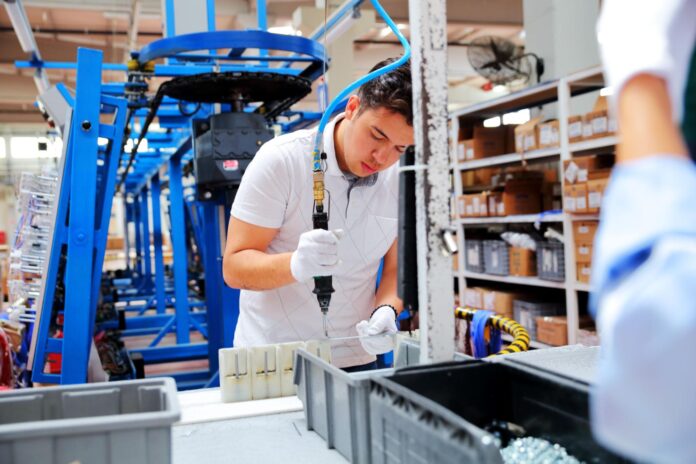
Officials also emphasized the importance of expanding domestic manufacturing capacity. Investments in factories, equipment upgrades, and workforce development are being encouraged to strengthen the industrial ecosystem. Companies are increasingly adopting advanced technologies—including automation, robotics, and data-driven systems—to improve efficiency and remain competitive.
Another key focus is supply chain resilience. Policymakers highlighted efforts to reduce reliance on external production by boosting domestic capabilities. By strengthening local supply chains, the administration aims to improve reliability, reduce disruptions, and enhance economic security.
Why It Matters
Manufacturing plays a vital role in the U.S. economy, contributing significantly to employment, exports, and innovation. A strong industrial base supports economic stability and helps maintain global competitiveness.
For businesses, manufacturing expansion creates opportunities for growth. Companies involved in production, logistics, and supply chains benefit from increased demand and improved efficiency. This allows firms to scale operations and enhance productivity.
For workers, a stronger manufacturing sector translates into job creation. Roles in production, engineering, maintenance, and operations provide stable employment and support regional economic development, particularly in industrial hubs.
Manufacturing also drives innovation. Investment in advanced production technologies enables companies to improve processes, reduce costs, and develop new products. This strengthens the overall competitiveness of U.S. industries in global markets.
Consumers benefit indirectly as well. A robust domestic manufacturing base can improve product availability, reduce supply disruptions, and contribute to more stable pricing.
Political and Economic Context
Manufacturing policy is closely tied to national economic strategy and global competition. Governments often prioritize domestic production to strengthen resilience and reduce dependence on international supply chains.
The Trump administration has consistently emphasized manufacturing growth as a strategic priority. Supporters argue that expanding domestic production enhances economic independence, supports job creation, and strengthens industrial capabilities.
The Federal Reserve monitors manufacturing activity as part of its broader economic assessment. Stable industrial output signals balanced growth and can influence monetary policy decisions.
Globally, manufacturing remains highly competitive. Countries are investing heavily in technology, infrastructure, and workforce development to strengthen their industrial sectors. In this environment, maintaining a strong manufacturing base is essential for the United States.
Technological transformation is also reshaping the sector. Automation, artificial intelligence, and digital systems are revolutionizing production processes, requiring continuous investment and adaptation from businesses.
Implications
If current trends continue, the U.S. manufacturing sector could see sustained expansion, supporting economic growth and employment. Increased investment and technological adoption may lead to higher productivity and improved competitiveness.
For businesses, the outlook suggests opportunities to expand operations and improve efficiency. Companies that invest in automation and supply chain optimization may gain a significant advantage in the market.
For policymakers, maintaining manufacturing growth will require continued focus on infrastructure, workforce training, and regulatory balance. Ensuring that policies support both innovation and stability will be key.
For workers, manufacturing expansion provides opportunities for stable employment and career development. However, as technology evolves, skill development and training will become increasingly important.
In the broader context, strengthening manufacturing reinforces the foundation of the U.S. economy. By prioritizing domestic production and innovation, the country can support long-term growth and maintain its position in the global industrial landscape.
Sources
Trump signals manufacturing boost to strengthen U.S. production

