Story Highlights
- The Trump administration threatened to raise tariffs on European vehicles to 25 percent
- European Union officials met U.S. trade representatives in Paris this week
- Auto manufacturers and exporters are warning of higher costs and supply chain disruptions
What Happened
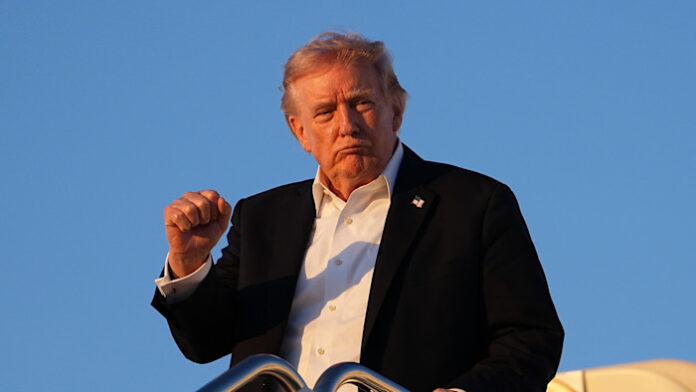
Officials from the European Union met with representatives from the Trump administration in Paris this week after new warnings from Donald Trump raised concerns about another escalation in transatlantic trade tensions. The White House signaled it could increase tariffs on imported European cars and trucks after accusing European leaders of failing to fully implement commitments tied to a 2025 trade agreement negotiated during Trump’s second term.
European Trade Commissioner Maros Sefcovic urged the United States to restore the original tariff framework that both sides had previously discussed. Under the earlier arrangement, many European exports entered the American market under a 15 percent tariff structure that included exemptions for several strategic goods. European officials now argue that new blanket surcharges imposed by Washington have pushed some tariffs above those agreed levels.
The Trump administration has defended the tougher trade posture by arguing that Europe continues benefiting disproportionately from trade access while delaying reforms promised during earlier negotiations. White House advisers also pointed to growing pressure from American manufacturers and labor groups demanding stronger protections for domestic production and supply chains.
The disagreement has focused heavily on the auto industry, which remains one of Europe’s largest export sectors to the United States. Germany’s vehicle manufacturers are especially vulnerable because American consumers represent a significant share of their premium automobile sales. Industry analysts warned that any sharp increase in tariffs could raise vehicle prices for consumers while reducing export demand.
Despite the tensions, both sides agreed to continue negotiations through the summer. Trade officials indicated they hope to finalize operational details connected to the earlier agreement before the end of July. However, diplomats privately acknowledged that political pressure inside both the United States and Europe could complicate any compromise.
Why It Matters
The dispute matters because the United States and European Union collectively represent one of the largest economic relationships in the world. Any disruption between the two economies affects manufacturing, energy markets, technology investment, and financial confidence across multiple industries. A prolonged tariff conflict could also increase costs for American consumers already facing elevated prices in several sectors.
For the Trump administration, the tougher trade strategy reflects a broader effort to promote domestic manufacturing and reduce trade imbalances. Trump has consistently argued that tariffs provide leverage against trading partners and encourage companies to move production into the United States. Supporters of the administration believe the approach strengthens American industrial competitiveness and reduces dependence on foreign suppliers.
Critics, however, warn that additional tariffs may trigger retaliatory measures from Europe and increase uncertainty for businesses operating across international markets. American exporters, including agricultural producers and industrial suppliers, could face new barriers if the European Union responds with countermeasures. Economists also note that higher import costs frequently pass through to consumers in the form of higher retail prices.
The political stakes are equally significant. Trump has made economic nationalism a central element of his political identity, and trade policy remains closely tied to his broader message on jobs, manufacturing, and national security. European leaders, meanwhile, are balancing domestic political pressures with concerns about maintaining stable relations with Washington during a period of global uncertainty.
Economic and Global Context
The renewed tariff tensions arrive during a period of slower global economic growth and persistent geopolitical instability. Central banks in major economies are still managing inflation risks, while governments continue competing for strategic industries including electric vehicles, semiconductors, and advanced manufacturing.
The European auto sector has faced mounting pressure from several directions at once. Chinese electric vehicle competition has increased sharply over the last two years, forcing European manufacturers to defend market share while also investing heavily in new technologies. Additional American tariffs could further weaken profit margins and disrupt long-established export patterns.
Financial markets reacted cautiously to the latest trade developments. Analysts warned that uncertainty surrounding tariffs may discourage investment decisions, especially for multinational companies dependent on stable supply chains. Several industry groups estimated that sustained tariff increases could raise vehicle costs by thousands of dollars depending on the model and production location.
The broader geopolitical implications are also important. The United States and Europe remain closely aligned on security matters involving Russia, China, and Middle East stability. Trade disputes do not necessarily threaten those alliances directly, but prolonged economic tensions could complicate diplomatic coordination on wider strategic issues.
Implications
The next several months will likely determine whether the United States and European Union can stabilize their trade relationship or move toward a deeper economic confrontation. Negotiators are expected to continue discussions throughout the summer as both sides attempt to avoid major disruptions before the next phase of tariff deadlines takes effect.
American manufacturers may benefit in the short term if higher tariffs reduce foreign competition in the domestic auto market. However, companies that rely on imported parts or international production networks could experience higher operating costs. Dealers and consumers may also face price increases if tariffs remain elevated for an extended period.
European policymakers are expected to prepare contingency plans in case negotiations fail. That could include retaliatory tariffs, new industrial subsidies, or accelerated efforts to diversify export markets away from the United States. Such actions would likely increase uncertainty across global trade networks.
For voters and policymakers in the United States, the dispute highlights a broader debate about how aggressively America should use tariffs to pursue economic and geopolitical goals. Trump’s supporters view the strategy as a necessary correction to decades of uneven trade arrangements, while critics argue that escalating trade conflicts may ultimately weaken economic stability and international cooperation.
Sources
“EU urges US to restore trade deal tariffs as anniversary nears”

