Story Highlights
- Trump posted on Truth Social on June 8 saying Israel and Iran are “looking to do an immediate CEASEFIRE” and that final peace negotiations are “proceeding”
- Iran’s Khatam Al-Anbiya Central Headquarters declared a suspension of operations against Israel but warned of more severe action if provocations continue
- The U.S. military confirmed it seized an oil tanker in the Gulf of Oman on June 8 for violating the ongoing blockade of Iranian ports
What Happened
Sunday, June 8, brought a sharp new escalation in the conflict that has gripped the Middle East since President Donald Trump and Israeli Prime Minister Benjamin Netanyahu launched joint strikes against Iranian military and government targets on February 28, 2026. Overnight exchanges between Israeli forces and Iranian military units produced some of the most intense activity since the ceasefire brokered by Pakistan took effect in April. Iran launched missiles aimed at Israeli territory, with at least one striking near the West Bank city of Jericho. In a notable and closely watched development, U.S. forces did not intercept the Iranian missiles during their overnight trajectory — a departure from earlier phases of the conflict in which American air defense assets had been more directly engaged.
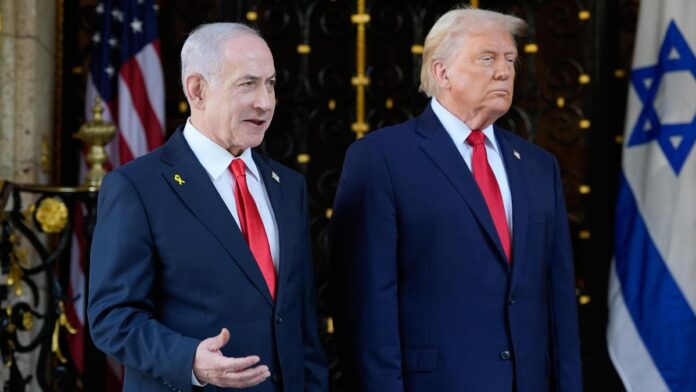
Trump responded on social media Monday morning, writing that Israel and Iran were “looking to do an immediate CEASEFIRE” and that final negotiations on peace were proceeding — contingent, he added, on what he described as ignorance or stupidity not getting in the way. The president had reportedly reached out to Netanyahu in the hours before the escalation, urging the Israeli leader to hold off on retaliating against Iran directly following fresh Israeli operations in Lebanon that had drawn Iranian fire.
Iran’s Khatam Al-Anbiya Central Headquarters issued a formal statement through Iranian state media declaring that its retaliatory operations against Israel had concluded. The statement carried a significant caveat: if aggressions and provocations continued, including Israeli activity in southern Lebanon, Iran reserved the right to respond with actions more severe and decisive than what had just occurred. Iran’s chief negotiator, Mohammad Bagher Ghalibaf, also struck a confrontational note in parallel diplomatic communications, warning that Iran had rebuilt its armed forces during the ceasefire period and that any resumption of the war by the United States would be more costly than the original conflict.
U.S. Central Command separately confirmed that American naval forces detained an unladen oil tanker in the Gulf of Oman on June 8 after the vessel attempted to sail to an Iranian port in violation of the ongoing U.S. blockade. The seizure was presented as routine enforcement of the blockade framework, but added to the day’s overall tension on the water and in regional shipping lanes.
Why It Matters
The Sunday escalation matters because it reveals just how brittle the April ceasefire has become nearly two months after it took effect. What began as a two-week pause mediated by Pakistan has been extended multiple times, but both parties have continued conducting limited strikes in ways that test the ceasefire’s parameters without formally abandoning it. Iran views Israeli operations in southern Lebanon as a casus belli that justifies a response, while Israel considers those operations a matter of independent sovereign security unrelated to the U.S.-Iran negotiations. This gap in interpretation creates a structural problem that the existing ceasefire framework has never resolved.
For the Trump administration, the day’s events crystallized a fundamental tension in its war strategy. The president has pursued an approach that treats military pressure and diplomatic outreach as simultaneous tools, but Sunday’s escalation demonstrated the risk that one can destabilize the other. If Iran interprets continued Israeli strikes as American acquiescence to provocation, negotiating good faith collapses even while talks nominally continue.
The decision by U.S. forces not to intercept Iranian missiles this time — as they had done in previous exchanges — also signals a possible deliberate shift in American operational posture. Whether that represents a message to Israel, an effort to preserve a negotiating dynamic with Iran, or a change in rules of engagement, it has broad implications for how regional allies interpret American commitment and deterrent reliability.
Economic and Global Context
The Iran war has maintained significant pressure on global energy markets since it began in February. The Strait of Hormuz, through which roughly 20 percent of global oil supply flows, has been partially restricted since Iranian forces blocked navigation in the early weeks of the conflict. While the U.S. naval blockade has complicated Iranian oil exports, the broader disruption to tanker traffic has kept oil prices elevated throughout spring. The fresh exchanges on Sunday caused a brief spike in crude futures during overnight trading, with Brent crude rising above its recent range in early Asian market sessions.
The naval seizure of a tanker in the Gulf of Oman adds another dimension. Commercial shipping insurers have already raised war-risk premiums for vessels transiting the region to record levels, and any fresh incident involving a seized or targeted vessel sends a signal to global trade networks that the Strait remains operationally unpredictable. That uncertainty continues to feed through to consumer prices in importing nations, including European allies who have grown increasingly frustrated with the duration of the conflict.
Markets are also watching the peace talks closely for signals about the Strait’s potential reopening. A recent framework under discussion would end hostilities while gradually reopening the Strait and ending the U.S. naval blockade of Iranian ports, with at least 30 days of continued nuclear talks built into the structure. The success or failure of that framework in the coming days will directly influence energy prices and regional economic stability.
Implications
If the ceasefire holds through the week, the negotiating track could move forward under renewed urgency given the close call on Sunday. Trump’s public statement framing both parties as willing ceasefire participants may provide diplomatic cover for de-escalation without forcing either side into a formal concession. That framing — optimistic, forward-looking, and vague on specifics — is consistent with his approach to the conflict throughout the spring.
If the ceasefire fractures, the consequences would be severe. A formal resumption of U.S.-Iranian hostilities would likely trigger another Strait of Hormuz closure, send oil prices sharply higher, and confront Congress with renewed pressure to invoke or strengthen war powers limitations. The House already passed a non-binding war powers resolution last week directing Trump to end the Iran conflict. A Senate version remains stalled, but a fresh escalation could change that political calculus rapidly.
For American voters, the Iran war remains one of the administration’s most consequential and contested decisions. Its duration and cost — financial, diplomatic, and human — have weighed on Trump’s approval ratings throughout the spring, and the November midterm elections are now less than five months away.
Sources
“Iran live updates: Trump calls on Israel, Iran to ‘immediately’ stop attacks”

