Story Highlights
- Rick Jackson defeated Trump-endorsed Lieutenant Governor Burt Jones 53 percent to 47 percent in the June 16 Republican runoff
- Jackson spent more than 100 million dollars of his own fortune on the race, the most expensive gubernatorial primary in Georgia history
- Jackson will face Democrat Keisha Lance Bottoms in November in a contest Cook Political Report rates as a toss-up
What Happened
Georgia’s Republican primary for governor became one of the most expensive and bitter intraparty contests of the 2026 cycle, pitting Lieutenant Governor Burt Jones, a sixth-generation Georgian and longtime Trump ally, against Rick Jackson, a self-funding healthcare executive and first-time candidate who entered the race in February 2026. Jones held the early advantage, securing Trump’s endorsement more than a year before the primary and emphasizing his history as the first member of the Georgia State Assembly to back Trump’s presidential campaign. He also signed alternate elector documents in 2020 falsely claiming Trump had won Georgia, a credential that burnished his standing with the party’s base.
Jackson, who grew up in poverty and spent time in Atlanta’s public housing projects before building a healthcare fortune, reshaped the race almost immediately upon entering, pledging up to 50 million dollars of his own money and ultimately spending more than 100 million dollars combined on his campaign and allied advertising, according to AdImpact data. He positioned himself as the authentic outsider candidate, telling supporters he would be “President Trump’s favorite governor” despite lacking the president’s formal endorsement. The race turned personal and litigious: Jackson sued Jones for defamation after the lieutenant governor accused him of profiting from Planned Parenthood recruitment and transgender medical procedures for minors, while a company owned by Jones separately sued Jackson for 100 million dollars over allegations that Jackson’s campaign implied Jones Petroleum had engaged in criminal activity.
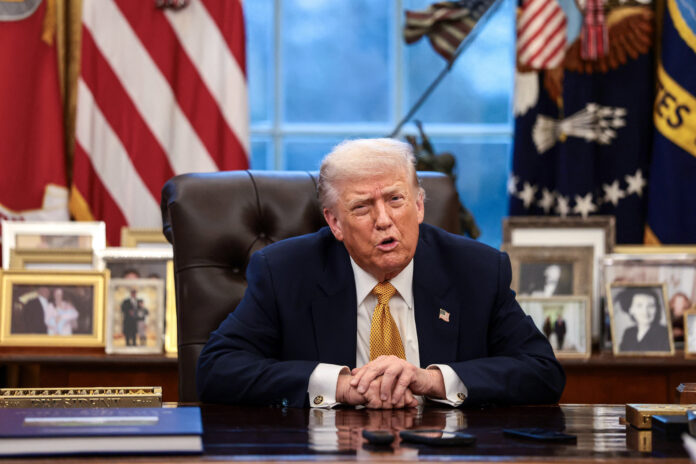
In the days before the June 16 runoff, Trump reiterated his endorsement of Jones, praising his “Courage and Wisdom” in a social media post, while Governor Brian Kemp offered a late endorsement as well. Despite this combined institutional weight, Jackson won decisively, taking 53 percent of the vote to Jones’s 47 percent with most ballots counted. Notably, Georgia Attorney General Chris Carr, who had finished fourth in the initial May primary, endorsed Jackson ahead of the runoff, signaling cracks within the party establishment that had initially rallied around Jones.
Senators Ted Cruz of Texas and Rick Scott of Florida both campaigned with Jackson in the race’s final days, putting them at odds with Trump’s endorsement, though Cruz attempted to frame Jackson’s profile as fundamentally compatible with the MAGA movement, telling supporters “an outsider, a businessman, I don’t know anyone in politics like that.” Donald Trump Jr. similarly avoided a formal break with his father’s endorsement while still praising Jackson on social media as among “the patriots building up MAGA and an America First economy.”
Why It Matters
For Republican strategists, the Georgia result is significant primarily because of what it reveals about the limits of presidential endorsement power when confronted with extraordinary self-funded spending. Trump’s endorsement has proven to be among the most reliable predictors of primary success throughout the 2026 cycle, but Jackson’s willingness to spend over 100 million dollars of his own fortune created a financial mismatch that few past primary challengers have been able to replicate, regardless of their political positioning. The result raises strategic questions for the party about how to handle future races where wealthy outsider candidates can effectively purchase the kind of name recognition and message saturation that typically flows from a presidential endorsement.
The race also illustrates the durability of MAGA-aligned messaging even when deployed against Trump’s own chosen candidate. Jackson did not need Trump’s formal endorsement to convince Republican primary voters of his alignment with the president’s broader political brand, suggesting that the MAGA coalition’s voting behavior, while still heavily influenced by Trump’s direct involvement, retains some independent capacity to evaluate candidates on perceived ideological fit rather than formal endorsement alone.
For the general election, Republicans now face a genuine battleground contest in a state that has become increasingly competitive at the statewide level. Jackson’s unconventional political profile, as a wealthy businessman with no prior elected office experience, creates both opportunities and uncertainties for the party heading into a race against Bottoms, a well-known former Atlanta mayor with substantial name recognition of her own. How effectively Jackson can unify the Republican base after such a contentious and expensive primary will be closely watched by national party strategists assessing the broader health of the GOP coalition heading into the midterms.
The episode also adds to a developing narrative about friction between Trump and elements of his own party during this primary season, with Georgia joining several other states where Trump-endorsed candidates have faced unexpectedly competitive or unsuccessful primary challenges, a pattern that complicates simple assumptions about presidential dominance over the party’s nominating processes.
Economic and Global Context
The financial scale of the Georgia primary reflects a broader trend of wealthy self-funded candidates reshaping competitive primary dynamics across the country in 2026, a development that has implications for how political parties manage candidate recruitment when traditional fundraising networks can be overwhelmed by personal fortunes. Jackson’s spending alone exceeded the total primary spending in many full Senate races this cycle, illustrating the scale of resources increasingly available to candidates without traditional party backing.
Georgia’s economic profile as a major battleground state adds significance to the gubernatorial race beyond its immediate political stakes. The state’s economy, anchored by film production, logistics, and a growing technology sector centered around Atlanta, makes the governor’s office consequential for business climate policy, tax structure, and economic development incentives that affect major employers throughout the Southeast.
The race also intersects with Georgia’s role in the broader national redistricting battles that have defined the 2026 election cycle. Earlier this month, Georgia’s Republican legislative leaders rejected Governor Kemp’s call to redraw congressional and legislative districts during a special session, citing concerns about moving too quickly following the Supreme Court’s Louisiana v. Callais ruling, which weakened Voting Rights Act protections for minority voters. That decision to hold off on redistricting, even as other Republican-led states moved aggressively to redraw maps following the same ruling, suggests internal Republican caution in Georgia that may also reflect lessons learned from the bruising gubernatorial primary fight.
Implications
For Jackson’s general election campaign, the immediate challenge will be consolidating Republican support after a primary that generated significant intraparty acrimony, including multiple lawsuits between the candidates that are unlikely to be fully resolved before November. His ability to win over Jones’s supporters, along with backers of other primary candidates including Secretary of State Brad Raffensperger and Attorney General Carr, will significantly shape his competitiveness against Bottoms.
For the Trump political operation, the loss will likely prompt renewed internal discussion about how to deploy presidential endorsements strategically in races where opponents possess substantial personal wealth, particularly as several other competitive primaries remain on the 2026 calendar where similar financial dynamics could play out.
For national Republicans focused on the broader battle for state-level power, Georgia’s competitive governor’s race adds to an already challenging map, with the GOP needing to defend the seat in a state Trump won twice but where Democratic statewide candidates have demonstrated increasing competitiveness in recent cycles.
For Democrats, Jackson’s victory over the more traditionally MAGA-aligned Jones may complicate efforts to nationalize the race around Trump specifically, since Jackson’s outsider positioning and personal wealth create a different campaign dynamic than a direct referendum on the president would otherwise produce, requiring Bottoms’s campaign to adapt its messaging strategy accordingly heading into the fall.
Sources

