Story Highlights
- Trump has issued over 200 endorsements in the 2026 cycle, backing nearly all Republican incumbents and key open-seat candidates nationwide
- The average Trump endorsement now comes seven months before the November general election, compared to just seven weeks before primary day in the 2018 midterm cycle
- His endorsed candidate Randy Feenstra lost Iowa’s gubernatorial race, one of several visible setbacks that highlight the limits of presidential endorsement power
What Happened
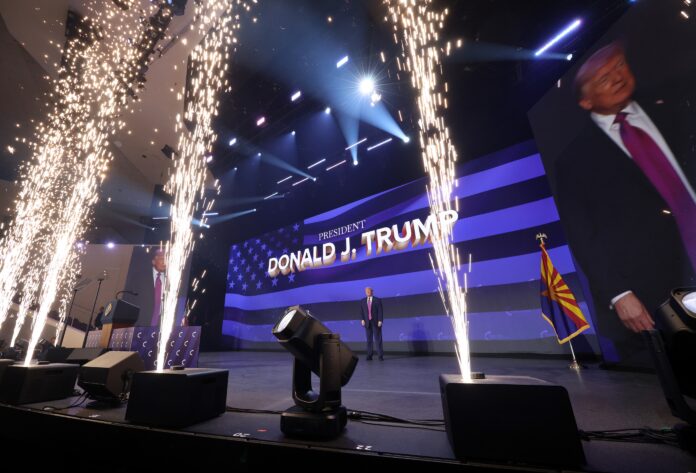
President Donald Trump has transformed the Republican primary calendar in 2026 by deploying his endorsement power earlier and more systematically than ever before. According to an NPR analysis of more than 1,000 Trump endorsements across the past decade, the average endorsement this cycle has arrived approximately seven months before the November general election — compared to roughly seven weeks before primary day in the 2018 midterm cycle. The shift reflects a deliberate strategy to clear primary fields, protect incumbents, and project dominance before competitors can gain traction.
The scope of Trump’s involvement is broad. He has endorsed nearly every Republican incumbent seeking reelection in Senate, House, and gubernatorial races, along with a carefully selected roster of candidates in open and competitive seats. Notable endorsees include Rep. Andy Harris for Maryland’s First Congressional District, Lt. Gov. Jon Husted for Ohio’s Senate seat, and Vivek Ramaswamy for Ohio governor.
Tuesday’s primaries in South Carolina, New York, Maryland, and Utah produced a mixed but largely favorable night for Trump’s endorsed candidates. In South Carolina, Attorney General Alan Wilson won the GOP gubernatorial runoff — an outcome made unusual by Trump’s decision to endorse both runoff candidates in a last-minute Truth Social post. In Iowa, Rep. Ashley Hinson won her Senate primary, along with several other Trump-backed congressional incumbents who performed as expected.
The most prominent stumble of the recent primary season came in Iowa’s gubernatorial race, where Trump-endorsed Rep. Randy Feenstra lost to businessman Zach Lahn by fewer than 2,000 votes. Lahn’s alignment with the Make America Healthy Again movement, led by Health and Human Services Secretary Robert F. Kennedy Jr., gave him credibility with deep-red voters that proved sufficient to overcome a presidential endorsement.
Why It Matters
Trump’s endorsement record in 2026 is a direct measure of his continued hold over the Republican Party and, by extension, his ability to shape the congressional landscape heading into a challenging midterm environment. Republicans hold a narrow House majority, and losing even a handful of seats would flip control to Democrats. The composition of Republican nominees — how ideologically aligned or broadly appealing they are — will significantly affect the party’s chances in competitive general election contests.
The strategic shift toward earlier endorsements is designed to prevent the kind of messy, contested primaries that sapped party resources and produced weak general election candidates in 2022. By signaling support months in advance, Trump aims to dissuade challengers and consolidate his party behind candidates most likely to hold or expand the majority.
However, the Feenstra loss in Iowa, combined with Trump-backed candidates facing competitive runoffs in South Carolina and Oklahoma, suggests the endorsement is not universally decisive. Analysts have noted that as Republican primary voters become more ideologically diverse — with factions aligned to MAHA, libertarian conservatism, and traditional Reaganite Republicanism — the presidential imprimatur carries less automatic weight than it did in previous cycles.
The political dynamics are further complicated by Trump’s own approval ratings. Multiple polls show his numbers hitting new lows, with some surveys indicating he has lost significant support among voters who backed him in 2024. Democrats are over-performing in special elections by historically large margins, including in the race for the Georgia seat previously held by former Rep. Marjorie Taylor Greene.
Economic and Global Context
The political stakes of the 2026 endorsement battles are inseparable from the economic environment voters are experiencing. Inflation remains elevated, trade disruptions from tariff policy have raised prices on consumer goods, and the Iran war has added volatility to energy markets. In competitive congressional districts, the economic climate is a significant factor in whether Trump-endorsed candidates can hold or flip seats in what was expected to be a favorable Republican environment.
Trump’s endorsement of Sen. Susan Collins for reelection in Maine illustrates the political complexity of the moment. Collins voted against the One Big Beautiful Bill Act, has consistently maintained independence from Trump on key votes, and joined the bipartisan war powers rebuke of his Iran policy this week. Yet Trump confirmed her endorsement at the Secure America Act signing, calling her a sane woman. The move signals that electoral pragmatism can override ideological purity tests when Senate math demands it.
Republican operatives have noted that fundraising and media presence are increasingly important inputs to Trump’s endorsement calculus. Candidates who appear frequently on conservative media, generate grassroots energy, and show strong polling are elevated in the White House’s political analysis — suggesting the process is more systematic than individual Truth Social posts might imply to outside observers.
Implications
The outcome of the 2026 midterms will be heavily shaped by how many of Trump’s endorsed candidates survive competitive general elections. If his picks win in sufficient numbers to hold the House and expand the Senate majority, it will validate the endorsement strategy and cement his position as the unchallenged Republican kingmaker heading toward 2028.
A poor midterm performance, by contrast, would accelerate conversations already underway in Republican circles about the party’s long-term direction. Some former Trump allies have already distanced themselves from the president, and several notable retirements — including Sen. Thom Tillis of North Carolina, who announced his departure after opposing the One Big Beautiful Bill — reflect the difficulty of navigating between Trump loyalty and constituent accountability in a competitive state.
Candidates like Rep. Thomas Massie of Kentucky, who has repeatedly defied Trump and earned pointed criticism from the president, face existential primary challenges designed to remove them from Congress. How they fare will be a signal of whether Republican primary voters reward or punish ideological independence in a midterm cycle otherwise defined entirely by Trump’s dominant presence across the party.
Sources
“How Trump’s ‘Complete and Total Endorsement’ has reshaped the Republican Party”

