Story Highlights
- Lawmakers call for a clearer long-term Iran policy
- Ceasefire sparks renewed debate on U.S. foreign strategy
- Focus shifts from immediate crisis to sustained approach
What Happened
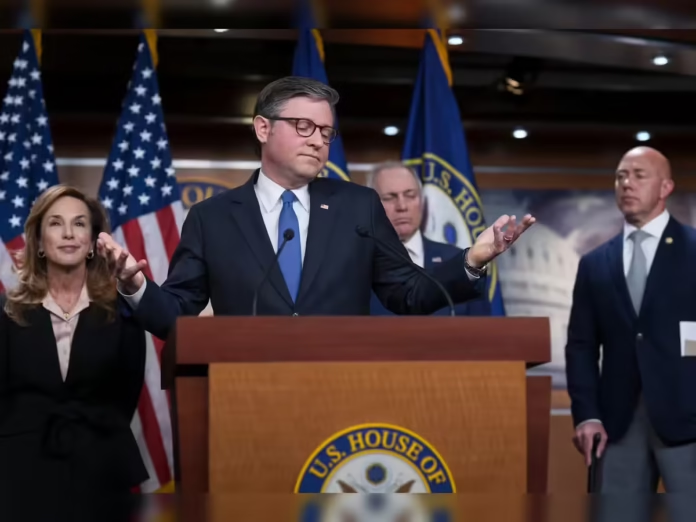
In the wake of the temporary ceasefire between the United States and Iran, lawmakers across the political spectrum have begun debating the broader strategy moving forward. While the agreement has reduced immediate tensions, it has also raised important questions about the long-term direction of U.S. foreign policy in the region. Members of Congress and policy experts are now focusing on what comes next beyond the short-term pause in hostilities.
Discussions have centered on the need for a more comprehensive framework that addresses underlying issues rather than relying solely on temporary measures. Lawmakers have emphasized the importance of defining clear objectives, including how to manage regional security, economic relations, and diplomatic engagement. The ceasefire has provided an opportunity to reassess existing strategies and consider potential adjustments.
Hearings and public statements have reflected a range of perspectives. Some policymakers advocate for strengthening diplomatic channels and building on the current momentum to achieve lasting agreements. Others emphasize the need for maintaining strong deterrence measures to ensure compliance and stability. These differing viewpoints highlight the complexity of formulating a unified approach.
The debate has also involved input from foreign policy analysts and experts, who have provided insights into potential scenarios and outcomes. Their contributions have helped inform discussions, offering perspectives on both risks and opportunities. The focus remains on developing a strategy that balances immediate needs with long-term goals.
Why It Matters
The debate over broader strategy is significant because it will shape how the United States engages with Iran in the future. Temporary agreements like ceasefires can provide short-term relief, but lasting stability requires a well-defined and consistent approach. The decisions made in this phase could have long-term implications for regional and global dynamics.
A clear strategy is also important for maintaining credibility and consistency in foreign policy. Allies and partners often look for predictable and reliable actions, while adversaries assess how policies are implemented. Establishing a coherent framework can help strengthen relationships and reduce uncertainty.
The discussion also highlights the importance of balancing different priorities. Diplomatic engagement, economic considerations, and security concerns all play a role in shaping policy decisions. Finding the right balance among these factors is essential for achieving effective outcomes.
Additionally, the situation underscores the role of legislative oversight in foreign policy. Congressional involvement ensures that decisions are reviewed and debated, contributing to a more comprehensive approach. This process can help identify potential challenges and improve policy formulation.
Political and Geopolitical Impact
Domestically, the debate is likely to influence future policy decisions and legislative actions. Lawmakers may propose new initiatives, funding allocations, or policy guidelines based on the discussions. The outcome of these debates could shape the direction of U.S. foreign policy in the coming months and years.
The discussion also reflects broader political dynamics, as different perspectives on foreign policy are often linked to party priorities and ideological approaches. These dynamics can influence how strategies are developed and implemented.
On the geopolitical stage, the development of a clear strategy will be closely watched by other countries. Allies may seek reassurance about U.S. commitments, while other nations will assess how the strategy affects regional stability. The approach taken by the United States can influence the actions and decisions of other global actors.
The debate may also encourage increased diplomatic engagement with international partners. Coordinated efforts can enhance the effectiveness of policies and contribute to more stable outcomes. Collaboration is often a key component in addressing complex global challenges.
Implications
The ongoing discussions could lead to the development of a more structured and comprehensive approach to U.S.-Iran relations. This may include defined goals, timelines, and mechanisms for monitoring progress. Such a framework could improve the likelihood of achieving lasting stability.
However, reaching consensus on a strategy may be challenging due to differing perspectives and priorities. The process will require negotiation, compromise, and careful consideration of various factors. The ability to navigate these challenges will be critical in determining the effectiveness of the final approach.
In the longer term, the situation highlights the importance of strategic planning in foreign policy. Addressing complex issues requires not only immediate actions but also a clear vision for the future. The current debate provides an opportunity to develop such a vision and guide future decisions.
Sources
“US politicians respond to Iran ceasefire with calls for broader strategy”

