A sweeping new White House report accuses leadership at the Smithsonian’s National Museum of American History of ideological capture, arguing the institution has traded historical scholarship for political activism aimed at dividing the country. The 162-page document, released on the nation’s 250th Independence Day, marks the most aggressive step yet in President Trump’s broader campaign to overhaul American cultural institutions. The Smithsonian has pushed back, defending its independence, setting up a fresh standoff over how the country’s history should be told.
Story Highlights
- The White House Domestic Policy Council released a 162-page report calling Smithsonian museum leadership “extreme” activists
- The report follows Trump’s March 2025 executive order titled “Restoring Truth and Sanity to American History”
- Smithsonian Secretary Lonnie Bunch III has defended the institution’s independence and nonpartisan mission
- The order empowers Vice President Vance to work with congressional leaders on appointing new Smithsonian regents
What Happened
The White House Domestic Policy Council released a report on July 4 accusing leadership at the Smithsonian’s National Museum of American History, known as NMAH, of adopting an ideological framework that treats the American story “as a political instrument to divide, dispirit, and discourage our citizens” rather than a shared national inheritance. The 162-page document argues that the museum’s leadership has explicitly moved its mission away from straightforward historical education toward what the report calls “extreme political activism that seeks to transform our country.”
The report is the product of a comprehensive internal review the White House ordered last August, which placed heavy emphasis on ensuring the museum’s exhibits align with what the administration describes as “the President’s directive to celebrate American exceptionalism.” The review effort traces back to a March 2025 executive order signed by President Trump titled “Restoring Truth and Sanity to American History,” which directed federal agencies to combat what the White House characterizes as revisionist portrayals of the nation’s past. That order also touched off changes at national parks and monuments beyond the Smithsonian itself.
According to the report, authored by a council led by a former top Trump speechwriter, the National Museum of American History “cannot be trusted to tell America’s story honestly and in a way that is inspiring, unifying, and worthy of our great republic.” The document states its central finding is not that the museum simply added overlooked stories or broadened its historical scope, but that leadership deliberately embraced a divisive ideological lens. The order also included a provision instructing Vice President JD Vance to work, if necessary, with House Speaker Mike Johnson and Senate Majority Leader John Thune to appoint new “citizen” members to the Smithsonian Board of Regents, a move that could reshape the institution’s governance.
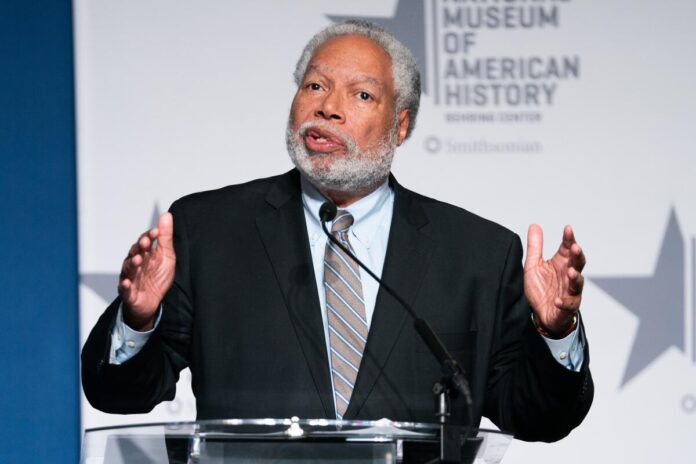
The Smithsonian responded through a spokesperson, telling reporters that the institution has “served the American public with nonpartisan and independent scholarship” for more than 180 years and remains committed to that mission. Smithsonian Secretary Lonnie Bunch III, the first African American to lead the institution, separately told CNN’s “Amanpour” that the nation’s 250th birthday is “an opportunity to actually get people to think about” history, adding that history is “really about ambiguity, complexity, nuance, debate.” Bunch, who has led the Smithsonian since 2019, has said the institution has cooperated extensively with the White House review even while maintaining its operational independence.
Why It Matters
This latest escalation fits into a broader pattern in which the Trump administration has targeted institutions it views as culturally influential but ideologically opposed to its vision of American identity. The Smithsonian, as the world’s largest museum and research complex, occupies a uniquely prominent role in shaping how millions of American schoolchildren and international visitors understand the nation’s founding and development, making the fight over its exhibits more than an academic dispute.
The administration’s push to potentially reshape the Smithsonian’s governing board through new regent appointments raises significant institutional questions, since the Smithsonian operates as a public-private trust rather than a standard executive branch agency, giving it a degree of legal independence that has not previously been tested this directly by a sitting administration.
For conservative voters and policymakers, the report validates long-standing complaints that major cultural institutions have drifted toward a uniformly progressive interpretation of American history, and it signals that the administration intends to use its influence over federal funding and appointments to correct what it views as an imbalance. For those who study or work in public history, the episode raises concerns about the potential politicization of scholarly institutions that have traditionally operated with a measure of independence from changing political winds in Washington.
The dispute also arrives at a symbolically charged moment, timed to the nation’s 250th anniversary, ensuring that the fight over how America’s story gets told will remain a visible and recurring feature of this year’s broader national commemoration efforts.
Economic and Global Context
The Smithsonian Institution operates with a substantial mixed public-private funding structure, receiving significant federal appropriations alongside private donations and its own trust funds, a structure that gives Congress and the executive branch some leverage over its operations even though the institution maintains formal independence. Any effort to reshape its Board of Regents or condition future federal funding on ideological alignment would represent a significant test of that funding arrangement.
This effort mirrors similar administration actions elsewhere in the cultural sector, including Trump’s installation as chairman of the John F. Kennedy Center for the Performing Arts, where his handpicked board pursued programming changes and building renaming efforts, some of which were later challenged in federal court. The administration has also used the threat of withholding federal funding to pressure universities, including a high-profile dispute with Columbia University over several hundred million dollars in federal support.
Internationally, the Smithsonian’s museums draw millions of foreign tourists annually and are frequently cited by educators and cultural institutions abroad as a benchmark for public history presentation, meaning any significant restructuring could draw scrutiny from the global museum community, which has closely watched similar culture-war disputes playing out in Western democracies over how national histories are presented in public institutions.
Implications
In the near term, expect the Smithsonian’s leadership to continue publicly defending its independence while privately navigating pressure from congressional Republicans and the White House over funding and board appointments. Given Bunch’s public comments emphasizing nuance and complexity in historical storytelling, a full capitulation to the report’s demands appears unlikely without a more direct confrontation over funding or governance.
For congressional Republicans, particularly Speaker Johnson and Majority Leader Thune, the report creates an opportunity to advance new regent appointments aligned with the administration’s vision, though doing so would likely draw immediate legal and public relations pushback from Democrats and museum advocacy groups who view the effort as executive overreach into an independent trust.
For the broader public, the dispute will likely become another flashpoint in the ongoing national debate over historical memory and cultural institutions, one that is likely to intensify as the country continues marking its 250th anniversary throughout the remainder of the year.
Sources
“White House brands Smithsonian’s American history museum leaders as ‘extreme’ activists”

