Story Highlights
- The task force has gathered documents from the CIA, NSA, ODNI, FBI, and Justice Department related to alleged 2020 ballot irregularities
- Members have reportedly been encouraged to limit redactions, even when documents include names of government officials
- Trump confirmed he told acting DNI Bill Pulte to “declassify almost everything” during his brief tenure in the role
What Happened
According to reporting from NBC News published this week, a White House task force has been working for months, at times late into the night, to gather thousands of pages of intelligence and law enforcement documents primarily related to the 2020 presidential election. The effort involves collecting material from the Central Intelligence Agency, the National Security Agency, the Office of the Director of National Intelligence, the Federal Bureau of Investigation, and the Justice Department, according to five people familiar with the matter. The documents reportedly concern alleged ballot irregularities, potential voting machine issues, and related topics that Trump has repeatedly cited, without substantiating evidence, as grounds for his belief that the 2020 election was stolen from him.
Sources told NBC News that task force members have been encouraged to limit redactions in any documents ultimately declassified, even when doing so would mean revealing the names of government officials or private individuals mentioned in the records. The initiative is separate from, but related to, comments by journalist John Solomon, who recently left his position at Just the News to take an unpaid advisory role with the administration focused on identifying documents related to “weaponization, election integrity, other things.”
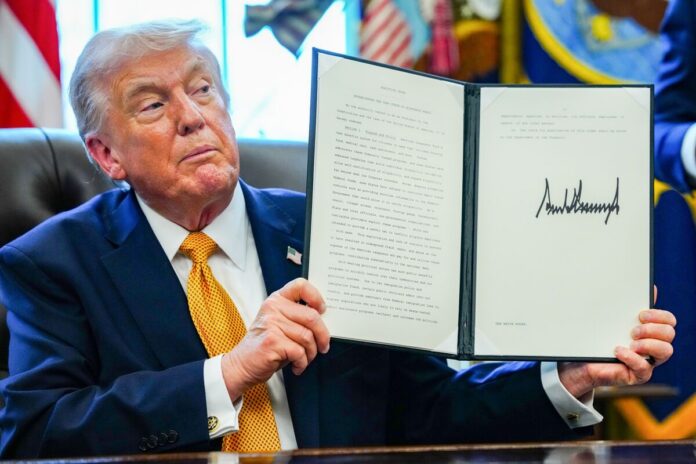
President Trump addressed the effort directly on Wednesday, confirming that he had instructed Bill Pulte, the acting Director of National Intelligence, to “declassify almost everything” during his time in the role. Pulte, who previously led the Federal Housing Finance Agency, was appointed to the intelligence post last month following Tulsi Gabbard’s early departure and is expected to serve only a short-term stint while Trump’s formal nominee, Jay Clayton, currently the U.S. attorney for the Southern District of New York, awaits Senate confirmation. During his brief time atop the ODNI, Pulte has already drawn attention for laying off staffers at the agency on his first day in the role.
Lawmakers from both parties have raised concerns about Pulte’s lack of formal security clearances and national security experience prior to his appointment. Critics have also pointed to his record at the Federal Housing Finance Agency, where he issued criminal referrals against several of Trump’s political adversaries, including Federal Reserve Governor Lisa Cook, Senator Adam Schiff, and New York Attorney General Letitia James, as evidence of a pattern that could extend into his handling of the declassification effort. A White House official defended the initiative in a statement to NBC News, describing Trump as “the most transparent president in history” and committed to “unprecedented transparency.”
Why It Matters
The task force’s work touches on one of the most consequential and repeatedly litigated claims in modern American politics. Extensive audits, recounts, and court proceedings following the 2020 election found no evidence of the widespread fraud Trump has alleged, a conclusion reached by state election officials, federal courts, and Trump’s own Justice Department during his first term. A renewed, White House-directed effort to declassify selective intelligence materials nearly six years later raises questions about whether the initiative is intended to generate genuine investigative findings or to provide political ammunition for claims that have already been extensively examined and rejected by courts.
The instruction to minimize redactions, potentially exposing the names of government officials or private citizens named in classified reporting, has alarmed some national security professionals, who warn that releasing raw intelligence reporting without standard vetting processes could expose sources, damage ongoing investigative relationships, or unfairly implicate individuals named in unverified tips that were never substantiated.
The effort also arrives amid a broader pattern of Trump administration figures selectively declassifying material related to 2020 election claims. FBI Director Kash Patel previously declassified and shared documents containing unverified allegations of Chinese Communist Party interference in the 2020 election with a congressional committee, despite the bureau’s own assessment that the underlying claims came from an unverified confidential source and lacked corroboration.
Economic and Global Context
While the task force’s work does not carry direct market or economic implications, the broader effort to revisit 2020 election claims intersects with ongoing institutional questions about the independence of federal intelligence and law enforcement agencies. Career officials at the ODNI, Department of Homeland Security, the Cybersecurity and Infrastructure Security Agency, and the Justice Department who previously worked on election security matters have in many cases been dismissed, reassigned, or seen their offices closed since Trump returned to office, according to nonpartisan legal analysts tracking these personnel changes.
Internationally, allegations of foreign interference remain part of the material reportedly under review, including claims involving Chinese Communist Party activity. Any declassified findings touching on foreign government conduct could carry diplomatic implications, particularly if released without the standard interagency vetting processes typically applied to intelligence involving foreign state actors.
Implications
For Congress, the initiative is likely to prompt further oversight requests, particularly from Senate Judiciary Committee Chairman Chuck Grassley, who has previously sought additional information from FBI Director Patel regarding the handling of unverified 2020 election-related intelligence reports.
For federal employees named in documents that may be declassified with minimal redaction, the initiative raises personal privacy and safety concerns that could prompt legal challenges or formal objections from affected individuals or their representing agencies.
For voters and election administrators, the release of selectively declassified material, absent new corroborating evidence, is unlikely to change the well-established record on 2020 election security but may nonetheless fuel continued public disagreement over the election’s legitimacy heading into another contested midterm cycle.
Sources

