Story Highlights
- Trump indicates U.S. exit from Iran could happen quickly
- Strategic flexibility retained for future engagement
- Focus shifts toward stability after key objectives
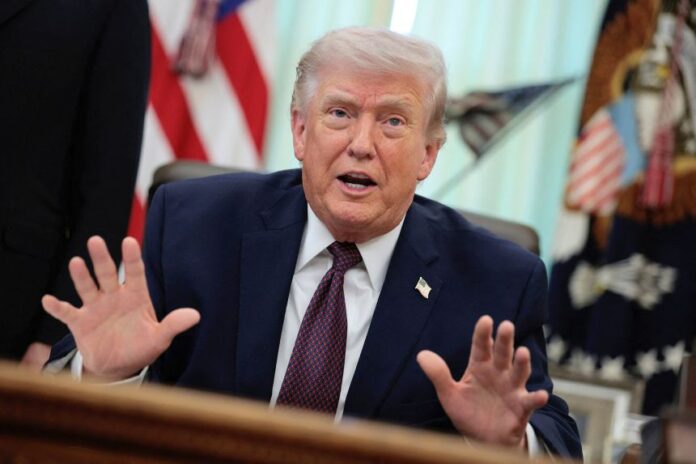
Donald Trump has indicated that the United States may soon exit its current phase of involvement in the Iran conflict, emphasizing that such a move could happen “pretty quickly” following recent strategic developments. His remarks suggest that the administration views its primary objectives as largely achieved, creating an opportunity to transition from active engagement to a more controlled and flexible posture. At the same time, Trump underscored that the United States retains the ability to re-engage if circumstances require, ensuring that strategic influence remains intact.
The timing of this statement is significant, as global attention remains focused on the Middle East and its impact on international stability. The Strait of Hormuz continues to be a central concern, given its importance as a key route for global oil shipments. Any indication that tensions may ease is closely monitored by markets, policymakers, and international stakeholders. Trump’s positioning of the situation as nearing resolution introduces a stabilizing narrative, which could influence both economic expectations and diplomatic dynamics.
From a strategic perspective, the emphasis on a swift exit reflects a focused approach to foreign policy. Rather than maintaining prolonged involvement, the approach prioritizes achieving defined objectives within a limited timeframe. This model seeks to balance effectiveness with efficiency, ensuring that resources are used strategically while avoiding extended commitments. By maintaining the option to return if needed, the strategy preserves deterrence, signaling that withdrawal does not equate to diminished capability.
The economic implications of a potential de-escalation are considerable. Energy markets are highly sensitive to developments in the Middle East, and fluctuations in oil prices often reflect changes in perceived risk. A reduction in tensions could help stabilize prices, contributing to a more predictable economic environment. This stability is particularly important for industries that rely heavily on energy inputs, as well as for consumers who are directly affected by fuel costs.
Geopolitically, the move suggests a controlled and outcome-driven approach. It reinforces the idea that objectives can be achieved without long-term entanglement, aligning with broader discussions about the role of efficiency in foreign policy. Allies may view this development as a positive step toward stability, particularly if it leads to the normalization of key trade routes. At the same time, regional actors will assess how the evolving situation affects their own strategic positions.
The communication surrounding this development also plays an important role. In modern geopolitics, public statements are not only reflections of policy but also tools that shape perception. By signaling a swift exit, Trump’s remarks project confidence and control, which can influence both market behavior and diplomatic responses. This interplay between messaging and policy is a defining feature of contemporary international relations.
Domestically, the development may contribute to ongoing discussions about foreign policy priorities and resource allocation. The emphasis on achieving results efficiently aligns with perspectives that prioritize strategic clarity and measurable outcomes. It also raises questions about how future engagements might be structured, particularly in terms of balancing effectiveness with sustainability.
However, while the outlook suggests progress, underlying tensions remain. The relationship between the United States and Iran has long been shaped by complex political and strategic factors, and these are unlikely to be resolved entirely in the short term. As such, any withdrawal should be viewed as a transition rather than a complete resolution, with continued engagement playing a role in maintaining stability.
Implications
Trump’s indication of a controlled exit from the Iran conflict highlights a strategic approach focused on achieving clear objectives while maintaining flexibility. If realized, this shift could support greater stability in global energy markets and reduce geopolitical uncertainty.
At a broader level, the development reinforces the importance of adaptable and outcome-driven foreign policy. The ability to engage decisively and disengage efficiently remains a key factor in managing complex international challenges.

