Story Highlights
- Trump’s economic approval stands at 30%, a career low, with just 21% approving of his handling of gas prices
- 77% of Americans, including most Republicans, say Trump’s policies have raised the cost of living
- Democrats lead Republicans on economic trust for the first time since at least 2010, with registered voters splitting 45%–42% in congressional preference
What Happened
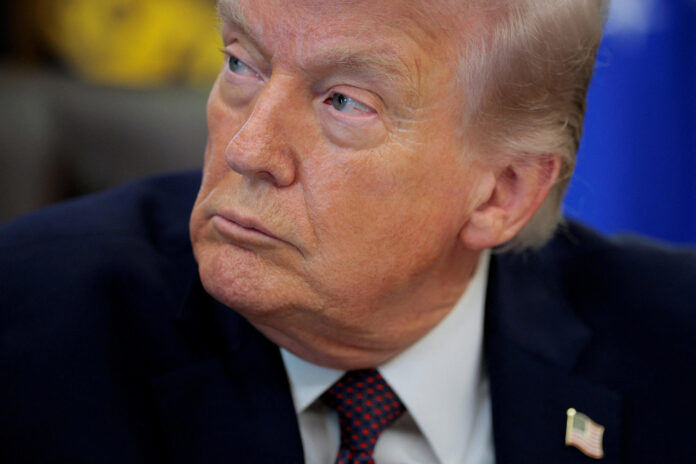
The CNN/SSRS poll, conducted from April 30 through May 4, delivers some of the most unfavorable economic numbers of President Donald Trump’s entire political career. His approval rating on the economy stands at just 30 percent — a career low — while only 26 percent approve of his handling of inflation. Gas prices receive the lowest marks of all, with just 21 percent of Americans approving of how Trump has managed them and a majority of Republicans expressing disapproval.
The broader affordability picture is similarly grim. Seventy-seven percent of Americans — including a majority of Trump’s own Republican supporters — say his policies have increased the cost of living in their own communities. Roughly two-thirds of all Americans say his policies have worsened economic conditions nationally. These numbers represent a dramatic shift even from recent months: the share of Americans saying Trump’s policies have raised the cost of living is up 17 percentage points overall since last year, and up 25 points among Republicans specifically — suggesting that the Iran war and its economic consequences have breached political loyalties that previously kept Republican opinion of Trump’s economic management relatively stable.
The partisan dynamics of economic trust have fundamentally shifted. For the first time since at least 2010 — a period that spans the post-financial crisis years, the Tea Party wave, and multiple election cycles — Democrats are now more trusted than Republicans to handle the central economic issues facing the country. On cost of living, helping the middle class, and inflation, polling respondents now give Democrats the edge. That reversal, if it holds through November, would constitute one of the most significant political realignments of Trump’s presidency.
Among registered voters, the survey finds a 45 to 42 percent Democratic advantage in congressional preference ahead of the midterms — a modest but potentially decisive edge in an environment where Republicans hold slim majorities in both chambers. However, the poll also shows that more than 30 percent of Americans — including half or more of political independents — say they trust neither party on many economic issues, a finding that creates some uncertainty about how this discontent will ultimately translate into votes.
Why It Matters
The political implications of these numbers are profound. Midterm elections are almost universally understood to be referenda on the sitting president, and presidential job approval is the single strongest predictor of how the incumbent party performs in those contests. With Trump’s overall approval rating now at approximately 40 percent in multiple polls — and his economic approval significantly lower — Republicans face a challenging environment heading into November.
The Emerson College poll from April 2026 found Democrats holding a 10-point advantage on the generic congressional ballot, 50 to 40 percent. The CNBC All-America Economic Survey found Trump’s net approval rating at a record low of negative 18 for his two terms. The Silver Bulletin polling average places Trump’s net approval at approximately negative 19, the lowest of his second term. These are not outliers — they represent a consistent pattern of declining support across multiple polling methodologies and organizations.
What makes this moment particularly significant for Republicans is that economic dissatisfaction is the issue driving the shift, not social or cultural grievances. Sixty percent of true independents — those who don’t lean toward either party — say the economy matters more than any other issue in the midterms. Those are the voters who will determine the outcome in competitive House and Senate districts across the country. Democrats have historically struggled to maintain the economic trust advantage, but the Iran war-driven surge in gas prices and cost of living has handed them an opening that is difficult to close quickly.
Economic and Global Context
The economic anxieties reflected in the CNN poll are not abstract — they are rooted in real-world price increases that Americans encounter daily. Gas prices have risen more than 50 percent since the Iran war began on February 28, from approximately $2.98 per gallon to $4.52 today. Diesel is approaching all-time highs, driving up food, goods, and shipping costs. The CPI rose to 3.3 percent in March, up from 2.4 percent in February, and economists predict the conflict will add more than one percentage point to inflation over the coming year.
The Brookings Institution analysis from April 2026 found that Trump’s approval on inflation stood at just 30 percent, on the overall economy at 37 percent, and on health care at 29 percent — collectively representing a collapse in confidence across the three issues Americans consistently rate as most important. Public approval of tariffs, the centerpiece of Trump’s economic agenda, stood at 38 percent, with the public overwhelmingly disapproving of the administration’s overall trade policy.
For context, the share of Americans who hold stock market investments — including retirement accounts — stands at slightly over half, meaning that even strong equity market performance would not translate into broad economic relief for the majority of households most affected by gas and food price increases. The voters who are most economically exposed — working-class and middle-class households with little or no investment income — are precisely the demographic groups that are registering the sharpest decline in Trump support.
Implications
Republicans face a clear and immediate strategic problem: the primary driver of public economic dissatisfaction — the Iran war and the Strait of Hormuz blockade it has produced — is not susceptible to rapid resolution through domestic policy. Proposals like the federal gas tax suspension can provide modest, temporary relief, but they cannot undo $1.50-per-gallon increases in gas prices or a one-percentage-point surge in annual inflation. The only solution that would meaningfully shift the economic picture before November is a negotiated end to the Iran conflict that allows the Strait of Hormuz to reopen.
The upcoming Trump-Xi summit in Beijing represents the most immediate opportunity to set in motion a diplomatic process that could ultimately produce that outcome. If the summit generates credible momentum toward an Iran deal — whether through Chinese pressure on Tehran or direct U.S.-Iran negotiations — markets could respond positively even before a formal agreement is reached, providing some relief to consumers and improving the economic outlook.
For Democratic strategists, the poll represents an extraordinary opportunity but also a caution. The survey finds that by an 8-point margin, the public says there is a bigger problem with the government giving too much help to people who don’t deserve it than with failing to help enough people — suggesting that economic discontent does not automatically translate into support for expansive government programs. Democrats will need to offer specific, credible economic alternatives rather than simply contrasting themselves with an unpopular president.
Sources
“Americans’ anger about the economy hits Trump and Republicans’ midterm prospects”

