Story Highlights
- The Republican National Committee, under Chairman Joe Gruters, has confirmed plans for an unprecedented September midterm convention — a large-scale event separate from the every-four-years presidential convention — to showcase Trump’s record and mobilize Republican voters ahead of November.
- Trump has made 12 campaign-style stops around the country in 2026 through mid-May, matching his pace at the same point ahead of the 2018 midterms, when he dramatically accelerated in October — spending 21 of 31 days on the road and headlining 16 political rallies — only to see Democrats recapture the House.
- Republicans currently hold a 218-to-213 House majority and a 53-to-47 Senate majority, meaning Democrats need just three net House seats and four net Senate seats to take control of both chambers.
What Happened
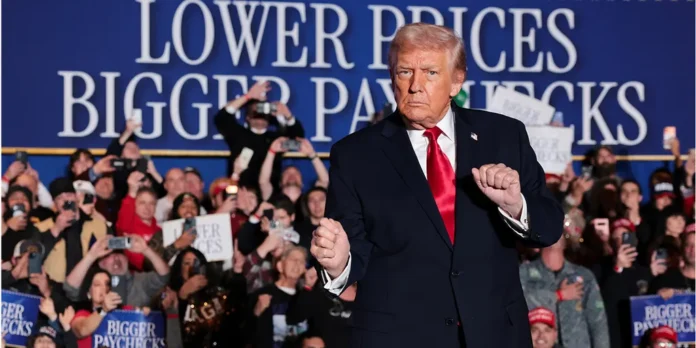
President Donald Trump is not on the ballot in November 2026, but he has made clear through actions, endorsements, rallies, and a personal involvement in primaries — including the record-breaking Kentucky 4th District race — that he intends to be a major force in shaping the outcome of the midterms. The question consuming Republican strategists is not whether Trump will be involved, but at what level, in which races, and with what effect on voter segments the party cannot afford to lose.
The Republican National Committee, under Chairman Joe Gruters, has formalized its headline midterm mobilization strategy: an unprecedented September convention designed to function like a presidential convention without a candidate — a multiday event featuring Trump, Republican congressional leaders, and likely celebrity appearances, aimed at generating the kind of primetime media coverage and grassroots energy boost that normally accompanies only presidential election cycles. “Republicans nationwide are united behind President Trump and his winning agenda,” Gruters said in a statement. “While Democrats remain trapped defending a failed record, voters know which party delivers results. Republicans have the energy, the message, and the strongest turnout force in politics with President Trump leading the charge.”
Trump confirmed the convention plans via Truth Social in September 2025, writing: “The Republicans are going to do a Midterm Convention in order to show the great things we have done since the Presidential Election of 2024.” Time and location have not been officially announced, though Las Vegas emerged in earlier reports as a leading site under consideration. The convention is being designed to give Republican House and Senate candidates a platform alongside the president — framing their races as extensions of Trump’s agenda and attempting to produce the kind of post-convention polling bounce more typically associated with presidential nominees.
The dilemma, however, is real. An NBC News analysis found Trump has made 12 campaign-style stops in 2026 through mid-May — the same pace he maintained ahead of the 2018 midterms. That year, he dramatically ramped up his schedule in October, spending 21 of 31 days on the road and headlining 16 political rallies. The result: Democrats netted 40 House seats and recaptured the majority. Republican strategists are acutely aware of that precedent and are debating internally how to calibrate Trump’s visibility to maximize base turnout while minimizing the suburban backlash that a heavy Trump presence can trigger in competitive districts.
“I think he can help with things like turnout, but there is some room for backfire on something like that,” one state Republican party chair told NBC News on condition of anonymity. “It would have to be the right audience.” A GOP operative working on House races took a more bullish view: “Republicans view the president as key to turning out low-propensity voters, so having him involved and engaged is critical to holding the majority in both chambers.”
Why It Matters
The stakes of the midterm calculation are enormous. Democrats need just three net House seats to take control — a margin so narrow that the individual district decisions about whether to invite Trump to rally, feature him in advertising, or keep him at arm’s length could plausibly determine majority control. In the Senate, Democrats need four net seats to overcome Vice President JD Vance‘s tiebreaking vote.
NPR and Marist polling data quantifies the dual Trump dynamic with striking specificity. White voters without college degrees — a demographic that backed Trump by 34 points in the 2024 presidential election — now say they will vote for a Republican congressional candidate by only six points, a 28-point swing. Adults in the South, who backed Trump by 13 points in 2024, are now five points more likely to vote for a Democratic congressional candidate. These are Trump’s core constituencies; their erosion is not symbolic — it is the operational challenge that Republican campaign managers are trying to solve.
At the same time, Democratic enthusiasm is running significantly higher than Republican enthusiasm in current polling. Some 61 percent of Democrats and Harris 2024 voters report being “very enthusiastic” about voting in the midterms, compared with lower Republican enthusiasm figures. Historical midterm patterns reinforce the concern: presidents below 50 percent approval at midterm time have seen their party lose an average of 33 House seats.
Economic and Global Context
The political context for Republican midterm strategy is inextricably linked to the economic environment. The Iran war has pushed gasoline prices above $4.50 per gallon, consumer sentiment has declined sharply, and Trump’s economic approval rating has fallen to approximately 30 to 37 percent in multiple polls — career lows. These economic headwinds are the single most significant factor explaining the polling shift away from Republicans among white working-class voters, Midwesterners, and Southerners who powered Trump’s 2024 victory.
Vice President JD Vance has been deployed at smaller-scale campaign events to keep the Republican message active without the full polarizing effect of a Trump appearance. But Vance’s events have generated notably modest crowds; a Turning Point USA event where he headlined drew criticism for empty seats. No surrogate in Republican politics comes close to matching Trump’s draw — which both underscores the party’s reliance on the president and limits options for campaign strategists who would prefer more surgical deployment.
The RNC’s redistricting success in Virginia, Tennessee, Florida, and elsewhere represents the structural backstop to the campaign strategy — a map-level advantage that can partially compensate for unfavorable national polling conditions. The combination of map advantages and a high-energy midterm convention represents the Republican party’s core theory of how to hold its majorities against historical headwinds.
Implications
For Republicans in swing districts, the September convention creates both an opportunity and a risk. Appearing alongside Trump at a nationally televised event associates them with presidential energy and base enthusiasm — but in purple districts, it may also associate them with the political liabilities of his second term. Individual Republican candidates will likely make their own calculations about how prominently to feature convention imagery and Trump associations in their local advertising.
For the RNC as an institution, the midterm convention represents an ambitious organizational bet. National conventions in presidential years generate enormous media coverage and typically produce measurable polling bounces for nominees. Whether a midterm convention without a candidate at the top of the ticket can replicate that dynamic is genuinely untested — and the logistical and financial requirements of a national convention-scale event are substantial.
For American voters across the political spectrum, the 2026 midterms will ultimately serve as the most direct accountability measurement of Trump’s second term to date. Trump himself acknowledged this in remarks on Fox Business, saying: “Even when you have a great president, they tend to lose the midterms. It doesn’t make sense to me, so we’re going to try turning it around.” Whether the convention strategy, the redistricting advantages, and the gas tax holiday response to high fuel prices are enough to defy that historical pattern will be answered on November 3, 2026.
Sources
“Republicans grapple with how much to have Trump on the campaign trail for the midterms”

