Story Highlights
- Trump announced the ceasefire directly via Truth Social on May 8, saying both Putin and Zelenskyy agreed to his personal request.
- The agreement included a suspension of all kinetic military activity and an exchange of 1,000 prisoners from each country.
- Secretary of State Marco Rubio had struck a far more somber tone just hours earlier, telling reporters that U.S. mediation had not produced a “fruitful outcome.”
What Happened
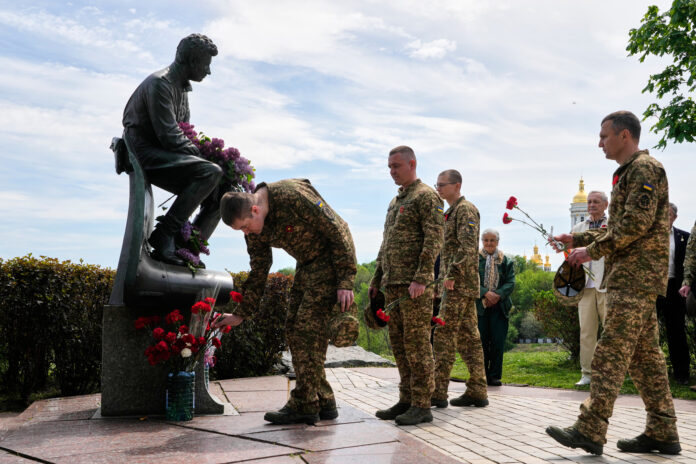
On May 8, 2026, President Donald Trump posted on Truth Social announcing that Russia and Ukraine had agreed to a three-day ceasefire covering May 9, 10, and 11, coinciding with Russia’s Victory Day — the annual national holiday commemorating the Soviet defeat of Nazi Germany in World War II. The ceasefire included a full suspension of kinetic military activity and a mutual exchange of 1,000 prisoners of war from each country.
Trump framed the agreement as the product of his direct personal diplomacy. “This request was made directly by me, and I very much appreciate its agreement by President Vladimir Putin and President Volodymyr Zelenskyy,” he wrote. “Hopefully, it is the beginning of the end of a very long, deadly, and hard fought War.” He added that peace talks were continuing and that both sides were “getting closer and closer every day.” Ukrainian President Zelenskyy confirmed the agreement on Telegram, saying Ukraine had received Russia’s agreement to conduct a prisoner exchange in the 1,000-for-1,000 format and called for a ceasefire on all fronts for the three-day period.
The announcement came hours after Secretary of State Marco Rubio, speaking at the end of a visit to Rome and the Vatican, struck a noticeably gloomier note. Rubio told reporters that U.S. mediation efforts had not led to a “fruitful outcome” so far, and acknowledged that the efforts had “stagnated.” The contrast between Rubio’s public assessment and Trump’s announcement reflected the characteristic dynamic of the administration — where the president’s personal diplomatic engagement sometimes moves faster and further than the institutional diplomatic machinery.
The ceasefire was the first jointly agreed pause in fighting after a string of failed attempts. Russia had declared a two-day unilateral ceasefire for Victory Day that collapsed almost immediately. Ukraine had separately declared a ceasefire for May 5–6 that also unraveled. Zelenskyy had previously hinted at the possibility of Ukraine striking the Moscow Victory Day parade — a symbolic threat that underscored Kyiv’s claim to long-range targeting reach inside Russia. His decision to stand down was framed around the prisoner exchange, with the Ukrainian president writing publicly that “Red Square matters less to us than the lives of Ukrainian prisoners who can be brought home.”
Yuri Ushakov, a foreign affairs aide to Putin, confirmed Russia’s agreement and said the ceasefire had been reached through prior telephone contacts between the U.S. and Russian administrations. Kremlin spokesman Dmitry Peskov cautioned that reaching a lasting peace agreement would be complex, calling it “a very long way with complex details.” Kremlin officials made clear the ceasefire was strictly for three days, despite Trump’s hope it might be extended.
Why It Matters
The successful brokering of a ceasefire and prisoner exchange, however brief, represents a meaningful step for an administration that has staked considerable credibility on delivering peace in Ukraine. Trump promised repeatedly during his 2024 campaign that he would end the war quickly — at one point suggesting he could resolve it in 24 hours — a boast that became a recurring point of criticism as the conflict dragged on into the second year of his second term. The prisoner exchange is tangible, human, and immediate: 2,000 individuals directly affected.
Beyond symbolism, the episode demonstrated that Trump’s direct phone diplomacy with Putin can produce operational results even when the broader negotiating framework is stalled. The Kremlin has consistently shown more willingness to engage with Trump personally than with the multilateral institutional process that European allies have favored, and the ceasefire announcement illustrated why the White House has prioritized that bilateral channel.
The domestic political implications are also significant. With Trump’s overall approval rating at its lowest point of the second term and the midterms approaching, a visible foreign policy achievement — particularly one that ends with American-brokered prisoner releases — is politically valuable. Republicans running in competitive seats can point to it as evidence of presidential effectiveness on the world stage, at a time when much of the political news has been dominated by tariff litigation and the Iran impasse.
Economic and Global Context
The Russia-Ukraine war has had sustained macroeconomic consequences that extend well beyond the battlefield. European energy markets were restructured following Russia’s full-scale invasion in 2022, and the conflict has contributed to persistent inflationary pressure across the global economy. Any meaningful reduction in hostilities opens the possibility of a gradual relaxation of energy and commodity market tensions, though a three-day ceasefire is far too brief to generate any measurable market movement on its own.
The broader peace framework that the Trump administration has been working toward involves significant economic elements: Ukrainian reconstruction, the status of Russian-controlled territory, potential sanctions relief for Russia, and European security architecture adjustments. Each of these dimensions carries enormous financial implications for markets, businesses, and governments across the Northern Hemisphere.
Ukraine’s economy has contracted sharply since February 2022, and continued conflict means continued aid requirements from the United States and European partners. A lasting ceasefire would reduce those requirements and free fiscal resources for domestic priorities in the U.S. and Europe alike.
Implications
The May 9–11 ceasefire provided the prisoner exchange but did not produce a lasting halt to hostilities. Both sides blamed the other for violations during the ceasefire window, consistent with the pattern of every prior attempted truce. The underlying territorial dispute — centered on Russia’s demand that Ukraine withdraw from parts of the Donetsk region that Russian forces have failed to capture — remained completely unresolved, and Zelenskyy has consistently ruled out ceding any territory currently under Ukrainian control.
Trump has said he is prepared to walk away from Ukraine peace mediation if progress is not made, a warning Vice President JD Vance reinforced by telling reporters that the administration is “more than open” to disengaging. That threat is a negotiating tool, but it also reflects genuine presidential frustration. Whether the Victory Day ceasefire becomes a stepping stone to a longer framework or a brief humanitarian pause in an otherwise continuing war will be determined in the weeks ahead.
For Republicans heading into the midterms, the outcome of the Ukraine mediation effort is a defining test of the administration’s foreign policy legacy. A lasting peace deal would be a powerful electoral argument. Continued stalemate makes the “ending wars” promise harder to defend.

