Story Highlights
- The Trump administration’s 9.9% Intel stake is now valued at over $50 billion, up from an initial $8.9 billion investment
- Trump told Fortune magazine he “should have asked for more” and suggested Intel should be the biggest company in the world
- Intel’s stock has risen more than 300% since the government took its position, driven partly by a new Apple chip agreement and Elon Musk’s Terafab project
What Happened
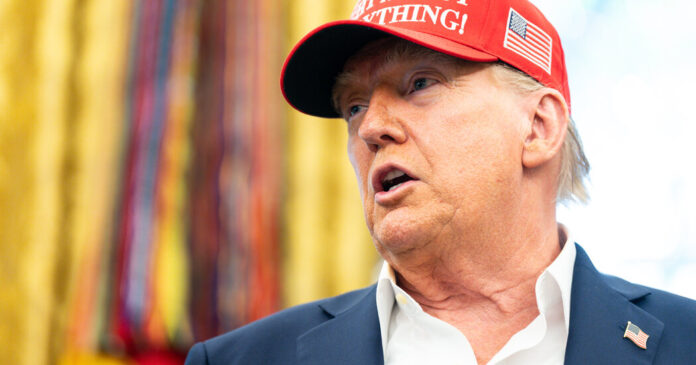
In an interview published Monday by Fortune magazine, President Donald Trump reflected on the government’s investment in Intel with characteristic candor. The administration took a 9.9 percent stake in the semiconductor giant last August after converting $5.7 billion in CHIPS Act grants that had been awarded but not yet paid into equity, combined with $3.2 billion from the Secure Enclave defense program. The total initial investment was valued at approximately $8.9 billion.
Since then, Intel’s share price has surged more than 300 percent. The government’s stake, originally pegged at roughly $8.9 billion in value, has ballooned to more than $50 billion. Asked about the deal in the Fortune interview, Trump was unambiguous: “Do I get credit for it? Does anybody even know I did that?” He added that he should have negotiated for a larger portion of the company on behalf of American taxpayers.
Trump also offered a sweeping assessment of Intel’s potential dominance in the global semiconductor market. He argued that had he been president earlier, when manufacturers began shifting chip production to Asia, he would have used tariffs to protect American chipmakers and that Intel, not Taiwan Semiconductor Manufacturing Company, would today be the world’s leading chip producer. Intel’s current market capitalization stands at approximately $547 billion, compared to TSMC’s $1.84 trillion.
The interview comes as Intel’s commercial momentum has accelerated significantly. Earlier this month, Apple and Intel reportedly reached a preliminary agreement for Intel to manufacture chips for Apple devices, a potentially transformative contract that could substantially increase factory utilization at Intel’s U.S. facilities. Additionally, Elon Musk announced in April that his $119 billion Terafab project would rely on Intel’s next-generation chips, providing another major demand anchor for the company’s expanded domestic manufacturing capacity.
Why It Matters
Trump’s Intel investment represents the most visible example of a broader shift in American industrial policy toward direct government equity participation in strategically important private companies. The deal breaks with decades of traditional Republican economic philosophy, which has generally opposed government ownership stakes in private enterprises as a form of market interference. The enormous financial return generated by the Intel position gives the administration a powerful argument that the approach works and should be expanded.
For American taxpayers, a government stake now worth more than $50 billion is an extraordinary outcome. Trump’s suggestion that the stake could be gradually sold over time, without crashing Intel’s stock price, raises the prospect of the government capturing significant realized gains that could be directed toward deficit reduction or other national priorities. That possibility, while not yet formalized into policy, represents a genuinely novel fiscal tool for the federal government.
The Intel case also reinforces the administration’s thesis that semiconductor manufacturing is a matter of national security, not merely economic competitiveness. The CHIPS Act framework that undergirded the original investment was designed precisely to ensure that advanced chips are produced on American soil, reducing dependence on Taiwan-based manufacturers and insulating the defense industrial base from geopolitical disruption.
Critics, however, warn that government equity ownership creates dangerous incentives. Fortune’s own reporting noted that truly free markets require government to remain outside corporate governance, and that equity stakes could tempt future administrations to make decisions based on political rather than economic calculations. The government has committed to a passive ownership role with no board representation, but that commitment would not bind future administrations.
Economic and Global Context
Intel’s revival is among the most dramatic corporate turnarounds in recent American business history. The company had seen its share price collapse in preceding years as it fell behind TSMC and Samsung in advanced manufacturing processes and lost major customers including Apple to rival chipmakers. The government’s intervention, combined with a new CEO who has pursued an engineering-led restructuring, appears to have restored investor confidence and attracted major commercial partnerships.
The semiconductor industry is central to the economic competition between the United States and China. Advanced chips power everything from artificial intelligence systems to military hardware, and control over their production is a cornerstone of technological supremacy. Trump explicitly invoked this dynamic in the Fortune interview, arguing that had he been president during the years when chip manufacturing migrated to Asia, he would have acted to protect American capacity through aggressive tariffs.
Intel’s Arizona facility is expected to begin high-volume production of the most advanced semiconductor manufacturing process on U.S. soil later this year, a milestone that would mark a genuine leap forward in domestic chip-making capacity. Combined with the Apple and Terafab agreements, the facility is positioned to operate at meaningful utilization levels from the outset, strengthening the economic case for the entire investment program.
Implications
Trump’s public expression of regret that he did not take a larger stake is likely to accelerate discussions within the administration about whether and how to expand government equity participation in other strategically important industries. Commerce Secretary Howard Lutnick has previously outlined the framework as a model for revitalizing American manufacturing, and the Intel success story gives that argument significant empirical weight.
For Intel’s existing shareholders, the government’s continued ownership of a near-ten-percent stake creates a complex dynamic. The passive ownership commitment provides some assurance that Washington will not interfere in operations, but a potential government stock sale of that magnitude will require careful management to avoid market disruption. Trump’s indication that a slow, orderly divestiture is the preferred exit strategy offers some comfort, but the timeline and mechanism remain undefined.
For the broader semiconductor ecosystem, Intel’s recovery changes competitive dynamics globally. TSMC, which has also announced major U.S. investment under government incentive programs, now faces a more formidable domestic rival. And for U.S. technology companies that have long relied on Asian foundries for manufacturing, Intel’s renewed ambitions and strengthened balance sheet create a credible alternative sourcing option for the first time in years.
Sources
“Trump Tells Fortune He Should Have Asked for Bigger Intel Stake”

