Story Highlights
- Trump said “a lot of different problems” were settled, while China called the summit “historical” and announced Xi will visit the U.S. in the fall
- The two sides reportedly agreed on 200 Boeing aircraft purchases and established new trade and investment councils, though China did not confirm all U.S. claims
- Trump described Taiwan arms sales as a “very good negotiating chip” and declined to reaffirm unconditional U.S. commitment to the island’s defense
What Happened
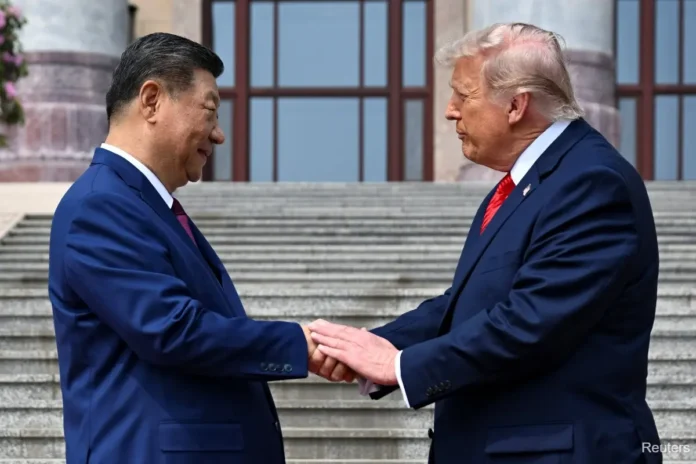
The Trump-Xi summit in Beijing was the first formal state visit between the two leaders since Trump returned to the White House in January 2025. The two days of meetings covered a wide range of bilateral issues, from trade imbalances and agricultural market access to semiconductor export controls, the Iran conflict, and the status of Taiwan. Both sides entered the talks with constrained expectations, and the outcomes largely reflected that caution.
Trump told reporters upon departing Beijing that he and Xi had settled “a lot of different problems,” and said China had agreed to purchase two hundred Boeing airplanes, a deal that, if confirmed, would represent the first official Chinese government airplane order from the American manufacturer in nearly a decade. The White House also announced the creation of a trade council and an investment council, designed to provide institutional mechanisms for following through on commitments, a nod to the failure of China to meet purchasing targets under Trump’s 2020 Phase One trade agreement.
China’s foreign ministry offered a broadly positive but substantially different characterization of the same discussions. Foreign Minister Wang Yi called the summit “historical” and described trade outcomes as “overall balanced and positive,” referencing commitments to agricultural market access and expanded trade under a reciprocal tariff reduction framework. However, Chinese statements made no specific reference to the Boeing deal or other concrete agreements mentioned by the U.S. side.
On Taiwan, Trump acknowledged that arms sales to the island remain pending, describing the $14 billion weapons package as a “very good negotiating chip” while declining to say whether he would approve it. The statement drew immediate concern from Taipei, which has been watching closely for any signs that Washington might trade away security assurances in exchange for economic concessions from Beijing. Trump also told Fox News that Taiwan would be “very smart to cool it a little bit,” echoing language that Beijing has long used in the dispute.
Why It Matters
The summit’s ambiguous outcomes reflect the fundamental complexity of managing the world’s most consequential bilateral relationship at a moment when it is defined by deep structural tensions. The two countries are simultaneously the world’s largest trading partners and geopolitical rivals competing for technological supremacy, regional influence, and global leadership. No single summit, however well-choreographed, can resolve tensions rooted in such fundamentally different national interests.
For the Trump administration, the visit served important political purposes. Being received in Beijing with full state honors reinforces Trump’s self-image as the dominant force in global diplomacy and positions him as actively managing great-power competition rather than reacting to it. The announcement of Chinese investment commitments and the Boeing deal, if they materialize, will be presented to American voters as tangible economic wins ahead of the midterms.
For Republicans in Congress, the summit’s mixed results on Taiwan will require careful messaging. The party has increasingly positioned itself as the defender of Taiwan’s security, and Trump’s description of arms sales as a negotiating chip rather than a standing commitment to an ally introduces tension with that posture. How the administration clarifies its Taiwan policy in the weeks ahead will be closely watched on Capitol Hill and in Taipei.
The agreement to establish a Board of Trade to oversee implementation of commitments signals that the administration has absorbed the lesson of the 2020 Phase One deal’s failure, when China fell far short of agreed purchase targets with limited consequences. Whether the new mechanism provides genuine accountability remains to be seen.
Economic and Global Context
Trade between the United States and China remains the backbone of the global economy, and even incremental improvements in the bilateral relationship carry significant market implications. Following the summit, bond yields rose and equity markets exhibited cautious optimism as traders processed the lack of major escalation alongside the absence of dramatic breakthroughs. The two countries agreed in principle to continue implementing consensuses reached during previous consultations, providing some stability to the trade truce brokered in South Korea in October 2025.
The chip export control question loomed over the summit even as it was reportedly not raised directly. U.S. restrictions on advanced semiconductor exports to China have been a persistent irritant in the relationship, and Beijing’s restraint in raising the issue directly was interpreted by analysts as a calculated choice to preserve the broader diplomatic atmosphere. New U.S. tariff investigations into Chinese unfair trade practices are expected to produce additional measures later this summer, potentially renewing tensions.
China agreed to purchase rare earth elements from the United States in quantities discussed at the Trump-Xi meeting in Busan last year, and committed to continued cooperation on blocking fentanyl precursor exports. Both commitments address specific American domestic concerns and will be used by the administration to demonstrate tangible wins from the engagement.
Implications
The most significant immediate implication of the summit is that both sides have agreed to an intensive schedule of future meetings. Xi is expected to visit Washington in September, with additional meetings planned in Shenzhen in November and at the G20 Summit in Miami in December. Analysts note that this timeline aligns with the expiration of the current trade truce, suggesting that the harder negotiations over tariffs and technology controls are being deferred to later in the year.
For American businesses hoping to expand into Chinese markets, the agreements on market access and investment councils represent modest but real progress. The Boeing deal alone, if formalized, would support thousands of American manufacturing jobs and signal that commercial engagement remains viable despite geopolitical friction.
For Taiwan, the most pressing concern is whether Trump’s characterization of arms sales as a negotiating variable represents a policy shift or a rhetorical posture. The administration will face pressure from both chambers of Congress to clarify its commitment to the island, particularly as China’s foreign ministry statements from the summit emphasized Beijing’s core interest in eventual reunification.
Sources

