Story Highlights
- Trump claimed he had ordered warships to begin operations and was “all set to start” before receiving appeals from Gulf state leaders to allow diplomacy more time.
- Gulf states presented a “unified front” in urging restraint, citing the Islamic Hajj season and positive momentum in Pakistan-led mediation efforts.
- The UAE warned it could restrict U.S. base access if strikes resume, a development that would significantly complicate American military operations in the region.
What Happened
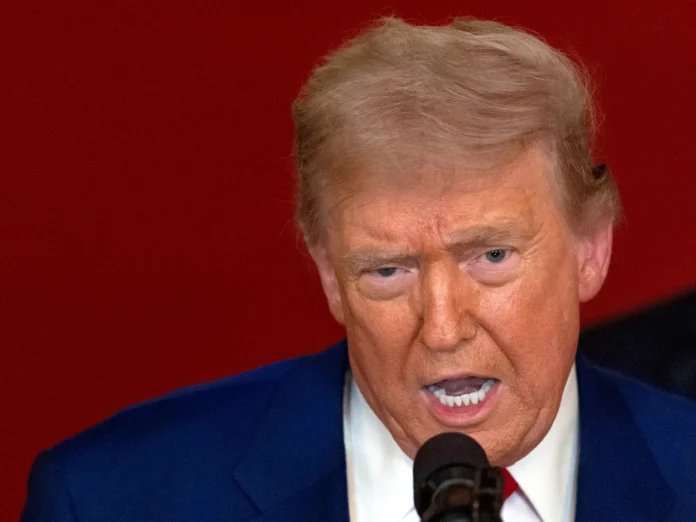
President Donald Trump described the near-miss to reporters Tuesday, saying his forces were “loaded to the brim” and ready to act before he decided to stand down. “They’re loaded to the brim and we were all set to start,” he said. The president offered a specific timeline — that he was approximately one hour from issuing the order — though officials from some Gulf countries said they were not aware that strikes were imminent, and other sourcing suggested renewed operations were not anticipated until later in the week.
What appears clear is that significant diplomatic pressure from regional partners was a key factor in Trump’s decision to pause. Gulf leaders — including representatives from Saudi Arabia, the UAE, and Qatar — presented what one regional official described as “a unified front” to the Trump administration over the preceding days. They argued that Pakistan-led mediation efforts had generated positive momentum and that the Islamic Hajj season, a period of traditional goodwill across the Muslim world, made the timing of new strikes particularly problematic.
Vice President JD Vance acknowledged the complexities in a White House press briefing Tuesday, admitting that Iran’s negotiating position remained unclear due to competing factions within Tehran. “You negotiate with people and sometimes you feel like you’re making progress and sometimes you feel like you’re not making progress,” Vance said. He affirmed that Iran wants to make a deal but conceded the specifics remained elusive.
Despite the pause, administration officials were emphatic that military options remain fully on the table. Trump set a new informal deadline of “maybe Friday, Saturday, Sunday, something, maybe early next week,” giving Iran a narrow window of days to demonstrate genuine movement toward an acceptable agreement. Plans for renewed strikes remain available to military commanders and could be activated at any time.
Why It Matters
The near-resumption of strikes illustrates the extraordinary instability of the current diplomatic moment. The United States is simultaneously conducting an active naval blockade of Iran, maintaining military assets capable of striking Iranian territory, and engaging in indirect peace negotiations through Pakistani intermediaries — all at the same time. The margin for miscalculation is exceptionally small.
Trump’s decision to pause carries both strategic and political dimensions. Strategically, the president faces a genuine dilemma: Iran’s enriched uranium stockpile remains largely intact, and some Iranian missile capabilities have survived the earlier campaign. Resuming strikes without achieving those objectives risks prolonging the conflict without resolving it. Yet accepting a deal that does not fully address those issues could be characterized as a failure to complete the mission.
Politically, the Iran war has been a significant drag on Trump’s approval ratings, which have fallen into the mid-30s. An unpopular war with no clear exit is a dangerous electoral liability heading into November’s midterm elections. Trump clearly prefers a deal that he can frame as a victory — a denuclearized Iran, a reopened strait, and American forces standing down — to a continued military commitment with no defined endpoint.
The Gulf states’ ability to influence Trump’s decision is itself a significant data point. For months, the administration has portrayed the Iran campaign as a unilateral American strategic interest. The revelation that Gulf leaders’ unified opposition effectively halted strikes suggests the administration’s freedom of action in the region is more constrained than the public posture implies.
Economic and Global Context
The economic stakes of the Iran standoff are substantial and immediate. Before the conflict began, approximately 25 percent of global seaborne oil trade passed through the Strait of Hormuz. Since the U.S. naval blockade began in April 2026, that flow has been severely restricted. Iran has seized several commercial vessels in retaliation, and the combined effect of dual blockades has disrupted global energy supply chains at a scale not seen in decades.
American consumers are paying more than $4 per gallon on average for gasoline, a price point that historically correlates with public discontent and reduced consumer spending. The inflationary pressure from elevated fuel costs ripples through the broader economy, raising transportation costs, manufacturing inputs, and household energy bills. Every additional week of conflict extends that economic burden.
For global energy markets, the prospect of resumed strikes introduced another spike in oil price futures this week before partially receding on news that Trump had stood down. Traders are pricing in significant uncertainty, with volatility likely to remain elevated until there is either a credible peace agreement or a decisive military resolution. Long-term supply chain planning by manufacturers, shippers, and energy companies has been disrupted, with investment decisions being deferred pending resolution.
The Gulf states’ economic interests are also in play. Saudi Arabia and the UAE depend on stable energy markets for their own fiscal planning, and an extended conflict in the region threatens their economic development agendas. Their intervention with Trump reflects not only diplomatic principle but direct self-interest in a rapid resolution that restores regional stability.
Implications
The next several days represent a genuine inflection point in the Iran conflict. If Trump’s informal deadline expires without a credible Iranian commitment to negotiate on nuclear issues, the administration will face intense internal pressure from officials who believe the military option must be exercised. The president has publicly staked his credibility on not allowing Iran to obtain a nuclear weapon, and any deal that fails to address enriched uranium stockpiles will face serious opposition within the Republican foreign policy establishment.
For Iran, the near-miss of renewed strikes represents a warning that the ceasefire is fragile. Tehran has submitted a 14-point peace proposal that includes conditions — among them, deferred nuclear talks and a new “control mechanism” for Strait of Hormuz shipping — that Washington has signaled are unacceptable. Iran’s internal factions are divided, with hardliners publicly dismissing U.S. proposals as a “wish list” while moderate voices push for a deal to relieve crippling economic pressure.
For the American military, the sustained readiness posture required to keep forces “loaded to the brim” carries its own costs — in personnel tempo, equipment wear, and operational security. Extended deployments in the region will strain readiness for other potential contingencies globally, a concern that senior military planners have reportedly raised internally.
For American voters, the question of whether the Iran war is a success or a quagmire will be a defining issue in November. A peace deal that Trump can credibly claim as a victory would dramatically improve Republican prospects. Continued stalemate, with elevated gas prices and no clear end in sight, could cost the GOP its congressional majority.
Sources

