Story Highlights
- Trump announced Friday he would make a “final determination” on an Iran deal following a White House Situation Room meeting but exited without a decision.
- Defense Secretary Pete Hegseth told a Singapore defense conference that Iran was “coming in our direction” and talks had been “productive.”
- Iran’s state-affiliated news agency disputed Trump’s characterization of a deal, calling his public description “incomplete and inconsistent with reality.”
What Happened
President Donald Trump ended a meeting in the White House Situation Room without announcing his final decision on whether to approve a deal to pause the three-month-old Iran war, an administration official confirmed Friday afternoon. Trump had set expectations high, announcing earlier that day he would deliver a “final determination” on the potential agreement. Instead, the meeting concluded with no announcement and no clear timeline for what comes next.
Trump stated in a Truth Social post that any deal must see the Strait of Hormuz reopened and that Iran must work with the United States to have its highly enriched uranium destroyed. These demands formed the baseline of his public position heading into the Situation Room session, but they also highlight the significant gaps that still exist between Washington and Tehran on both the waterway and nuclear issues.
Defense Secretary Pete Hegseth, appearing at the Shangri-La defense conference in Singapore, said Iran was “coming in our direction” and that talks had been productive, though he gave no indication that the president had reached a decision. Hegseth also addressed the concerns of partner nations about the ongoing Hormuz blockade, noting that countries were “reassured” once the American perspective was explained.
The agreement under discussion involves a 60-day ceasefire extension during which the Strait of Hormuz would be reopened, Iran would be able to freely sell oil, and negotiations would be held on curbing Iran’s nuclear program, according to a U.S. official. However, the nuclear question — specifically what happens to Tehran’s stockpile of near-weapons-grade uranium — remains a core unresolved issue that neither side has fully bridged.
Iran’s state-affiliated Fars news agency disputed Trump’s characterization of events, reporting that the Strait of Hormuz would remain under Iranian control according to the latest version of the proposal exchanged between the two sides, and calling Trump’s announcement of a “largely negotiated” deal “incomplete and inconsistent with reality.” Iran’s chief negotiator struck a similarly defiant tone, warning that the country would not back down on its sovereign rights.
Why It Matters
The Iran standoff is not a distant foreign policy abstraction — it is feeding directly into Americans’ daily lives through higher fuel prices, constrained supply chains, and economic uncertainty. The Strait of Hormuz is one of the world’s most critical energy chokepoints, with roughly 20 percent of global oil trade passing through the narrow waterway. Trump himself acknowledged the deal would involve Iran reopening the Strait of Hormuz, the blockade of which has been reverberating across the global economy, with Americans facing high fuel prices as millions travel for the Memorial Day holiday.
For Trump, this decision carries enormous political weight. Successfully brokering a ceasefire that reopens Hormuz would be a defining foreign policy achievement of his second term, validating his aggressive approach to Iran and potentially reshaping the Middle East for years. Failure to close the deal — or accepting terms perceived as weak on the nuclear front — could hand political opponents a damaging narrative heading into midterm elections.
The credibility of American commitments is also at stake. Allies and trading partners across Asia and Europe have been rattled by the economic consequences of the blockade. A resolution that holds would reassure partners; a prolonged stalemate would test those relationships further. Trump’s team must balance pressure to act quickly with the risk of accepting an agreement that Tehran can walk back.
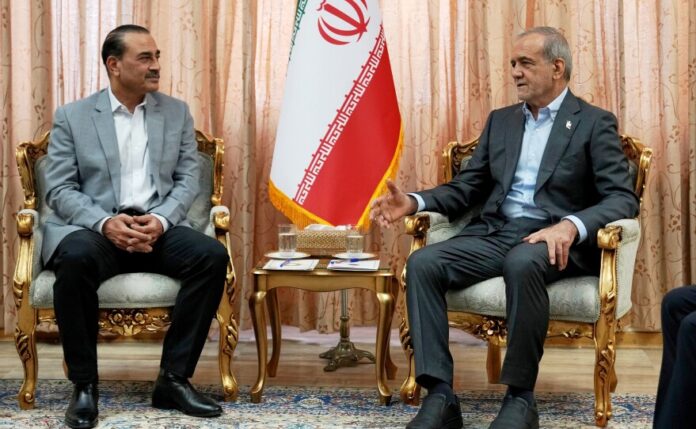
The discrepancy between Trump’s public statements and Iran’s version of events also underscores the fragility of any near-term deal. Negotiations involving multiple mediating countries — including Pakistan and Oman — add layers of complexity that make a clean, enforceable agreement difficult to achieve on a compressed timeline.
Economic and Global Context
The Hormuz closure has sent shockwaves through global energy markets since military operations began in February 2026. Oil prices surged immediately after the blockade was imposed, with Brent crude climbing sharply and U.S. gasoline prices hitting multi-year highs. The economic toll on American households has been significant, compounding existing inflationary pressures that the administration was already navigating.
The deal under discussion would avoid an escalation of the war and decrease the pressure on the global oil supply, though it remains unclear whether it will lead to a lasting peace agreement that also addresses Trump’s nuclear demands. Any reopening of the strait, even under a temporary framework, would likely send oil prices lower relatively quickly, providing relief at the pump for American consumers and easing broader inflationary pressures.
Recent versions of the memorandum of understanding would end hostilities with Iran while gradually reopening the Strait of Hormuz and ending the U.S. blockade of Iranian ports, and would unfreeze some Iranian assets held in banks outside Iran. The asset question is significant — frozen funds could represent billions of dollars in liquidity for Tehran and would be a politically sensitive concession for the Trump administration to defend domestically.
Global allies and trading nations have watched the standoff with deep concern. The Shangri-La conference in Singapore provided a diplomatic backdrop for Hegseth to manage allied anxieties, with the defense chief noting that Hormuz came up “relatively often” in bilateral conversations. Countries dependent on Persian Gulf energy flows have strong incentives to see a deal concluded quickly.
Implications
A signed ceasefire agreement, even one that punts the nuclear question to a 60-day negotiating window, would mark a significant turning point. Global oil markets would likely respond positively, bringing relief to consumers and businesses that have absorbed elevated energy costs for months. Diplomatically, it would represent a rare moment where Trump’s maximum-pressure strategy produced a tangible result.
However, the deal’s durability is not guaranteed. Iran’s public pushback on the terms — particularly on control of Hormuz — suggests Tehran may be holding out for more favorable conditions or testing Trump’s resolve. If the 60-day negotiating window fails to produce a nuclear agreement, the U.S. could find itself back at square one, with fewer military and diplomatic options on the table.
For Republican lawmakers and voters, the outcome of these negotiations will be a major data point heading into November’s midterms. A successful deal bolsters Trump’s standing as a tough but effective commander-in-chief. A prolonged or failed negotiation risks reinforcing criticism from both the right — where figures like Tucker Carlson have accused Trump of abandoning the America First agenda — and the center.
The coming days will be decisive. With Trump indicating he is “in no hurry,” the administration appears willing to wait for terms it considers acceptable. Whether Iran is prepared to meet those terms before economic and political pressure forces both sides to move remains the central question hanging over this consequential moment in American foreign policy.
Sources
“Live Updates: Trump decision yet to come on Iran deal as Hegseth talks negotiations”

