Story Highlights
- U.S. District Judge Carl Nichols, a Trump appointee, declined to issue a preliminary injunction blocking the March 31 executive order.
- The order directs DHS to use Social Security data to build citizen eligibility lists, with the U.S. Postal Service only delivering mail ballots to voters on those lists.
- A second case challenging the order is pending in Boston, with arguments scheduled for June 2.
What Happened
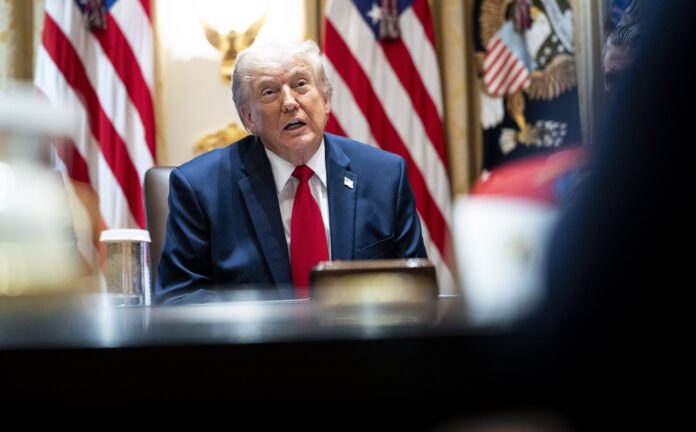
A U.S. judge on Thursday declined to immediately block President Donald Trump‘s executive order tightening rules on mail-in voting, but left the door open for the Democratic Party to challenge it again after the administration takes further steps to implement the measure. The ruling was issued by U.S. District Judge Carl Nichols, a Trump nominee based in Washington, D.C.
The March executive order directs the Department of Homeland Security to use Social Security data to compile lists of citizens eligible to vote in each state. The U.S. Postal Service would then only deliver mail-in ballots to voters on the DHS list. The order also calls for unique barcodes and secure envelopes for all mail ballots submitted nationwide.
Nichols wrote that the Democrats’ request for a preliminary injunction blocking Trump’s March 31 order was premature, because the administration had not yet taken significant action to implement the measure. The decision did not address whether Trump’s executive order was lawful. Crucially, the judge explicitly reserved the right for plaintiffs to renew their challenge once implementation begins in earnest.
Plaintiffs including Senate Minority Leader Chuck Schumer of New York argued that the executive order could disenfranchise millions of voters. They said the order’s direction to use Department of Homeland Security and Social Security Administration data to build “state citizenship lists” risked improperly excluding lawfully registered voters because the data sources can be out of date and may include errors.
The Postal Service released a Federal Register notice online that included a proposal for creating lists of mail-in and absentee voters based on information from state election officials, meeting a rulemaking deadline that fell at the end of May. That rulemaking now gives challengers a concrete agency action to contest in court — precisely the kind of future development Judge Nichols anticipated in his ruling.
Why It Matters
Mail-in voting has been a central battleground in American elections since the COVID-19 pandemic dramatically expanded its use in 2020. Trump has consistently attacked the practice as a vehicle for fraud, describing the cheating on mail-in voting as “legendary” when he signed the executive order in March. Speaking from the Oval Office, Trump said the order is focused on “voter integrity and mail-in ballots” and on “stopping the massive cheating that’s gone on.”
For Democrats, voting rights organizations, and civil rights groups, the stakes are extremely high. Mail-in voting is disproportionately used by elderly voters, people with disabilities, and communities of color — constituencies that reliably vote Democratic. Any systematic errors in the DHS citizenship lists used to determine ballot delivery eligibility could effectively deny the vote to large numbers of legitimately registered Americans without any formal disenfranchisement ever being declared.
The ruling comes as Trump’s Republicans are locked in a tight battle to keep control of both houses of the U.S. Congress in November midterms. The executive order’s implementation timeline aligns directly with the campaign season, meaning any disruptions to the mail ballot process will affect actual votes cast in consequential contests across the country. The overlap between the policy’s rollout and live elections makes the stakes unusual even by the standards of voting rights litigation.
The constitutional dimension of this dispute is also significant. Democrats argued that the U.S. Constitution empowers states and Congress, not the president, to determine who is eligible to vote by mail. That question — which Judge Nichols explicitly declined to resolve — will eventually have to be answered, either by the courts or by Congress.
Economic and Global Context
The mail-in voting executive order does not carry the same direct economic implications as energy or trade policy, but its downstream effects on governance and institutional trust are consequential. Elections determine the composition of Congress, which in turn sets tax policy, spending priorities, and regulatory frameworks that shape the economic environment for businesses and households. Anything that introduces systemic uncertainty into the election process carries indirect but real economic significance.
States face concrete administrative and financial costs in complying with or resisting the executive order. Secretaries of state in California, Arizona, Oregon, and Illinois have pledged to challenge the order, committing state legal resources to prolonged litigation. Meanwhile, states attempting to comply face the practical challenge of reconciling federal DHS citizenship lists with their own voter rolls — a data reconciliation problem that election administrators describe as technically complex and error-prone.
Since Trump signed the order, it has been unclear whether and how it would actually affect mail-in voting, which has been taking place for state primaries in this year’s midterm election. Acting U.S. Attorney General Todd Blanche told a Senate Appropriations subcommittee that the Justice Department is working with other agencies to ensure the order’s goals are implemented. The administrative ambiguity has itself become a source of friction and uncertainty for election officials nationwide.
International observers and democratic allies have also taken note. The spectacle of a presidential executive order restricting ballot access — challenged in federal courts and opposed by multiple states — adds to a broader narrative about the health of American democratic institutions that has implications for U.S. credibility in global governance discussions.
Implications
The June 2 hearing in Boston before a different federal judge could produce a different outcome, potentially creating a circuit split that accelerates the case toward appellate review. A coalition of Democratic states brought a similar lawsuit challenging the executive order in federal court in Boston, where U.S. District Judge Indira Talwani, an appointee of Democratic President Barack Obama, is due to hear arguments in that case on June 2.
For Republican candidates in competitive districts and states, the mail-in voting order creates a complex political calculus. Endorsing Trump’s position on election integrity plays well with the base, but being associated with policies that block elderly constituents or veterans from receiving their ballots carries obvious downside risk. Several Republicans in swing states have been notably quiet about the executive order for precisely this reason.
The Postal Service’s new rulemaking — triggered by the executive order’s 60-day implementation deadline — now provides a concrete legal target that plaintiffs can attack once it is finalized. Judge Nichols’s ruling essentially set a procedural clock: when the rule becomes final, the litigation can recommence at full force, and the constitutional questions he declined to address will be squarely before the courts.
Ultimately, this fight is about who controls the machinery of elections heading into a consequential midterm cycle. The administration has achieved an important short-term legal victory, but the broader battle over mail-in voting, federal versus state authority, and the integrity of American elections is far from resolved. Every step of implementation between now and November will be watched — and potentially contested — with enormous intensity.
Sources
“A federal judge won’t immediately block Trump executive order on mail voting”

