Story Highlights
- Iran cited Israel’s ongoing operations in Lebanon as a violation of the ceasefire and halted all communications with U.S. negotiators.
- Trump claimed he spoke directly with Netanyahu and through intermediaries with Hezbollah, securing pledges to cease hostilities.
- Netanyahu’s office stated Israeli forces would continue operations in southern Lebanon despite Trump’s ceasefire claims.
What Happened
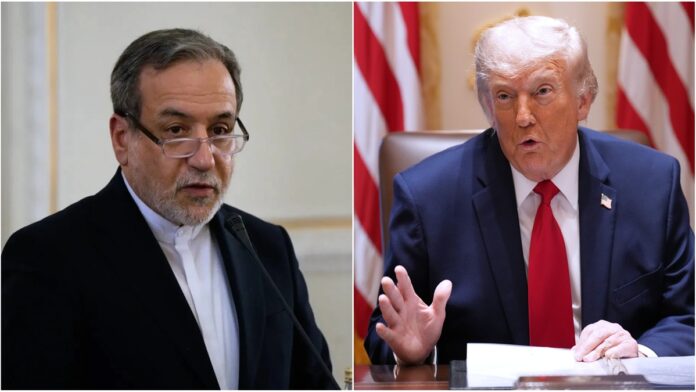
Iran on Monday announced it was halting all communications with the United States unless Israel stops its expanding military offensive in southern Lebanon. The semi-official Iranian news agency Tasnim said that “given the continuation of the Zionist regime’s crimes in Lebanon and considering that Lebanon was one of the preconditions for the ceasefire,” the Iranian negotiating team was stopping “talks and exchange of texts through a mediator.”
Tehran suspended ceasefire negotiations because of Israel’s escalating military attacks in Lebanon and U.S. strikes, an Iranian official told The Washington Post. Escalating violence in the Middle East threatened to derail stalled peace talks between Iran and the United States as negotiators struggled to extend a shaky ceasefire and end the war.
President Trump took to Truth Social in the wake of the Iranian declaration to say that he had spoken to both Israeli Prime Minister Benjamin Netanyahu and, via intermediaries, to Hezbollah leaders. Trump said he had secured pledges to end the fighting. “I had a very productive call with Prime Minister Bibi Netanyahu, of Israel, and there will be no Troops going to Beirut,” Trump wrote. He also wrote that through “highly placed Representatives,” he had a good call with Hezbollah, and said they agreed that “all shooting will stop.”
Despite Trump’s ceasefire push, Netanyahu’s office said Israeli forces would continue operations in southern Lebanon. Israel maintained that military action would persist if Hezbollah continued firing at Israeli cities and civilians.
Trump also claimed on Truth Social, without evidence, that “Talks are continuing, at a rapid pace, with the Islamic Republic of Iran.” Trump earlier told NBC News that he was not informed of the decision to suspend negotiations ahead of time but that “I think it’s fine if they’re done talking.” He added, “It’s an appropriate thing to say, because they’re better negotiators than they are fighters.”
Trump told ABC News on Monday that he believes an agreement to reopen the Strait of Hormuz and extend the ceasefire with Iran is reachable “over the next week,” while acknowledging that “it’s not a simple thing.”
Why It Matters
The breakdown in communications between the U.S. and Iranian negotiating teams, even temporarily, threatens to unravel a ceasefire framework that has served as the primary mechanism for managing the conflict that began in February 2026. The ceasefire was contingent on a series of conditions including the reopening of the Strait of Hormuz and a structured two-phase negotiating process. Iran’s suspension of talks signals that the conditions under which it agreed to engage are now, in Tehran’s assessment, being violated.
The intervention of Lebanon as a complicating variable illustrates the interconnected nature of the conflicts in the region. While the formal ceasefire was framed around the direct U.S.-Iran confrontation, the ongoing Israeli military operations against Hezbollah in Lebanon have created a secondary crisis that Tehran insists is covered by the ceasefire framework. The U.S. and Israel have contested that interpretation.
Trump’s unilateral claim of brokering a new Lebanon ceasefire agreement — made via Truth Social posts without corresponding confirmation from Israel or Hezbollah — also reflects the improvised and personalized nature of American diplomatic engagement in the region. The credibility of those claims was immediately undermined by Israel’s own public statements that operations would continue.
Economic and Global Context
The war has cut tanker traffic in the Strait of Hormuz, a critical waterway through which 20 percent of the world’s traded oil and natural gas passes in peacetime, spiking gas prices globally. Every deterioration in the peace process risks a return to active hostilities that would further suppress traffic through the strait and send energy prices higher across global markets.
The economic ripple effects of the conflict have been substantial. Oil and natural gas markets have remained elevated since hostilities began in February, and any signal that ceasefire talks are collapsing triggers additional price volatility. European governments, heavily reliant on Middle Eastern energy flows, have been monitoring the negotiations closely. German and Norwegian ministers were forced to abort a planned solidarity visit to Beirut this week as Israeli military activity made approach to the airport unsafe.
U.N. Security Council members, except for the United States, called for Israel to withdraw its forces from southern Lebanon and refrain from threatened escalatory attacks. The isolation of the U.S. on this vote underscores the degree to which American diplomatic positioning in the conflict has placed Washington at odds with its traditional multilateral partners.
Implications
The most immediate implication is continued market and geopolitical volatility. With Iran’s negotiating team formally pausing engagement and Israel signaling it will continue operations regardless of Trump’s stated agreements, the ceasefire is operating on an extremely thin foundation. Another significant Israeli strike or escalation in Lebanon could trigger Iran to formally end the ceasefire rather than merely suspend talks.
For the Trump administration, the episode highlights the limits of deal-making conducted through social media posts and informal intermediary channels. A durable peace agreement with Iran will require structured negotiations, legal frameworks, and multilateral verification mechanisms that go well beyond the ad hoc diplomacy on display this week.
For regional actors including Gulf states, Israel, and Lebanon’s government, the uncertainty generated by alternating signals from Washington, Tehran, and Tel Aviv makes strategic planning nearly impossible. Partners who were told a ceasefire was in place are now navigating contradictory official statements from multiple capitals simultaneously.
For the American public, the stakes are significant. A small but growing faction of Republicans have joined Democrats in questioning the astronomical price tag and overall economic consequences of the conflict as midterm elections approach in the fall. A collapse of peace talks would intensify that pressure on the administration considerably.
Sources
“Iran halts talks with U.S. over Israeli actions in Lebanon, Gaza”

