Story Highlights
- The court ruled 6-3 along ideological lines, with all three liberal justices dissenting
- Up to 350,000 Haitians and 6,000 Syrians currently living legally in the U.S. could lose their protected status
- Justice Alito wrote that courts cannot review the administration’s decisions to terminate TPS
What Happened
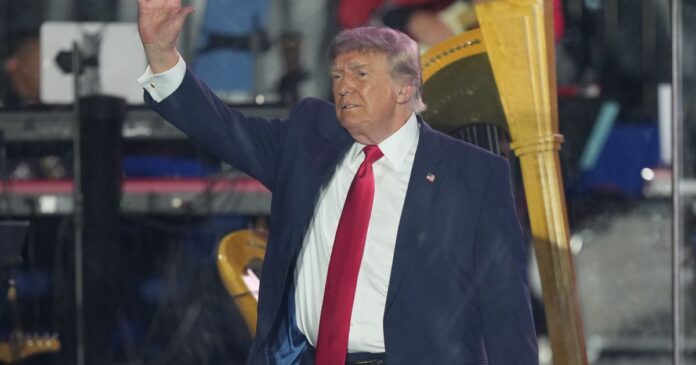
The U.S. Supreme Court cleared the way on Thursday for President Donald Trump‘s administration to strip hundreds of thousands of Haitian and Syrian immigrants of a humanitarian status that protects them from deportation. The court in a 6-3 ruling powered by its conservative justices overturned decisions by federal judges in New York and Washington, D.C., that had halted the administration’s actions terminating Temporary Protected Status, or TPS, for more than 350,000 people from Haiti and 6,100 from Syria.
Writing for the court majority, Justice Samuel Alito held that under the TPS law, the president has unreviewable authority to end the program, without intervention from the courts. By a 6-to-3 vote along ideological lines, the court’s conservative majority ruled that the president has virtually unrestrained power to end the Temporary Protected Status program.
The United States first provided TPS to Haitians after a major earthquake in 2010 and to Syrians after their country descended into civil war in 2012. Conservative Justice Samuel Alito, who authored the ruling, wrote that courts cannot review the administration’s decisions concerning TPS. The law governing TPS “plainly bars” such judicial review, Alito wrote.
Alito also wrote that the Haitian TPS holders who sued the administration were unlikely to succeed in their argument that the administration’s actions were racially biased, violating the U.S. Constitution’s Fifth Amendment promise of equal protection under the law. The court also dismissed claims that statements by former Homeland Security Secretary Kristi Noem demonstrated discriminatory intent.
The White House called the two immigration decisions handed down by the Supreme Court Thursday a “tremendous win” for the Trump administration. White House spokeswoman Abigail Jackson said the decision affirmed “what President Trump has always maintained: temporary protected status is, by definition, temporary.”
Why It Matters
The ruling carries enormous human stakes for the individuals affected, but its legal significance extends far beyond this particular group of immigrants. By declaring that TPS termination decisions are unreviewable by courts, the Supreme Court has effectively insulated future administrations — of any party — from judicial check on one of the federal government’s most powerful immigration tools.
There are more than a dozen countries that have been designated with TPS. The court’s decision means that the president can end the protected status of Haitians and Syrians without the possibility of judicial review. Migrants living legally in the U.S. from those countries will likely revert to illegal status, meaning they will lose their jobs and face deportation, with many of them forced to leave their American-born children behind.
“Haiti has been under ‘Temporary’ Protected Status since 2010. Syria has been under ‘Temporary’ Protected Status since 2012,” said House Rep. Tom Tiffany of Wisconsin. “Over 14 years later, we are finally putting the ‘T’ back in TPS.” Congressional Republicans largely celebrated the ruling as a restoration of executive authority over immigration policy.
Justice Elena Kagan, writing in dissent, argued that the plaintiffs had demonstrated they would face irreparable harm and were entitled to maintain their protections while litigation continued. The dissent highlighted the court’s deepening ideological divide on questions of immigration enforcement and executive power.
Economic and Global Context
According to advocacy groups, 200,000 Haitian TPS holders are in the U.S. workforce, including 15,000 agricultural workers, 13,000 nursing assistants, and 8,000 caregivers. TPS holders generate an estimated $5.9 billion for the U.S. economy. The removal of this population from the labor market would create measurable disruptions in sectors already experiencing workforce shortages, particularly healthcare and agriculture.
The ruling also arrives against a backdrop of severe conditions in both Haiti and Syria. The State Department currently warns against traveling to either Haiti or Syria, citing widespread violence, crime, terrorism, and kidnapping, with both included on its “do not travel” list. Critics of the administration argue this creates an obvious contradiction: the government advises Americans not to go to these countries while simultaneously requiring their legal residents to return there.
The legal fight over TPS presented another test of Trump’s executive power and the Supreme Court’s traditional deference to presidents on matters of immigration, national security, and foreign policy. Actions revoking TPS and other humanitarian protections are part of Trump’s broader rollback of legal and illegal immigration since returning to office in January 2025. The financial impact of mass deportations on local economies, particularly in cities with large Haitian communities such as Miami, Boston, and New York, is expected to be significant.
Implications
The Supreme Court’s ruling reshapes the legal architecture around TPS for years to come. By placing TPS termination decisions beyond judicial review, the court has handed the executive branch a nearly unchecked immigration tool — one that will be available to future presidents as well as the current one.
The dispute carried potentially wide implications, affecting 1.3 million immigrants from all 17 countries currently designated for TPS. The Supreme Court last year let the administration end TPS for hundreds of thousands of Venezuelans. The Thursday ruling removes the last significant legal barrier to pursuing similar actions for any of the remaining countries on the TPS list.
For affected individuals, the practical path forward narrows considerably. They may seek asylum, apply for other forms of legal status, or face deportation proceedings. Many have American-born children — U.S. citizens by birthright — who would face the difficult choice of remaining in the country without their parents or leaving with them.
For the Trump administration, the decision represents a major strategic victory that validates the legal theories it has advanced throughout the second term regarding executive immigration authority. Paired with the court’s simultaneous ruling permitting the administration to revive a border metering policy, Thursday delivered a broad affirmation of the White House’s approach to immigration enforcement that will shape policy well beyond this presidency.
Sources
“Supreme Court lets Trump end deportation protections for Syrians and Haitians”

